
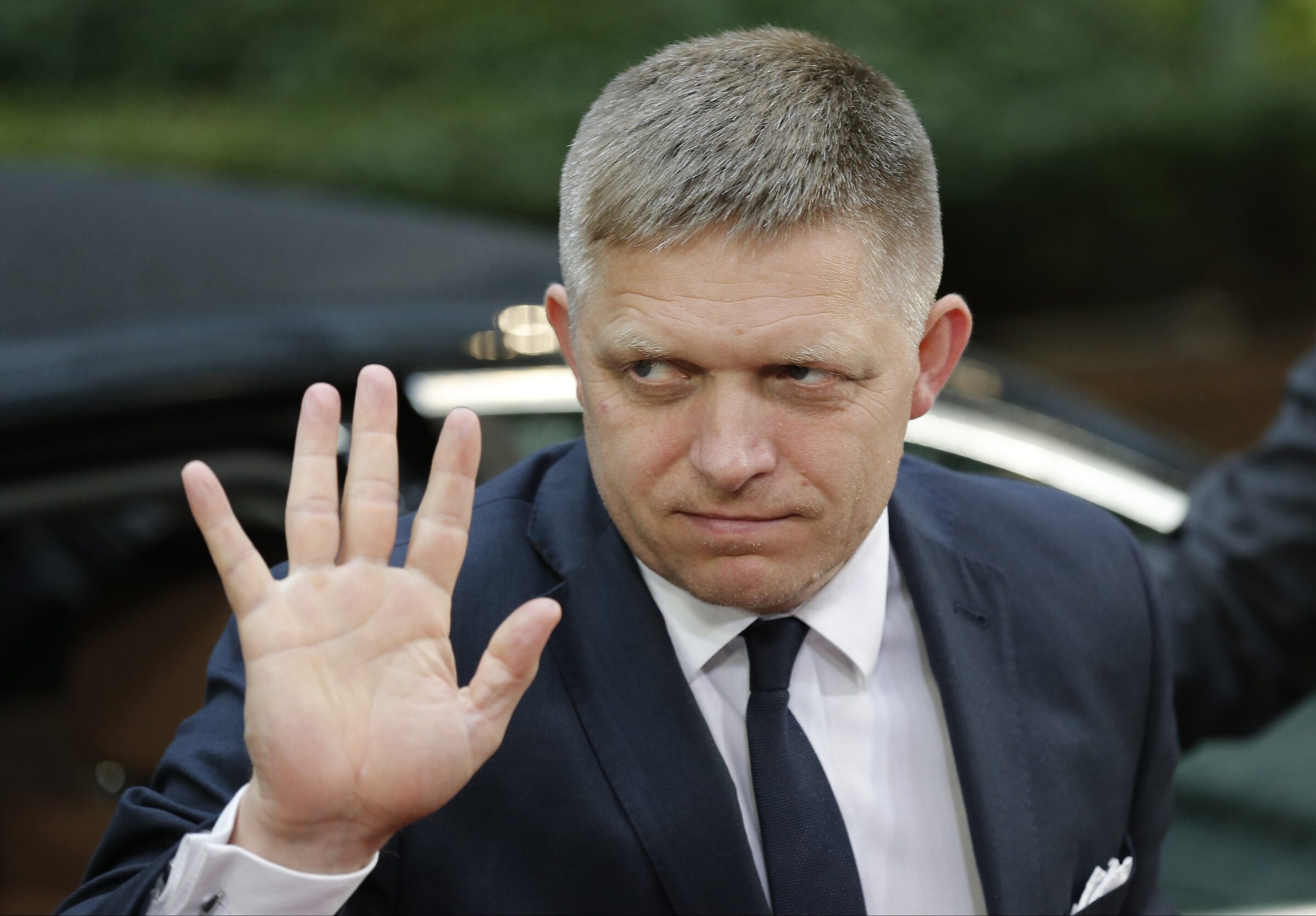
Slovak prime minister Robert Fico left the EU special summit in Brussels still refusing to chip in to a proposed €45bn loan for Ukraine, arguing that his country cannot afford the cost. At home, his government faces mounting questions over how it spends taxpayers’ money. European leaders ended their special summit on Thursday (26 November) late at night without an agreement on the EU’s next long-term budget or a proposed €45bn loan for Ukraine. Both issues now move to the Christmas summit in December, piling pressure on leaders to close a deal before the year ends. Among those returning home without a breakthrough was Slovak prime minister Robert Fico, who has opposed further financial support for Kyiv. Days before the summit, he once again cast doubt on the reality of the war. “There is no sign of war at all in Lviv,” he said before the special summit at the Slovak parliament’s European affairs committee, following his recent visit to Lviv, where he had said on 5 November that Slovakia is always ready to help host technical-level peace talks between Ukraine and Russia. Ahead of the summit, German chancellor Friedrich Merz insisted that all 27 member states should contribute to supporting Ukraine, threatening to hold up agreement on the next multi-annual financial framework (MFF) if some countries refused – and Slovakia, Hungary, the Czech Republic and Bulgaria have all sought to stay out of the proposed loan. Fico has repeatedly argued that Slovakia has already done enough. And as net contributors are pushing for tighter spending, others – Slovakia among them, defend traditional funding for agriculture and poorer regions. But while Fico argues in Brussels over how European money should be spent, a series of domestic controversies is raising questions about how carefully public money and state assets are managed in Slovakia. And indeed, in Bratislava, the debate over spending discipline has taken a rather different turn offering an uncomfortable reminder that demands for financial discipline are easier to make in Brussels than to demonstrate at home. Ministerial luxury perks Former environment minister Tomáš Taraba is facing questions over a stay at luxurious Villa Le Barone in Tuscany in May 2025, where a single night costs €4,700 - a payment which was made by the ministry.
Slovakia’s Fico blocks EU cash for Ukraine while spending scandals pile up at home
Full Article
Original Source
Read the full article at Euobserver →KhanList aggregates and links to publicly available news content. We do not host full articles from third-party sources. Always verify important information with original sources.