
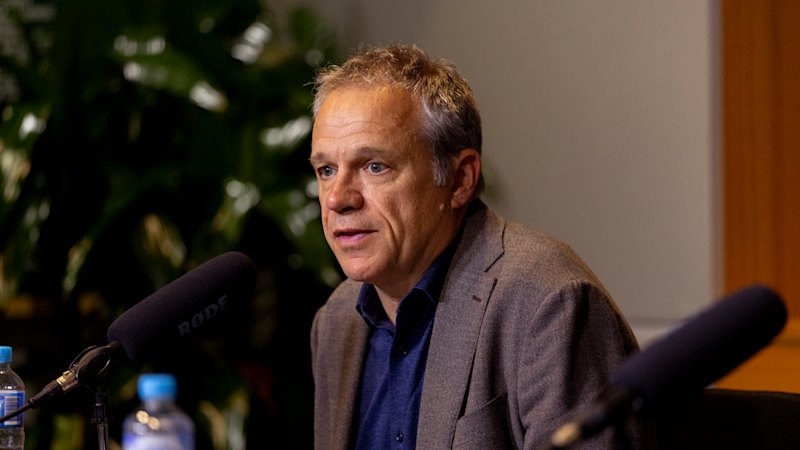
Updated August 26, 2026 — 12:56pm,first published August 26, 2026 — 9:49amNine Entertainment is no longer a television-led company, its chief executive emphasised on Wednesday, boasting strong results from its subscription streaming and publishing assets while writing down the value of its TV business by more than half.Chief executive Matt Stanton said the media company had a “transformative year”, posting growth in profit and revenue despite a tough advertising market as it sold its conservative-leaning talkback radio network and property listings platform Domain while buying outdoor media firm QMS.Nine Entertainment’s chief executive Matt Stanton.Renee NowytargerNine’s net profit from its continuing businesses rose 7 per cent to $142.4 million and revenue rose 3 per cent to $2.19 billion in Stanton’s first full financial year in the job.After several years struggling through declining advertising demand and a falling share price, the company now wants to shift the narrative of what kind of company it is now – a diversified media group rather than a TV broadcaster.Nine’s TV writedown comes after international media giants Disney, Comcast and others slashed the book value of their television business in recent years to account for struggling advertising demand as consumers’ attention is diverted away from television sets to streaming platforms and social media.Nine has lowered the book value of its Total TV business, which includes both broadcast and digital streaming, in its books by $426 million to about $360 million.The accounting move was reflective of TV advertising market conditions, it said. It’s also an acknowledgement to the market these are not growth assets, and clears up the company to be more flexible on future deals.But TV has been bolstered after Nine agreed to a new, seven-year deal to air the NRL in June along with Foxtel. Nine chose to retain the free-to-air rights in return for around $145 million per year. It emphasised that no impairments had been taken against the sport rights.Investors liked what they saw from the results overall, pushing Nine shares 7.8 per cent higher in early trading.The television industry has been in structural decline for several years, with digital streaming advertising demand not experiencing the rate of attrition seen by broadcast television advertising as tech giants scoop up ad sales and premium streaming platforms introduce ads as alternatives for marketers looking to get their brands in front of Australians.Nine is now structured around publishing, streaming and broadcast, and outdoor advertising. “The business has been completely transformed into three key divisions,” Stanton told this masthead, with television the only significant drag on its results.“What happens a lot of the time when you put these results out is people go straight to the free-to-air TV Channel Nine part of the business. In reality, that’s now less than 25 per cent of our revenue and even EBITDA [earnings before interest, taxes, depreciation, and amortisation] going forward.”“It’s still Nine, but it’s Nine Entertainment. The biggest growth asset we’ve got is QMS, which we acquired this year. That is the biggest growth assets we’ve got.”It’s a major change for the company named after its long-dominant free-to-air network. Stanton told staff 70 per cent of the earnings in the coming fiscal year are expected to come from streaming, digital publishing and its outdoor media business.“People still sometimes think about the narrative of Channel Nine, and I often get called the Channel Nine chief executive when I’m the Nine Entertainment chief executive,” he said. It’s a ” huge change from where we were 12 months ago as an organisation, and this is just the start of us signalling this out there into the marketplace.”Stanton confirmed about 35 staff will be affected by redundancies announced last month in its publishing division. The division, which includes The Sydney Morning Herald, The Age, Brisbane Times and WAToday is performing strongly overall. Digital subscription revenue was up 15 per cent, despite total paying subscribers staying flat at 510,000 across the division, which also includes The Australian Financial Review.Stanton refused to rule out further job cuts across both the publishing and television divisions.“I’m not going to commit that we won’t carry on doing that because we do have to carry on changing,” he said. “We’re a business, we’re shareholders, and we create value, so we’ll continue to do that and make sure we get the most efficient and effective workforce that’s appropriate for our business at that time.”Nine’s total television division, which includes broadcast television and free streaming platform 9Now, reported a revenue fall of 9 per cent to $1.03 billion and an EBITDA decline of 12 per cent to $133.5 million. Its result was propped up by strong growth for premium streaming platform Stan, with earnings there jumping 34 per cent to $80.6 million, despite a slight dip in paying subscribers from 2.4 to 2.3 million.Stan’s growth was helped by its first season of its English Premier League deal, which helped add more subscribers to its sport tier and allowed it to raise its subscription price by $5.Stanton said the company does “a lot of work” to ensure the pricing of its premium subscriptions for both its mastheads and Stan is right.“It’s premium content, so you pay. You have to pay for it. You have to fund it through volume or price,” he said. He declined to comment on reports Nine is close to extending its Premier League deal through to 2034.After agreeing to purchase QMS for $800 million earlier this year, the company came under Nine’s umbrella three months ago. Stanton singled out QMS as a “great, digital asset”. The outdoor ad firm contributed $54.5 million in earnings during its initial three months under Nine ownership, with revenue up 15 per cent to $295.4 million.UBS analysts said Nine beat their earnings expectations thanks to cost controls, with its television division and Stan subscriptions softer than expected, likely owing to the Premier League off-season.The Business Briefing newsletter delivers major stories, exclusive coverage and expert opinion. Sign up to get it every weekday morning.From our partners
Nine signals TV not the main game any more after ‘transformative year’
Full Article
Original Source
Read the full article at Smh →KhanList aggregates and links to publicly available news content. We do not host full articles from third-party sources. Always verify important information with original sources.