
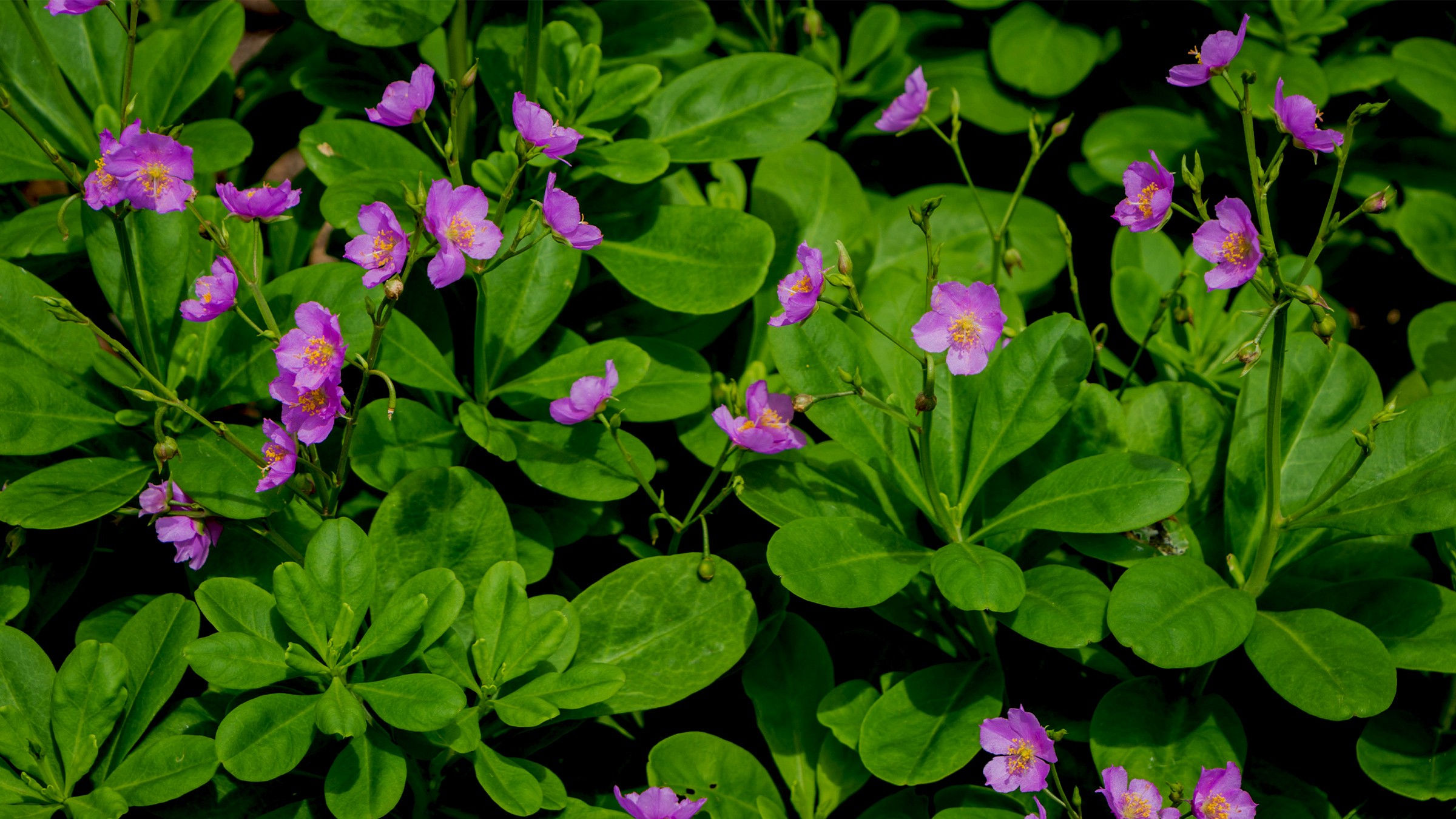
In Nigeria, the waterleaf plant, one of the country’s most widely eaten vegetables, is succumbing to changing rainfall patterns and flooding.Farmers say their plants aren’t reaching maturity amid months of relentless rain; meanwhile, market vendors are faced with diminished supplies, while buyers balk at increased prices.While technology-powered farming methods and better water management can offer solutions, many of Nigeria’s smallholder farmers cannot afford the price of these improvements. This is Part 1 in a two-part series on Nigerian waterleaf. Part 2 will be published soon. “These are the ones that survived the rain,” Enono Koka said, gesturing at a patch of short, spindly waterleaf plants across her large farm in downtown Calabar, in southern Nigeria’s Cross River. It was an unseasonably sunny morning in early October, and the 33-year-old was harvesting some of the vegetables for breakfast the next day. Most of the crops, she explained, had perished following days of relentless rainfall between August and September. “So I’m only left with these and I’m keeping them to eat with my family in the house,” she said. Much like Koka’s experience, the months since July have been painfully rough for Joy David Okon’s nearby waterleaf farm in Calabar. Before leaving town in September to visit her son, the sexagenarian farmer had sprayed some manure around her farmland to help enrich the freshly planted stems. Then came the disappointment. Her once-flourishing vegetable garden had turned into a marshland thick with weeds by the time she returned. “See the batch I planted in August. See how they keep looking scanty because of the plenty of rains this year,” she said, pointing at a sunken bed of shriveled waterleaf. Taken together, these events hint at the mounting strain on Nigeria’s waterleaf growing cycle brought on by shifts in rainfall patterns. Despite declining annual rainfall in recent years, persistent downpours in coastal cities like Lagos and Calabar have resulted in frequent episodes of flooding. As farmland across these zones becomes waterlogged, few waterleaf stems develop into mature plants, leading to a slump in yields and an unpleasant dynamic for not just growers. A waterleaf plant in India. This vegetable crop is cherished in different parts of the tropics for food and medicine. Image by Manojk via Wikimedia Commons (CC BY-SA 3.0). A slimy but valuable weed Scientifically documented as a weed, waterleaf (Talinum fruticosum) is a vegetable crop cherished in different parts of the tropics for food and medicine. It is often grown from its seeds or by planting vegetative cuttings sheared from an existing crop. As seeds are slow to germinate owing to dormancy, many growers commonly use stem cuttings, which take at least 30 days before maturing into fleshy greenish plants with spoon-shaped leaves and a pinkish flower. Since it’s a highly succulent crop, it readily secretes large amounts of slimy juice when shredded or cooked, hence its popular name. Although there’s no national estimate of how much waterleaf is produced or consumed, researchers have noted that it’s among Nigeria’s most widely eaten vegetables. For instance, a 2017 study in which 82% of 502 respondents reported eating waterleaf, 41% said they ate it in their daily diets, while 19% reported eating the vegetable at least once in two weeks. The crop is most established in southern Nigeria, where it’s grown as a source of livelihood by hundreds of smallholders. But waterleaf is not a standalone dish. It is typically paired with more fibrous vegetables like fluted pumpkin (Telfairia occidentalis) or Gnetum africanum for staple sauces such as edikang ikong or afang. Also, in folk medicine across this region, waterleaf extract is drunk to ease stomach discomfort and flush out excessive internal heat. Thanks to its adaptive mechanisms, waterleaf can endure a range of temperatures, soil types and moisture levels compared with many common leafy herbs. Notwithstanding its resilience, scientific investigations suggest that excessive soil moisture may not often provide an optimal growing environment for its crops. The waterleaf is often grown from its seeds or by planting vegetative cuttings sheared from an existing crop. Image by Kingsley Charles. To test how the plant responds to contrasting water conditions, a team of researchers from universities in Canada, Ghana, Sri Lanka and the United States ran a controlled greenhouse experiment between September 2024 and July 2025. The scientists compared the performance of waterleaf seedlings grown under contrasting conditions representing acute drought and heavy saturation. The upshot of that experiment became the crux of a research paper published in the journal Crops this past September. While prolonged waterlogging was observed to hurt waterleaf growth, the authors noted that plants subjected to severe drought performed worse. “Leaf area declined by 1.9-fold under waterlogging and 3.8-fold under drought,” Efoo Bawa Nutsukpo, an agricultural scientist who was part of the research crew, told Mongabay via email. “Photosynthesis was also reduced under both conditions, although the reduction was much greater under drought.” Therefore, based on the experiment, too little water caused more serious damage to waterleaf crops than excessive water. These findings highlight yet another challenge in waterleaf production within Nigeria. As many growers told Mongabay, the shortfall in supply isn’t limited to the rainy season alone. Waterleaf yields notably fall around December and March, coinciding with periods of extreme heat in Nigeria. “You know, because the sun is usually too much by that time, there’s no water in the soil to help the plants. So if you don’t wet the soil consistently, the vegetables will all die,” Okon explained. Historically, Nigeria’s tropical climate has been marked by two seasonal rhythms: a wet season stretching from April until October and followed by frequent bouts of rainfall; and a dry season, defined by dry, humid heat, filling up the remaining months of the year. The onset of the wet season following a dry spell is often perceived to mark agricultural abundance, because rainwater is the commonest type of irrigation for Nigeria’s smallholders, who make up roughly 80% of the total farming population. Although there’s no national estimate of how much waterleaf is produced or consumed, researchers have noted that it’s among Nigeria’s most widely eaten vegetables. Image by Kingsley Charles. Shifting rainfall patterns Analyses of rainfall trends across Nigeria’s savanna regions have, however, exposed shifts in distribution in recent decades, as climate patterns have become dramatically less predictable. For instance, a 2026 study examining rainfall records between 1981 and 2022 observed a declining trend in areas including the country’s capital, Abuja. This contrasts against the rising trend in Nigeria’s southern and coastal areas, where rainfall is markedly heavier and frequently followed by flooding. A late onset of rain — or an early finish — can take a severe toll on most plants. Even for a largely climate-resilient crop such as waterleaf, the effects of extended bursts of showers can be adverse. “If rainfall results in prolonged saturation or waterlogging, it can interfere with root function, photosynthesis and biomass production even in a crop that is relatively tolerant of excess water,” Nutsukpo, the agricultural scientist, explained. In 2022, heavy downpours followed by the release of water from Cameroon’s Lagdo Dam resulted in one of Nigeria’s most ruinous flooding episodes, damaging an estimated 569,251 hectares (1.4 million acres) of cropland. Two years later, authorities recorded an even higher toll during the 2024 floods, which swept through 29 of Nigeria’s 36 states and swallowed nearly 1 million hectares (2.5 million acres) of farmland, according to the U.N.’s Food and Agriculture Organization. In the wake of its flooding disasters, Nigeria has ramped up its early-warning systems, amplifying climate data and identifying high-risk areas. The latest rainfall forecast by the Nigerian Meteorological Agency for August until October predicted “normal to below normal” levels in coastal states like Cross River. But many residents in the state told Mongabay that the rain has been in excess. “It would have been better if it rained and stopped and allowed some sunshine,” said Esther Solomon, a Calabar-based waterleaf grower. “Instead it falls every day in a week, and it’s always heavy.” Solomon stressed that persistent rainfall, as witnessed during this wet season, weakens the tender leaves of waterleaf plants and snaps their stems. “Even now that the rains are not falling much again, those that are planting now are complaining because as the rain keeps falling, the stems keep dying,” she added. Outside of excess rainfall, several farmers also attributed the crunch to heavy use of “chemicals,” which tended to make the stem cuttings brittle. Although waterleaf plants are traditionally grown with decomposed manure, growers have begun opting for synthetic fertilizers, believed to produce greener leaves and help the shoot sprout faster during adverse weather conditions. Two waterleaf farmers sticking stem cuttings into a farm bed in Calabar, southern Nigeria. Image by Kingsley Charles. Market stress Indeed not only farmers have borne the direct impact. As lower supplies of waterleaf reach markets, consumers are also feeling the squeeze. Along a bustling alleyway within a foods market in Calabar, Anthony glumly plucks out pink flowers from a tray of waterleaf. On most weekends, prior to the scarcity, he made roughly 60,000 naira ($45) from selling the vegetable. Business wasn’t so brisk these days, he said. “If I tell customers the price, they’ll look at me like I intentionally raised the price of waterleaf.” After anemic sales caused his stock to rot once, leaving him in debt, Anthony now buys “only half as before,” he said. Indeed many buyers struggle to fathom the recent hike, describing it as exaggerated. “You go to the market and they give you one tiny bunch [of waterleaf], smaller than my fist, for 1,000 naira [$0.75],” said Faith Onayi, a mother of two living in an island village in Nigeria’s oil-rich Rivers state. For years, Onayi’s weekend culinary roster often included afang soup, a practice she inherited from living with her aunt. Since waterleaf prices shot up, “I’ve been trying out other [non-leafy] dishes at home for now,” she said. Yet skipping waterleaf altogether isn’t an easy choice for restaurateurs like Margaret Ibok, whose daily menu features afang and other waterleaf-based soups. “Because you cannot substitute waterleaf in any of the soups,” this means navigating higher expenses without a corresponding increase in profit, she lamented. “Imagine paying 8,000 naira [$6] for waterleaf that I used to buy for 3,000 naira [$2.30]. Most times, I end up spending around 30,000 naira [$22.50] for only one pot of soup, and I don’t even see my capital.” As waterleaf prices surge in markets, sales of leafy vegetables like the fluted pumpkin and G. africanum have taken a hit. “Nobody wants to buy afang [made with G. africanum greens] again since waterleaf is scarce in the market,” one local vendor told Mongabay. A vegetable market in Nigeria. As waterleaf prices surge in markets, sales of leafy vegetables like the fluted pumpkin and G. africanum have taken a hit. Image by Jeff Attaway via Flickr (CC BY 2.0). Even across social media sites like Facebook and X, Nigerian users increasingly compare waterleaf prices in their local markets, with many likening the vegetable to gold. All this comes on top of the global energy shock caused by tensions in the Middle East. Since February, when the conflict started, fuel prices have risen by 65% in Nigeria, driving transport fares. This has piled on the agony for farmers, as high input costs and extreme precipitation shrink their income, worsening food inflation. The country’s annual food inflation rate climbed from 8.9% in January to 19.6%, according to data from Nigeria’s National Bureau of Statistics. Faced with the persisting saturation, other staple crops like cassava might take a hit, Okon reckoned. “We might not be able to afford garri [cassava flakes] next year because the rain is making the cassava tuber soft.” Scientists are not so pessimistic, however. According to Nutsukpo, “there is considerable potential to improve year-round availability” once water is better managed. While technology-powered farming methods such as controlled environment agriculture “can significantly reduce the risk of complete crop loss,” Nutsukpo added that it isn’t a complete solution to the seasonal shortages. Controlled environment agriculture, a soilless system that cultivates crops in high-tech glass greenhouses amid well-regulated conditions, has gained traction in Europe and the U.S. for its potential to enhance food security amid worsening climate change. But, in Nigeria, adoption has been sluggish, as the prohibitive cost of installation means that only large-scale commercial farmers and entrepreneurs can afford it. To prevent waterlogging during prolonged bursts of rainfall, Nutsukpo recommended improving drainage and raising beds where necessary. Back on her farm in the coastal city of Calabar, Enono Koka is loath to plant more stem cuttings. “I’ll wait for the rain to stop completely before I replant them again,” she said. Asked when that might be, she shrugged and answered, “I don’t know for now.” Banner image: Waterleaf plants (Talinum fruticosum). Image by Mark Yokoyama via Flickr (CC BY-NC-ND 2.0). Citations: Babayemi, J., Olafimihan, O., & Nwude, D. (2017). Assessment of heavy metals in Waterleaf from various sources in Ota, Nigeria. Journal of Applied Sciences and Environmental Management, 21(6), 1163. doi:10.4314/jasem.v21i6.29 Oluwole, S. O., Ogun, M. L., & Balogun, O. O. (2018). Effects of different watering regimes on the growth of talinum triangulare jacq. (Water leaf). JOURNAL OF RESEARCH AND REVIEW IN SCIENCE, 5(1). doi:10.36108/jrrslasu/8102/50(0130) Ofori, P. A., Nutsukpo, E. B., Opoku-Agyemang, F., Amalapridman, V., Owusu-Nketia, S., Ofoe, R., … Abbey, L. (2026). Comparative morpho-physiological and biochemical responses of Waterleaf (Talinum fruticosum) to drought and waterlogging stresses. Crops, 6(5), 84. doi:10.3390/crops6050084 Ibrahim, I., Usman, M., Abdulkadir, A., & Emigilati, M. (2018). Analysis of rainfall distribution, temporal trends, and rates of change in the Savannah zones of Nigeria. Atmosphere-Ocean, 58(5), 351-360. doi:10.1080/07055900.2018.1502149 Thomas, J. E., Agbo, E. P., & Offorson, G. C. (2026). Changing precipitation regimes and implications for water insecurity in Nigeria using innovative trend and drought analyses. Discover Geoscience, 4(1). doi:10.1007/s44288-026-00594-3 Morrison, A.I., Ndakara, O.E., EFE, S.I. (2023). Analysis of rainfall distributions and variations in Nigeria. Himalayan Journal of Agriculture, 04(02), 1-6. doi:10.47310/hja.2023.v04i02.012 Credits Topics
Nigeria’s shifting rainfall wreaks havoc with a beloved edible green, the waterleaf plant
Full Article
Original Source
Read the full article at News →KhanList aggregates and links to publicly available news content. We do not host full articles from third-party sources. Always verify important information with original sources.