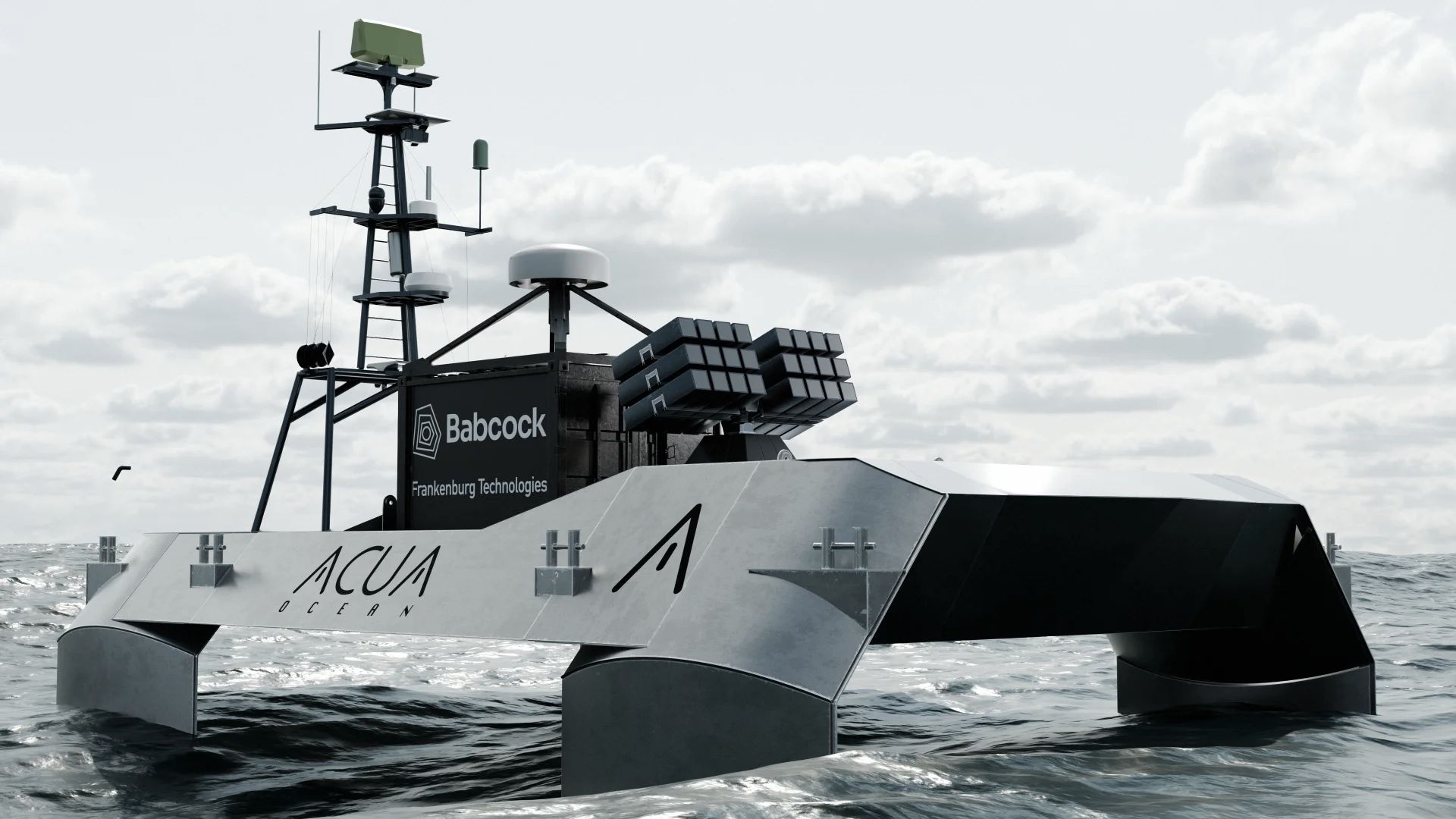
Estonian defense technology company Frankenburg Technologies has signed a Memorandum of Understanding (MoU) with Babcock International and ACUA Ocean Technologies to jointly develop integrated maritime counter-drone air defence systems. The step expands efforts to address the growing threat posed by uncrewed aerial systems (UAS) in naval and offshore environments. Scalable and cost-effective counter-UAS solutions The partnership brings together three complementary capabilities. Frankenburg’s low-cost interceptor missile technology, Babcock’s defense engineering and systems integration expertise, and ACUA Ocean’s autonomous uncrewed surface vessel (USV) platforms. Together, the companies aim to create scalable and cost-effective counter-UAS solutions that can protect naval vessels, ports and critical maritime infrastructure.The agreement reflects increasing concern among defense organisations over the rapid proliferation of low-cost attack drones, which have demonstrated their effectiveness in recent conflicts. Conventional air defense systems are often expensive to operate against relatively inexpensive drones, creating demand for more affordable interception technologies.The three companies intend to develop integrated solutions capable of detecting, tracking and defeating hostile drones operating in maritime environments, where protecting ships and offshore assets presents unique operational challenges. Affordable missile defense “Affordable missile defense is heading farther out to sea. By equipping ACUA’s uncrewed vessels with Frankenburg’s mass-manufacturable missiles and Babcock’s launcher technology, we aim to create a persistent and low-cost way to protect the UK’s ships, ports and critical maritime infrastructure against mass drone attacks,” said Daniel Hallett, UK Managing Director at Frankenburg Technologies.Under the collaboration, Frankenburg Technologies will contribute its precision-guided, low-cost interceptor missiles designed specifically for counter-drone missions. Babcock will provide expertise in defense engineering, mission integration and maritime platform development, while ACUA Ocean Technologies will bring its autonomous surface vessel technology, enabling flexible deployment of air defence systems at sea. Combination of autonomous vessels, modular launch systems and affordable interceptors The partners expect the combination of autonomous vessels, modular launch systems and affordable interceptors to deliver a more scalable approach to maritime air defense than traditional solutions.“We’re excited to partner with innovative companies to develop an integrated approach that directly addresses some of the biggest challenges our customers face in today’s defence landscape,” said Sir Nick Hine, Chief Growth Officer for Babcock. “As a trusted systems integrator, collaborations like this will help protect critical national assets and infrastructure from attritable one-way attack drones.” The latest agreement expands an existing partnership between Babcock and Frankenburg Technologies announced earlier this year. Under that arrangement, the companies began exploring the development of a containerised maritime launch platform capable of deploying Frankenburg’s low-cost Mark 1 interceptor missile against one-way attack drones.By adding ACUA Ocean Technologies to the programme, the collaboration now extends beyond launcher development to include autonomous maritime platforms capable of supporting integrated counter-drone operations.“Partnering with Babcock and Frankenburg enables true persistent, multi-domain defence capabilities. To counter mass drone attacks, maritime air defence must be uninterrupted, yet rough weather often forces traditional systems out of limits,” said Neil Tinmouth, CEO of ACUA Ocean Technologies. “The unique stability of ACUA’s Pioneer-class, which we’ll be using for this collaboration, ensures these counter UAS and interchangeable payloads remain online and fully operational in high seas where other platforms fail.”A key objective of the partnership is to develop solutions that remain affordable while being rapidly deployable and easy to integrate into existing naval and coastal defence networks. As drone threats continue to evolve, defense organisations are increasingly seeking systems that can counter large numbers of low-cost aerial targets without relying on expensive interceptor missiles.The companies believe combining autonomous maritime systems with modular air defence capabilities could provide navies and security agencies with greater operational flexibility while reducing overall costs.Recommended ArticlesGet the latest in engineering, tech, space & science - delivered daily to your inbox.Prabhat, an alumnus of the Indian Institute of Mass Communication, is a tech and defense journalist. While he enjoys writing on modern weapons and emerging tech, he has also reported on global politics and business. He has been previously associated with well-known media houses, including the International Business Times (Singapore Edition) and ANI.
Next-gen maritime counter-drone system to bolster defense with precision-guided missile systems
Full Article
Original Source
Read the full article at Interestingengineering →KhanList aggregates and links to publicly available news content. We do not host full articles from third-party sources. Always verify important information with original sources.