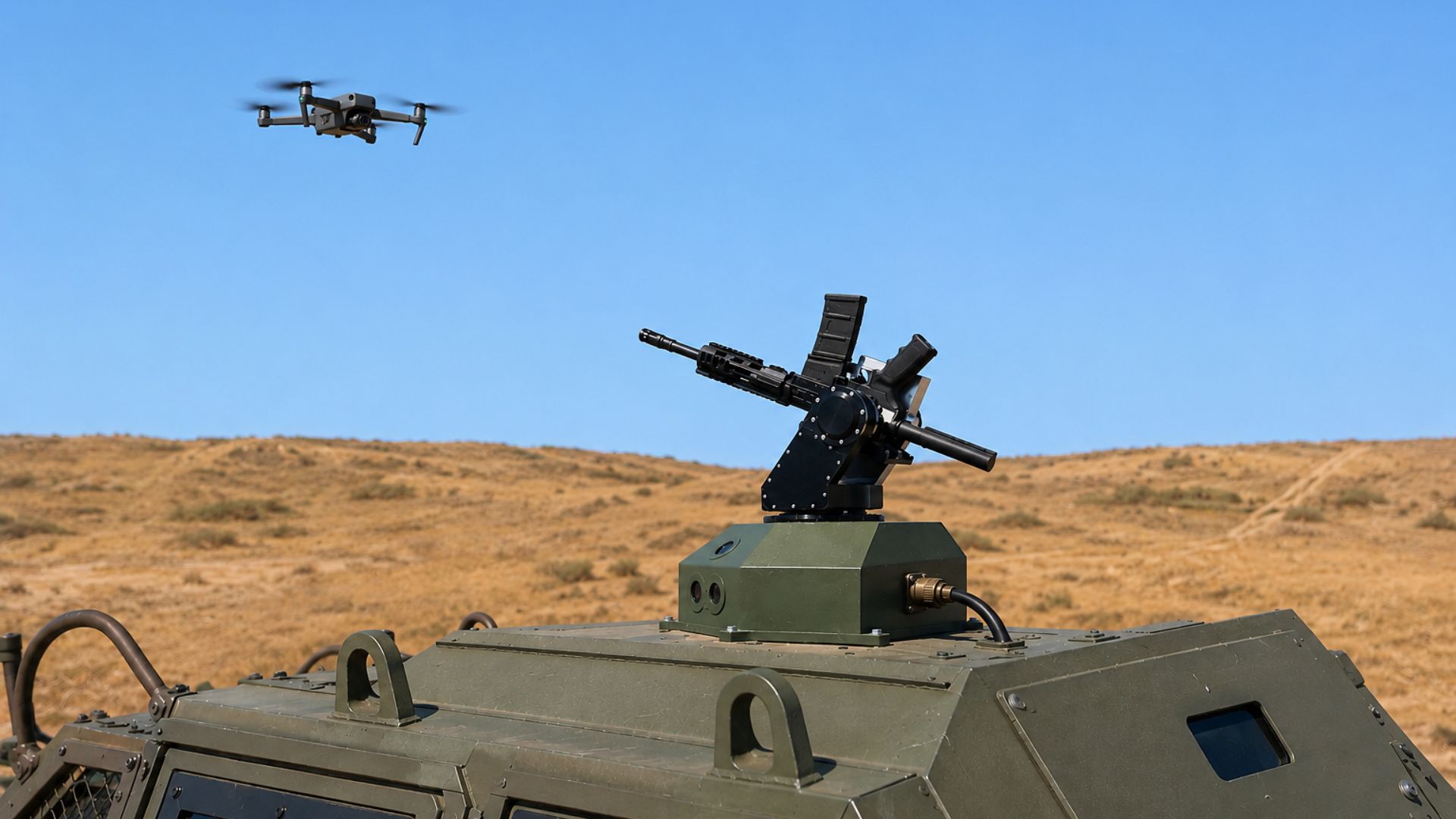
Israeli defense technology company Axon Vision has introduced ForceField, a new counter-drone protection system built to defeat first-person view (FPV) drones, including fiber-optic-controlled variants that can bypass traditional electronic warfare defenses. The company completed development of the system after a series of live-fire evaluations in operationally representative conditions. During the trials, ForceField detected FPV drone targets in real time before tracking them and directing an engagement. Axon Vision said the demonstrations validated the system’s ability to protect moving military forces against one of today’s fastest-growing battlefield threats. FPV drones have become a defining feature of modern conflicts because they offer precision strikes at relatively low cost. Their growing use has increased demand for protection systems that can operate even when electronic warfare measures fail. Designed for silent detection Fiber-optic-controlled FPV drones present a unique challenge because they remain connected through physical cables instead of radio links. That makes them resistant to conventional jamming systems that many armed forces rely on to disrupt unmanned aircraft. Axon Vision developed ForceField to address that gap. Instead of relying on active emissions that could expose a unit’s location, the system uses passive sensors to identify incoming aerial threats during both day and night operations. Edge AI software processes data directly on the platform, allowing operators to evaluate threats without depending on continuous communications or external surveillance networks. A man-on-the-loop architecture keeps a human operator involved before any engagement decision. Rapid platform integration ForceField places the entire engagement process inside one system, reducing the need to connect multiple independent technologies. The company designed it for installation on existing military vehicles and forward operating positions without requiring extensive modifications to core platform systems. It also works with standard weapons and ammunition. That approach removes the need for dedicated interceptor drones or specialized logistics support, which could simplify deployment across different military fleets. Military operators can field the system without introducing an entirely new supply chain or changing existing maintenance procedures. Axon Vision said customers can purchase the complete protection system or integrate only its Edge AI detection layer into existing weapon systems. The modular architecture gives defense contractors and armed forces greater flexibility when upgrading current platforms or developing future vehicle programs. Expanding defense ambitions ForceField also reflects a broader shift in Axon Vision’s business strategy. The company has spent several years developing Edge AI technologies through Israeli Ministry of Defense programs, primarily supplying capabilities to larger defense platforms. It now aims to deliver complete operational systems alongside standalone software and sensing technologies. The company has already started evaluation activities with military customers and strategic partners in Israel and overseas. ForceField will also support Axon Vision’s expanding collaboration with Leonardo DRS as both companies pursue opportunities in the U.S. defense market. “ForceField is the result of years of investment in operational Edge AI technologies,” said Neri Zin, chief executive officer of Axon Vision. He described the system as an important milestone in the company’s transition toward delivering complete operational solutions. Zin said the strategy expands Axon Vision’s product portfolio. He expects it to strengthen the company’s position in the defense market while opening opportunities in a growing global industry.Recommended ArticlesGet the latest in engineering, tech, space & science - delivered daily to your inbox.Aamir is a seasoned tech journalist with experience at Exhibit Magazine, Republic World, and PR Newswire. With a deep love for all things tech and science, he has spent years decoding the latest innovations and exploring how they shape industries, lifestyles, and the future of humanity.
New ForceField counter-UAS system stops FPV drone attacks without emitting signals
Full Article
Original Source
Read the full article at Interestingengineering →KhanList aggregates and links to publicly available news content. We do not host full articles from third-party sources. Always verify important information with original sources.