
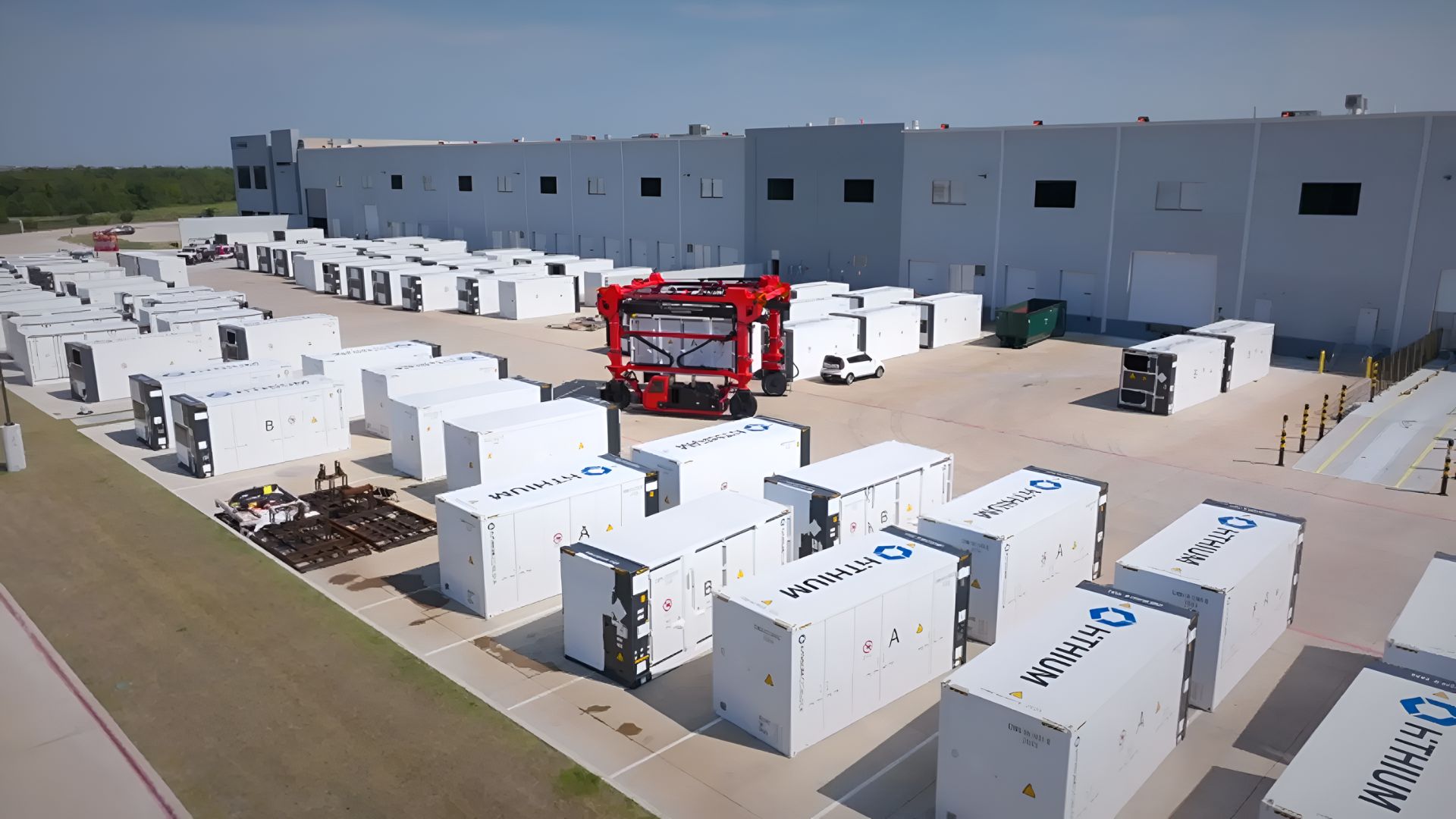
Chinese energy storage technology unicorn HiTHIUM has unveiled a 4 MWh sodium-ion battery energy storage system built around a new 785 Ah cell designed to last 20,000 cycles and support a 30-year operating life. Called the ∞Power N4.0MWh, the system is aimed initially at utility-scale energy storage. HiTHIUM plans to begin full-scale production and deliveries in 2027 as it works to expand sodium-ion technology beyond pilot-scale deployments. At the heart of the system is the company’s new ∞Cell N785Ah sodium-ion battery. The cell uses a polyanionic chemistry with an NFPP cathode, hard-carbon anode, and customized electrolyte. The Xiamen, China-headquartered company says the 785 Ah cell is designed to retain 70% state of health after 20,000 cycles and can support storage durations ranging from two to eight hours. That makes it suitable for applications where batteries need to repeatedly store and discharge electricity over long periods. New chemistry targets longevity The cell combines ultra-thick electrodes with long-life structural components. HiTHIUM also uses a wide-format stacking design that allows the sodium-ion cell to be produced using its existing kAh-class lithium-ion manufacturing platform. That compatibility could help the company scale sodium-ion production without developing an entirely separate manufacturing system. At the system level, HiTHIUM uses a stacked-cell architecture that it says cuts the storage station’s footprint by 30 percent. Rated-power utilization of the power conversion system, or PCS, is also more than 20 percent higher than in its previous-generation sodium-ion system. The company reports 24-hour comprehensive efficiency above 88 percent. Operating auxiliary power consumption has been reduced by 30 percent, while standby auxiliary consumption is 50 percent lower. HiTHIUM designed the storage system around the expected 30-year life of a power station rather than treating batteries as components that would necessarily require frequent replacement. “30 years means 10,950 days of validation—a long-term commitment to our customers,” said Dr. Aileen Wang, Director of HiTHIUM’s Battery Research Institute. Sodium takes grid role The company is positioning sodium-ion batteries as a complement to lithium-ion technology rather than a replacement. Its first target is large utility-scale installations, followed by commercial and industrial storage, residential systems and broader energy-access applications. Sodium-ion batteries are attracting interest for stationary storage because they can reduce dependence on lithium-based raw materials. For grid applications, where weight and energy density are generally less restrictive than in electric vehicles, affordability, durability, and material availability can play a larger role. HiTHIUM says affordability and long-term resource availability are key requirements for deploying energy storage at scale. The company is ultimately targeting levelized storage costs approaching RMB 0.1 per kWh. Alongside the new battery system, HiTHIUM launched its ∞Edge Pioneer Program. The initiative will test sodium-ion cells and complete storage systems under extreme operating conditions, with the company planning to disclose progress over the next three years. The ∞Power N4.0MWh is scheduled to enter full-scale production and delivery in 2027.Get the latest in engineering, tech, space & science - delivered daily to your inbox.With over a decade-long career in journalism, Neetika Walter has worked with The Economic Times, ANI, and Hindustan Times, covering politics, business, technology, and the clean energy sector. Passionate about contemporary culture, books, poetry, and storytelling, she brings depth and insight to her writing. When she isn’t chasing stories, she’s likely lost in a book or enjoying the company of her dogs.
New 4 MWh sodium-ion battery packs 785 Ah cells, targets 20,000 cycles over 30 years
Full Article
Original Source
Read the full article at Interestingengineering →KhanList aggregates and links to publicly available news content. We do not host full articles from third-party sources. Always verify important information with original sources.