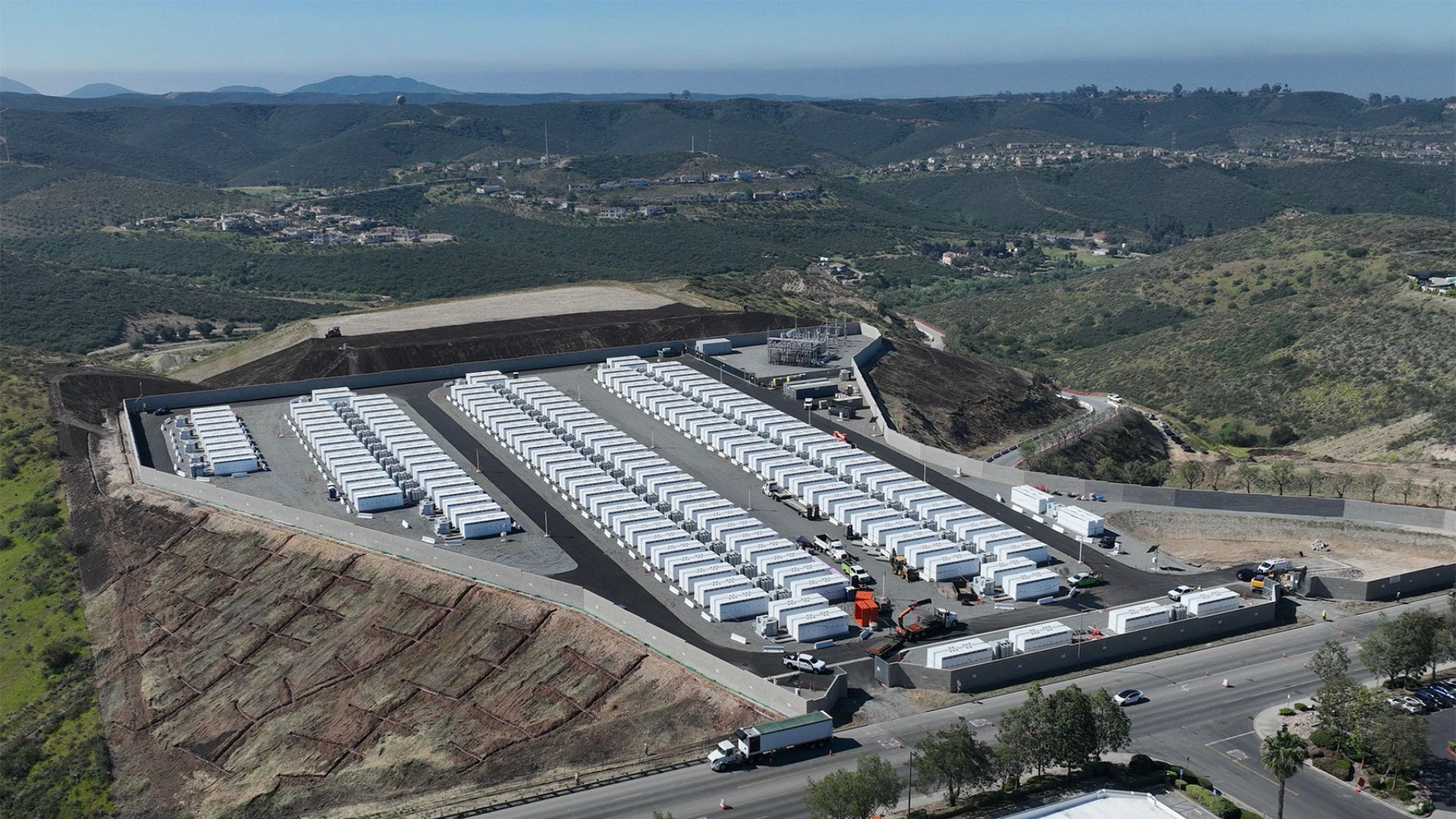
Arevon Energy has officially brought online its Nighthawk Energy Storage Project, a 300-megawatt (MW) / 1,200-megawatt-hour (MWh) battery facility in Poway, California. It is said to be the US-based company’s largest standalone energy storage venture to date. At full capacity, Nighthawk can discharge enough electricity to power up to 385,000 homes for four hours straight. It could be specifically beneficial for bridging the gap when the sun sets and power demand spikes. California’s newest grid savior California often generates an abundance of solar power during midday hours. Without adequate storage, that clean power risks going to waste. Nighthawk solves this mismatch by charging up when electricity is cheap and abundant, then pumping it back into the San Diego power grid during peak hours. “Energy storage is becoming increasingly important as electricity demand continues to rise across California and the United States. Projects like Nighthawk are critical to America’s growing energy needs because they strengthen grid reliability while delivering lasting economic benefits for local communities,” said Justin Johnson, Chief Executive Officer at Arevon. “We are proud to have developed, constructed, and brought Nighthawk online, and we look forward to its continued contribution to the San Diego region for years to come,” said Johnson. The facility uses lithium iron phosphate (LFP) battery technology. Recognized for fire safety, thermal stability, and prolonged operating life, LFP cells have quickly become the gold standard for utility-scale grid installations. Reportedly, the LFP batteries installed at Nighthawk are specifically Tesla Megapack units. According to the company’s website, the project features an on-site substation and compact battery containers, up to 25 feet long and 10 feet high. These house battery racks, control systems, fire protection equipment, and power conversion components like transformers and inverters. Millions for local schools and services Utility-scale battery storage systems strengthen the electric grid’s reliability by storing excess renewable power, such as solar and wind energy, during peak generation and discharging it back into the grid during peak demand. These systems emit no harmful radiation or emissions. Plus, the battery systems also rely on advanced safety technologies and built-in protection features, including an automatic battery management system. This helps to continuously monitor performance and safely shut down under suboptimal conditions. Apart from providing energy, the Nighthawk project will generate over $30 million in local property tax revenues throughout its lifespan. These funds will flow directly to Poway and San Diego County, strengthening the local economy by supporting public schools, emergency services, municipal road improvements, and essential community programs for youth and special needs. During the height of construction, the $600 million project employed over 130 workers and injected substantial commerce into surrounding small businesses “One thing that clean, green energy has taught us: battery storage is essential. This project strengthens our infrastructure, boosts our local economy, supports grid reliability, and provides enough capacity to power up to 385,000 homes when we need it most,” said Joel Anderson, San Diego County District 2 Supervisor. With the Nighthawk project now active and another 250 MW project under construction in Daly City, Arevon’s operating footprint in California has crossed 4 gigawatts. This milestone shows that utility-scale battery storage is no longer experimental, but an essential backbone supporting the modern electric grid.Get the latest in engineering, tech, space & science - delivered daily to your inbox.Mrigakshi is a science journalist who enjoys writing about space exploration, biology, and technological innovations. Her work has been featured in well-known publications including Nature India, Supercluster, The Weather Channel and Astronomy magazine. If you have pitches in mind, please do not hesitate to email her.
New 1,200 MWh battery storage facility to power 385,000 homes in California
Full Article
Original Source
Read the full article at Interestingengineering →KhanList aggregates and links to publicly available news content. We do not host full articles from third-party sources. Always verify important information with original sources.