
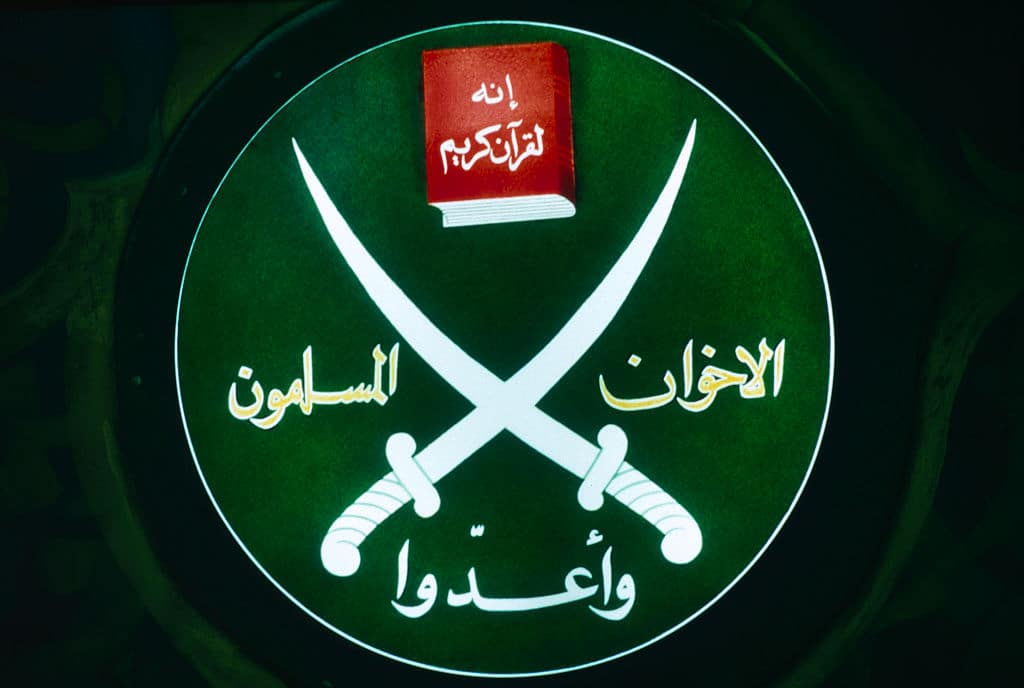
History is repeating itself. Just as the Muslim Brotherhood built a private army in Egypt in 1948 under the banner of Palestine, Hezbollah is now similarly terrorizing its own compatriots in Lebanon. Comparing how both the Muslim Brotherhood and Hezbollah weaponized the Palestinian cause shows a cross-generational blueprint of political deception. In Egypt eighty years ago and Lebanon today, anti-Zionist rhetoric has served as a smokescreen for dangerous domestic subversion. Whenever non-state groups stockpile explosives under the pretext of fighting an external enemy, their true targets are domestic rivals and the sovereignty of the state. On November 15, 1948, Egyptian authorities intercepted a Jeep in Cairo carrying bombs, firearms, and documents belonging to the Muslim Brotherhood’s secretive Special Apparatus militia. When confronted over his underground terrorist network, Muslim Brotherhood founder Hassan al-Banna resorted to a convenient geopolitical shield. He claimed that the seized cache was intended for use against Zionists in Palestine. Banna’s Palestine pretext was a calculated lie, as the hidden militia was actually built to settle domestic scores and intimidate political opponents. His pan-Islamic justification was designed to exploit public sympathy and deflect charges of treason, masking a paramilitary apparatus that was actively plotting against the Egyptian state. The Muslim Brotherhood’s Special Apparatus devoted far more energy to orchestrating campaigns of terror inside Cairo than to fighting on the battlefields of Jerusalem. Its members specialized in assassinating Egyptian judges, bombing local businesses, and neutralizing domestic rivals. By framing a partisan, power-hungry militia as a sacred anti-Zionist resistance, the Brotherhood sought immunity from the very laws governing the citizens it terrorized. The Egyptian state eventually backed Banna into a corner after his rogue apparatus assassinated Prime Minister Nuqrashi Pasha. Under immense pressure, the Muslim Brotherhood’s founder issued a public manifesto in January 1949 to save his political skin, disowning his militant followers. Banna stripped his own Muslim Brotherhood operatives of their religious and national legitimacy, declaring them “neither brothers nor Muslims.” Decades later, a strikingly similar security crisis has unfolded in Lebanon, proving that the anti-Zionist pretext remains the preferred alibi for the lawless Hezbollah. In early October 2026, Lebanon’s Internal Security Forces (ISF) intercepted 800 kilograms of explosives being transported from Baalbek to Beirut. The shipment also included shrapnel, nails, and five molds, raising fears that the material was intended for use in political assassinations. The Special Tribunal for Lebanon found Hezbollah members guilty of assassinating former Prime Minister Rafik Hariri in 2005. Most Lebanese believe the Iranian-backed group was also behind the dozen assassinations that followed. Just as in the historic Cairo Jeep incident, Lebanese authorities caught the operatives red-handed. Like the Muslim Brotherhood in Egypt, Hezbollah in Lebanon assembled a powerful apparatus with a sophisticated clandestine logistics network under the pretext of defending the nation against an external adversary. Predictably, Hezbollah officials rushed to justify the seized explosives using the same ideological defense Banna had invoked eight decades earlier. Hezbollah claimed the confiscated material was intended for “resistance” against Israel. By presenting its illegal weapons as instruments of patriotic defiance, the faction sought to shield itself from state accountability. Lebanon’s Military Judiciary refused to buy Hezbollah’s outdated excuse and launched a direct legal challenge to the group’s armed overreach. Military Prosecutor Judge Claude Ghanem formally indicted thirteen individuals associated with the illegal shipment, charging them with undermining state authority, a serious offense. Ghanem could have decoupled the arrest from its political context and charged the Hezbollah network with illicit weapons trafficking, as he would in an ordinary criminal case. Thankfully, the Lebanese judge did not beat around the bush. The state identified the two Hezbollah operatives detained while transporting the explosives as Haitham Ahmad Amhaz and Ali Shawki Al-Kurdi. The indictment also named six fugitives: Ibrahim Khodor Habib, Bilal Fadl Sabouri, Mohammad Safi Ayoub, Mohammad Haidar Zaiter, Mohammad Abdullah Hazimeh, and Russian national Yelena Krishinova, who is married to one of the suspects. The judicial crackdown sparked a backlash from the Hezbollah leadership, which views state accountability as an existential threat to the militia’s domestic hegemony. Hezbollah lawmaker Hussein Hajj Hassan denounced the prosecution, claiming the decision “lacks the simplest rules of the National Pact, the Charter of Human Rights, the United Nations Charter, and many Lebanese laws, all of which guarantee the legitimate rights of any resistance against occupation.” This defensive rhetoric exposes the party’s tired tactic of hijacking international law to protect its private army. Lebanon’s foundational National Pact of 1943 stipulates equality and partnership among the country’s sectarian blocs. Hezbollah’s heavily armed militia, in a country where other sects are unarmed, hardly reflects the equality envisioned by the National Pact. From Egypt in 1948 to Lebanon in 2026, the Palestinian cause has been exploited for too long as a license for domestic terror and tyranny. When a political entity establishes a secret army under the banner of foreign struggle, its ultimate goal is domestic dominance. Banna’s foundational deception provided a roadmap for modern Islamist groups to turn their guns inward while directing their rhetoric outward. Although Hezbollah’s militants hold Lebanese citizenship, their allegiance lies abroad, with Iran’s Supreme Leader. Ultimately, those who undermine the Lebanese state and smuggle explosives through the country’s own towns are neither Lebanese nor a resistance movement. Hussain Abdul-Hussain is a research fellow at the Foundation for the Defense of Democracies and a columnist focusing on Lebanon and broader Arab affairs.
Neither Lebanese Nor a Resistance
Full Article
Original Source
Read the full article at Fdd →KhanList aggregates and links to publicly available news content. We do not host full articles from third-party sources. Always verify important information with original sources.