
The Supreme Court on Wednesday (August 19, 2026) emphasised the need for institutionalising reforms within the National Testing Agency (NTA) while indicating that the government must not hop from one Committee to the next in search of solutions.The court made it clear that the constitution of the new Nandan Nilekani task force must not be seen as a move to discard “lock, stock, and barrel” an earlier panel headed by a former ISRO chief.The NTA has been under the Supreme Court scanner since the NEET-UG 2026 paper leaks.The Union government has constituted the “task force” chaired by Infosys co-founder Nandan Nilekani to usher in new technological reforms which would make the conduct of public exams under the NTA leak-proof.But a Bench headed by Justice P.S. Narasimha persisted to question the Union government on what it has done so far to implement the recommendations of an earlier Committee headed by former ISRO chairman K. Radhakrishnan to improve the NTA’s exam processes.“It should not be that a Committee gives recommendations, then a new Committee is formed which removes the old one, lock, stock and barrel,” Justice Narasimha said.The court said the reforms in NTA should focus on building an “institutional memory”.Justice Narasimha said it should not be that a Committee proposes a set of reforms which are implemented in one exam, after which the senior NTA officers are shifted out, and the reforms are undone in the next exam.The Court said there ought to be meaningful continuity in resolving systemic problems within the NTA.The reforms must be vibrant, institutionalised and carried on within NTA by successive officers. They should not be a knee-jerk reaction after a catastrophe, Justice Narasimha pointed out.The Court pointed out to how the Union Public Service Commission (UPSC) has been conducting public exams without a hitch.The 2026 NEET-UG question paper leaks resulted in the cancellation of the exams, leaving over 23 lakh medical aspirants stranded. A CBI investigation was ordered, and arrests made. However, the NEET-UG leaks led to nationwide protests and police crackdown on students, ultimately leading to the resignation of Union Education Minister Dharmendra Pradhan.“Life changes with every exam. The system changes with every exam. There are new technological challenges. How are you facing them? Have you developed the necessary infrastructure? Have you the software systems required in place? What about cyber security and storage?” Justice Narasimha asked Solicitor General Tushar Mehta, appearing for the Union government and the NTA.The Court referred to an August 4 affidavit filed by the Union government, listing several senior appointments to be made to the NTA.Mr. Mehta agreed to the need for a “permanent mechanism” to introduce reforms and maintain their continuity as keepers of the NTA’s institutional memory.He suggested that Mr. Radhakrishnan could be requested to be made a member of the Nilekani task force.Justice Narasimha asked the Union government to first file an affidavit explaining what it had done to implement the nuanced guidelines recommended by the Radhakrishnan Committee, which had also focused on ways to build an institutional memory.“We want a vibrant institution for the country to be proud of, and we are capable of doing it... Continuity in reforms is necessary. It must flow down from one generation to the next generation of officers,” Justice Narasimha said.The Court was hearing petitions by the Federation of All India Medical Association (FAIMA) and United Doctors Front highlighting that 2026 paper leak was part of a “recurring, systemic, and catastrophic failure” of the NTA in conducting the NEET-UG exam.The government, in its affidavit, hailed the Public Examinations (Prevention of Unfair Means) Act of 2026 and the forming of the task force under Mr. Nilekani as “landmark measures” against future paper leaks.Any structural change in the design of the NEET-UG would be undertaken only in structures consultation and concurrence of the Health Ministry and the National Medical Commission, the government said.“The Union of India also remains committed to providing candidates with adequate advance notice of any change in the mode or design of the examination, so that any transition may be smooth, equitable and free of avoidable stress to the candidates,” the Centre has assured.The government said it was creating an “institutional memory” bank drawn from experiences after every public examination. A formal “Learnings Note” is prepared recording the challenges encountered, the actions taken and the practices to be carried forward. This was part of a larger effort to institutionalised reforms, the government has said.
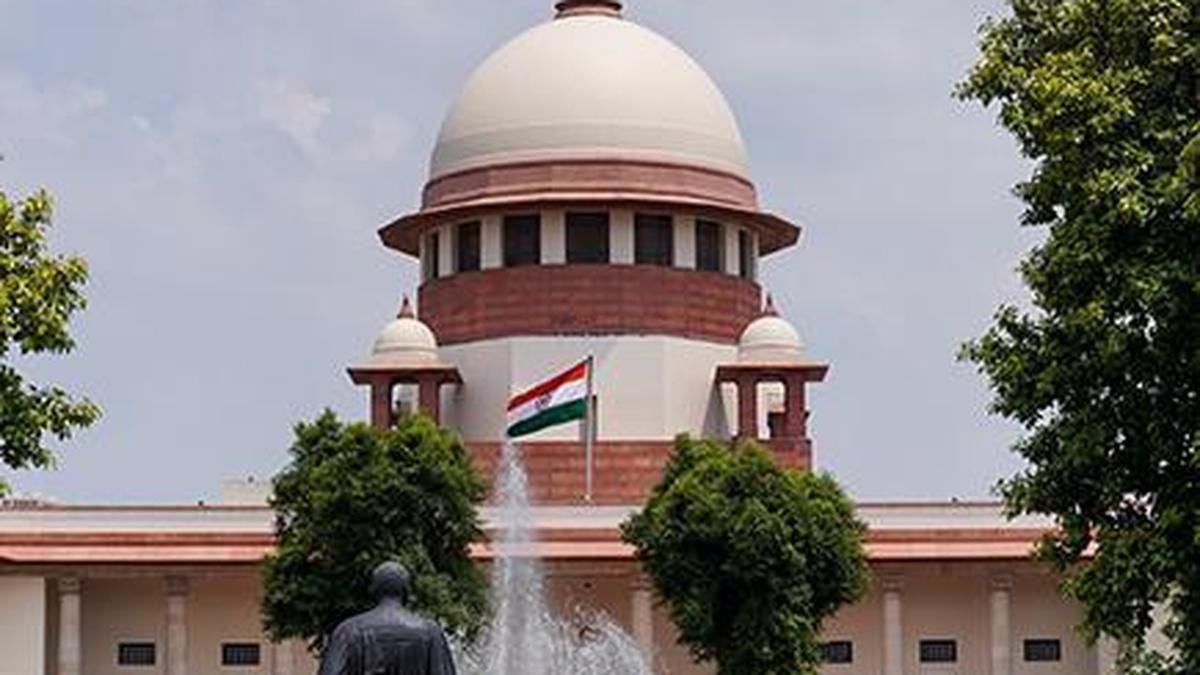
NEET-UG paper leak: Supreme Court advises meaningful continuity in NTA reforms, not Committee-hopping
Full Article
Original Source
Read the full article at Thehindu →KhanList aggregates and links to publicly available news content. We do not host full articles from third-party sources. Always verify important information with original sources.