
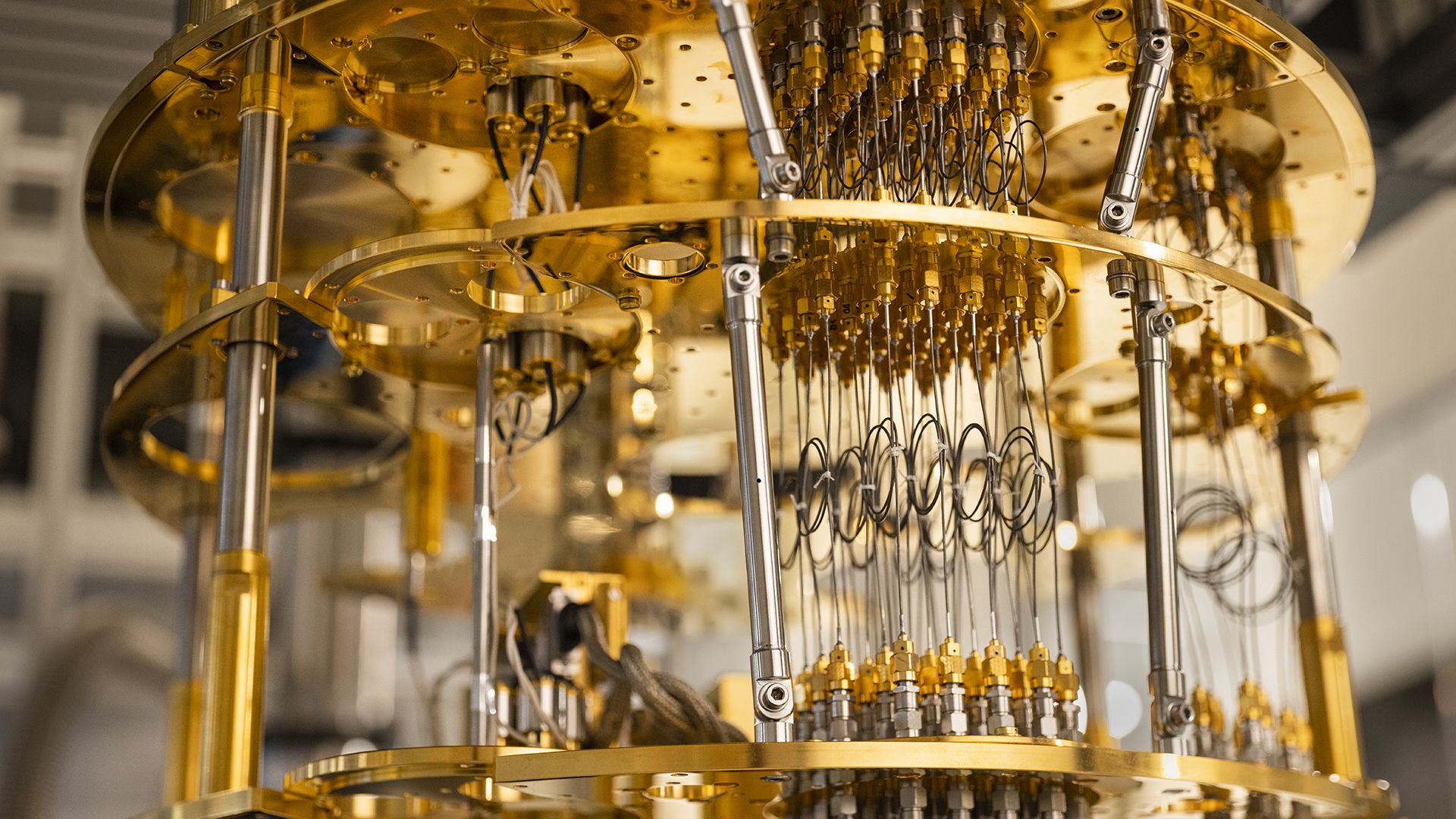
(Image credit: Microsoft) NEC was one of the first developers of quantum computers back in the 1990s, but it is now among the first companies that originally researched quantum computing technologies to quit development of quantum computing hardware, according to a Diamond Online report. However, the company will continue to investigate practical applications for quantum computers.NEC has been involved in superconducting quantum computing research since the technology's earliest days. In 1999, NEC researchers demonstrated the world's first superconducting solid-state qubit, which became a foundation of superconducting quantum computing. Variations of this technology are now being used by Google and IBM to build their quantum computers. However, it turns out that the Japanese technology giant quietly ended development of physical quantum computing machines in March 2026, and many of its researchers subsequently moved to rival Fujitsu.Despite its historical role, NEC has apparently concluded that developing commercial quantum computing hardware will take too long to generate adequate returns. As a result, the company quietly discontinued development of quantum computing machines at the end of March, according to Diamond. A number of researchers involved with the program — reportedly including a key research leader — have since moved to Fujitsu, which continues to invest heavily in superconducting quantum computing hardware.Meanwhile, NEC does not formally characterize the move as a withdrawal from quantum computing. In response to Diamond, the company declined to comment on whether it had exited quantum computer development and said that it continues to evaluate practical applications and industrialization of quantum technologies as well as conduct proof-of-concept projects with customers. Therefore, the move appears to represent an exit from development of actual quantum computers rather than from quantum technology altogether. NEC can continue working on quantum applications, software, algorithms, and customer projects without assuming the cost and risks associated with designing and building quantum processors and complete quantum computing systems.For Fujitsu, the arrival of experienced NEC researchers could strengthen an already advanced superconducting quantum computing operation. Last year Fujitsu and Riken launched a 256-qubit superconducting quantum computer and have been working toward a machine with more than 1,000 qubits in 2026. In addition, Fujitsu has outlined plans to develop systems exceeding 10,000 superconducting qubits by fiscal 2030.NEC's withdrawal is particularly notable because virtually none of the major corporate laboratories that pioneered quantum computing in the 1990s and remain intact today have completely abandoned quantum-computer hardware. IBM, the other major corporate participant in some of the earliest experimental quantum computers, has instead become one of the industry’s largest developers of quantum computing systems.NEC is no stranger to leaving businesses that have significant prospects ahead but require massive capital investments immediately. In 1990, NEC ranked No. 1 globally in semiconductor sales, ahead of Toshiba, Hitachi, Motorola, Intel, and Fujitsu. Intel subsequently overtook NEC during the 1990s as the PC microprocessor market exploded, but in 1990, NEC was significantly ahead. So, NEC's 1999 superconducting-qubit breakthrough did not come out of nowhere, but from a company with a huge semiconductor R&D organization and deep expertise in solid-state devices. By then, NEC was no longer the No. 1 semiconductor supplier, but it remained one of the world's major semiconductor companies.Get Tom's Hardware's best news and in-depth reviews, straight to your inbox.The demise of NEC's semiconductor business was not sudden. NEC dismantled its semiconductor business in stages over roughly a decade. NEC effectively gave up doing DRAM alone in 1999, when it spun off its DRAM operations into NEC-Hitachi Memory, which was named Elpida. In November 2002, NEC spun its remaining semiconductor operation — MCUs, system LSIs/SoCs and other devices — into a separate company called NEC Electronics and later renamed Renesas Electronics.Now, NEC is reportedly stepping away from quantum computer hardware as its commercialization remains distant, but development costs continue to mount. Furthermore, given NEC's current business focus — IT services, enterprise systems, aerospace and defense, telecom infrastructure, and AI and security — quantum computers are not exactly a natural fit. Follow Tom's Hardware on Google News, or add us as a preferred source, to get our latest news, analysis, & reviews in your feeds. Anton Shilov is a contributing writer at Tom’s Hardware. Over the past couple of decades, he has covered everything from CPUs and GPUs to supercomputers and from modern process technologies and latest fab tools to high-tech industry trends.
NEC has quietly quit quantum computing hardware development, report claims — company says it will continue to evaluate practical applications and industrialization of quantum technologies
Full Article
Original Source
Read the full article at Tomshardware →KhanList aggregates and links to publicly available news content. We do not host full articles from third-party sources. Always verify important information with original sources.