
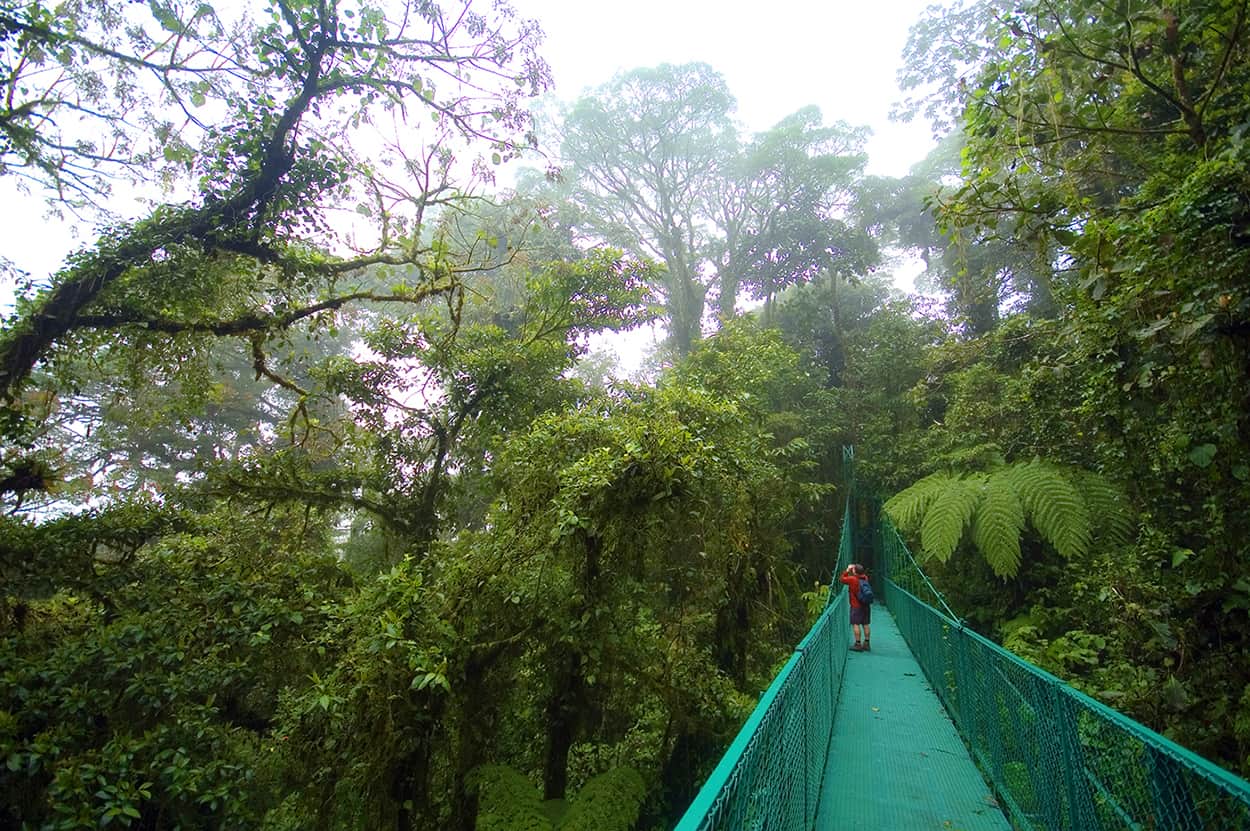
National Geographic has named Costa Rica one of five places in the world to experience forest bathing, the practice of walking slowly through a natural setting and paying deliberate attention to what you see, hear, smell and touch. The magazine’s roundup places Costa Rica alongside the Adirondack Mountains in New York, New Zealand, Kenya and Hawaii. Written by travel journalist Sunny Fitzgerald, the piece first appeared in 2019 and was refreshed earlier this month with updated figures on the forest cover. Forest bathing emerged in Japan in the 1980s as a physiological and psychological exercise called shinrin-yoku, which translates as forest bathing or taking in the forest atmosphere. National Geographic describes its original purpose as twofold, offering an antidote to burnout during the technology boom and inspiring people to reconnect with and protect Japanese forests. Japanese researchers began studying its health effects in the 1990s, and the practice has since spread as both a fitness trend and a mindfulness exercise linked to mental health. Costa Rica’s suitability for it comes down to arithmetic as about 60 percent is covered by forest, and nearly 6 percent of the world’s biodiversity is found here, according to World Bank and satellite-observation figures cited by the magazine. That combination, National Geographic writes, makes Costa Rica a forest bathing paradise with constant opportunity to notice wildlife.The magazine points to four settings and one is the misty cloud forest at Monteverde. Another is the hanging bridges suspended in the canopy near Arenal Volcano, which let visitors move through the forest rather than beneath it. A lowland rainforest trail along the Sarapiquí River offers a third option, and the article notes that a protected forest reserve just outside central San José puts the practice within reach of the capital, however it does not name the reserve. That last suggestion carries the article’s main point and that is that forest bathing is not just for the wilderness-lover and can be as simple as walking in any natural environment and consciously connecting with what is around you. For a more structured version, the magazine describes joining trained guides for a two- to three-hour excursion. In Costa Rica, the article recommends guided walks offered through Sentir Natural and led by local naturalist Manuela Siegfried, whom it identifies as the first guide certified by the Association of Nature and Forest Therapy. Siegfried was trained and certified in 2018 and has since worked as a trainer herself, mentoring guides internationally and leading the push to make the practice available in Spanish, according to the association’s guide directory. Her operation describes a typical session as roughly three hours covering no more than a kilometer (0.6 miles). The listing comes during a run of international attention for Costa Rica’s wellness and nature tourism. Two Costa Rican retreats placed in a global wellness ranking in July, and the Monteverde Cloud Forest Biological Reserve became the first protected area added to the IUCN Green List the same month. What the recognition points at is a quieter version of what already sells. Costa Rica’s tourism identity has long rested on what visitors can see, the volcanoes, the wildlife, the canopy walkways. Forest bathing asks for the opposite, which is to stop moving through all of it and stand still inside it instead.
National Geographic Names Costa Rica a Forest Bathing Paradise
Full Article
Original Source
Read the full article at Ticotimes →KhanList aggregates and links to publicly available news content. We do not host full articles from third-party sources. Always verify important information with original sources.