
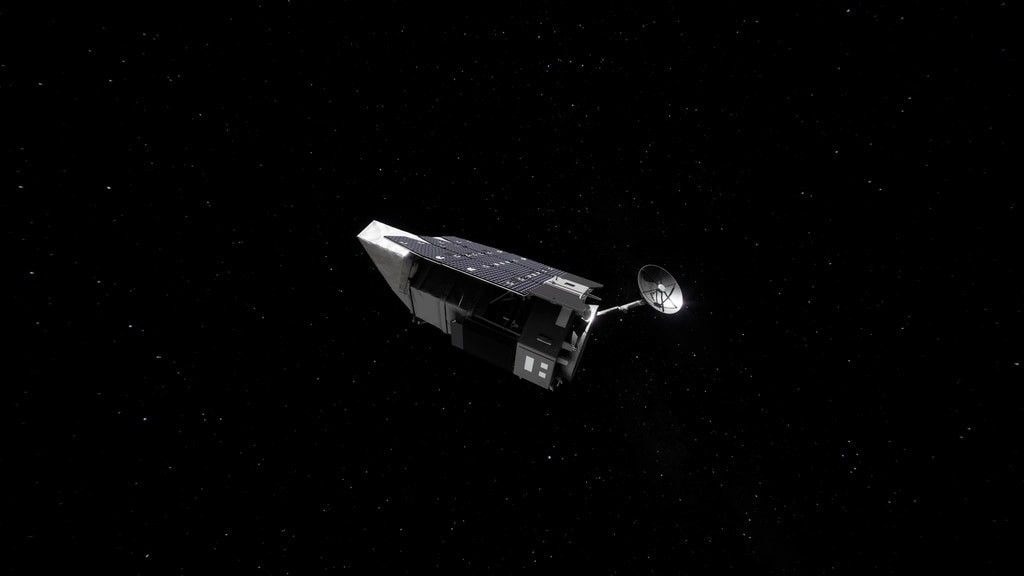
Nasa's Nancy Grace Roman Space Telescope has saved a surprising amount of fuel while travelling towards its new home in space. The saved fuel could give the observatory far more time to study the universe than originally planned.Nasa now estimates that Roman has enough fuel for much longer science operations than were initially planned; more than twice the 10-year fuel budget it was designed for.The estimate follows a highly accurate manoeuvre that used far less fuel than expected. The Nancy Grace Roman Telescope is seen at the Nasa space facility. (Photo: Nasa) “As a result of exquisite planning by our orbital dynamics team, brilliant execution by the operations team, and a precise launch from SpaceX, Roman has fuel for at least 22 years of potential science operations,” said Jamie Dunn, center director at Nasa’s Goddard Space Flight Center. A LONG JOURNEY AHEADRoman launched aboard a SpaceX Falcon Heavy rocket from Nasa's Kennedy Space Center in Florida on August 30.The telescope is now travelling towards a special location called the second Sun-Earth Lagrange point, or L2, about 15 lakh km from Earth. It is expected to reach its final orbit around L2 roughly 100 days after launch, in early December. L2 is useful because it allows Roman to maintain a relatively stable position while observing the universe, with the Sun and Earth on the same side of the spacecraft.Falcon Heavy launches @NASA’s Nancy Grace Roman Space Telescope from pad 39A in Florida, beginning its more than three-month journey to its destination where it will generate never-before-seen photos of the universe pic.twitter.com/L3gHrBiQ08— SpaceX (@SpaceX) August 30, 2026Once there, Roman would need small adjustments roughly every 28 days to remain in position.Roman is one of Nasa's major new space observatories.The observatory will survey huge areas of the sky in infrared light, helping scientists investigate dark energy and dark matter, study how galaxies form and evolve, and find planets beyond our solar system.HOW DID ROMAN TELESCOPE SAVE FUEL?The secret behind the saved fuel was the first major course correction that was carried out on August 31.Nasa said it was completed with more than 99% accuracy and used only about 18 kg of fuel, compared with the roughly 200 kg that had been set aside for the manoeuvre.That single saving could add about four years to Roman's potential operating life.I’ll take ‘Launching Soon’ for 1000, Ken.Want to be ready for an entire Jeopardy category on NASA's Nancy Grace Roman Telescope? Here's everything you need to know about our latest deep space telescope in just 7 minutes. pic.twitter.com/SFqamPTsJd— Nancy Grace Roman Space Telescope (@NASARoman) August 26, 2026Furthermore, Roman was lighter at launch than the maximum weight Nasa had used when planning its fuel needs, allowing engineers to load extra propellant, potentially adding another four years.The spacecraft, however, still has another important manoeuvre ahead.Nasa expects the second course correction later this month to be much smaller, potentially saving even more fuel.If those savings hold, Roman could have enough fuel for at least 22 years of potential science operations.That does not mean Nasa has guaranteed a 22-year mission.But it does mean the telescope could potentially keep watching the universe for much longer than originally planned, giving scientists many more years to make use of its powerful view of the cosmos.- EndsPublished On: Sep 15, 2026 11:47 IST
Nasa's Roman Telescope launch was so precise that its life has doubled
Full Article
Original Source
Read the full article at Indiatoday →KhanList aggregates and links to publicly available news content. We do not host full articles from third-party sources. Always verify important information with original sources.