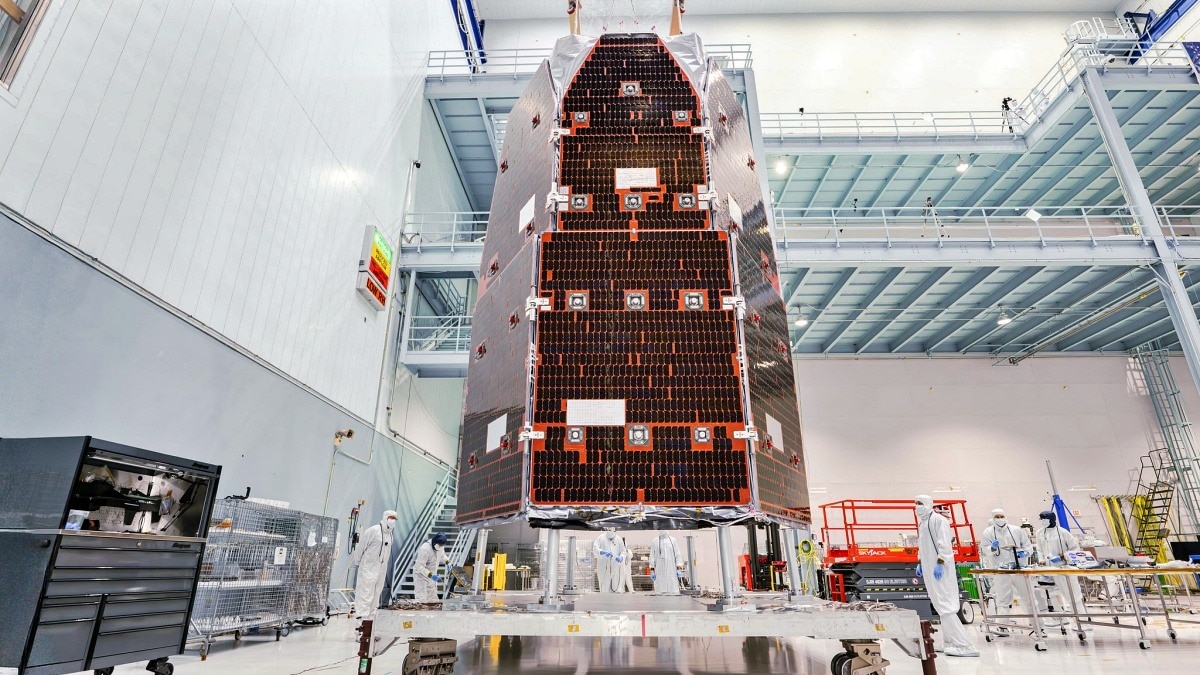
Nasa has officially set Sunday, August 30, 2026, as the launch date for its highly anticipated Nancy Grace Roman Space Telescope, the space agency's next major space observatory after the James Webb Space Telescope.The spacecraft is scheduled to lift off aboard a SpaceX Falcon Heavy rocket from Launch Complex 39A at Nasa's Kennedy Space Center in Florida at around 4:56 pm IST. An artist's concept of the Nancy Grace Space Telescope. (Photo: Nasa) The mission is launching nearly nine months ahead of its original schedule.Named after Nancy Grace Roman, Nasa's first chief of astronomy, the telescope is expected to transform scientists' understanding of the universe by tackling some of astronomy's biggest mysteries, including dark matter, dark energy and planets beyond our solar system. An image of Nancy Grace observing her work. (Photo: Nasa) TO SEE A BIGGER PICTUREUnlike the James Webb Space Telescope, which focusses on small regions of the universe in extraordinary detail, Roman is designed to scan vast areas of the sky quickly.Nasa said that its primary instrument can capture images with Hubble-like clarity but over an area at least 100 times larger, allowing astronomers to survey billions of galaxies and hundreds of millions of stars far more efficiently. After launch, Roman will travel to the Sun-Earth Lagrange Point 2 (L2), around 1.5 million kilometres from Earth, where it will operate alongside Webb.From this stable location, the telescope will have an uninterrupted view of deep space while remaining shielded from much of the Sun's and Earth's heat. Technicians and engineers at Nasa’s Kennedy Space Center prepare the telescope. (Photo: Nasa) WHY IS THE NANCY GRACE SPACE TELESCOPE A BIG DEAL?Roman's wide-field surveys are expected to help scientists investigate why the universe's expansion is accelerating, a phenomenon linked to the mysterious force known as dark energy.The observatory will also map the distribution of dark matter, discover thousands of exoplanets using multiple techniques, and observe exploding stars, black holes and distant galaxies.Getting the widest, clearest view of ingredients that make up me and you!Our soon-to-launch Roman Space Telescope will provide both, pairing a large view of space with infrared heat vision, changing the game for studying nebulae. https://t.co/uf7JOc3Drd pic.twitter.com/R6vf39qe2s— Nancy Grace Roman Space Telescope (@NASARoman) July 24, 2026Nasa recently completed fuelling the spacecraft with hydrazine, clearing one of the final major milestones before launch.Engineers will now integrate the observatory with its launch vehicle and encapsulate it inside the Falcon Heavy payload fairing ahead of liftoff.Once operational, the Nancy Grace Roman Space Telescope is expected to generate an unprecedented volume of astronomical data, complementing discoveries made by Hubble and Webb while opening a new chapter in humanity's exploration of the cosmos.- EndsPublished On: Jul 30, 2026 12:12 IST
Nasa sets late-August launch date for Nancy Grace Roman Space Telescope
Full Article
Original Source
Read the full article at Indiatoday →KhanList aggregates and links to publicly available news content. We do not host full articles from third-party sources. Always verify important information with original sources.