
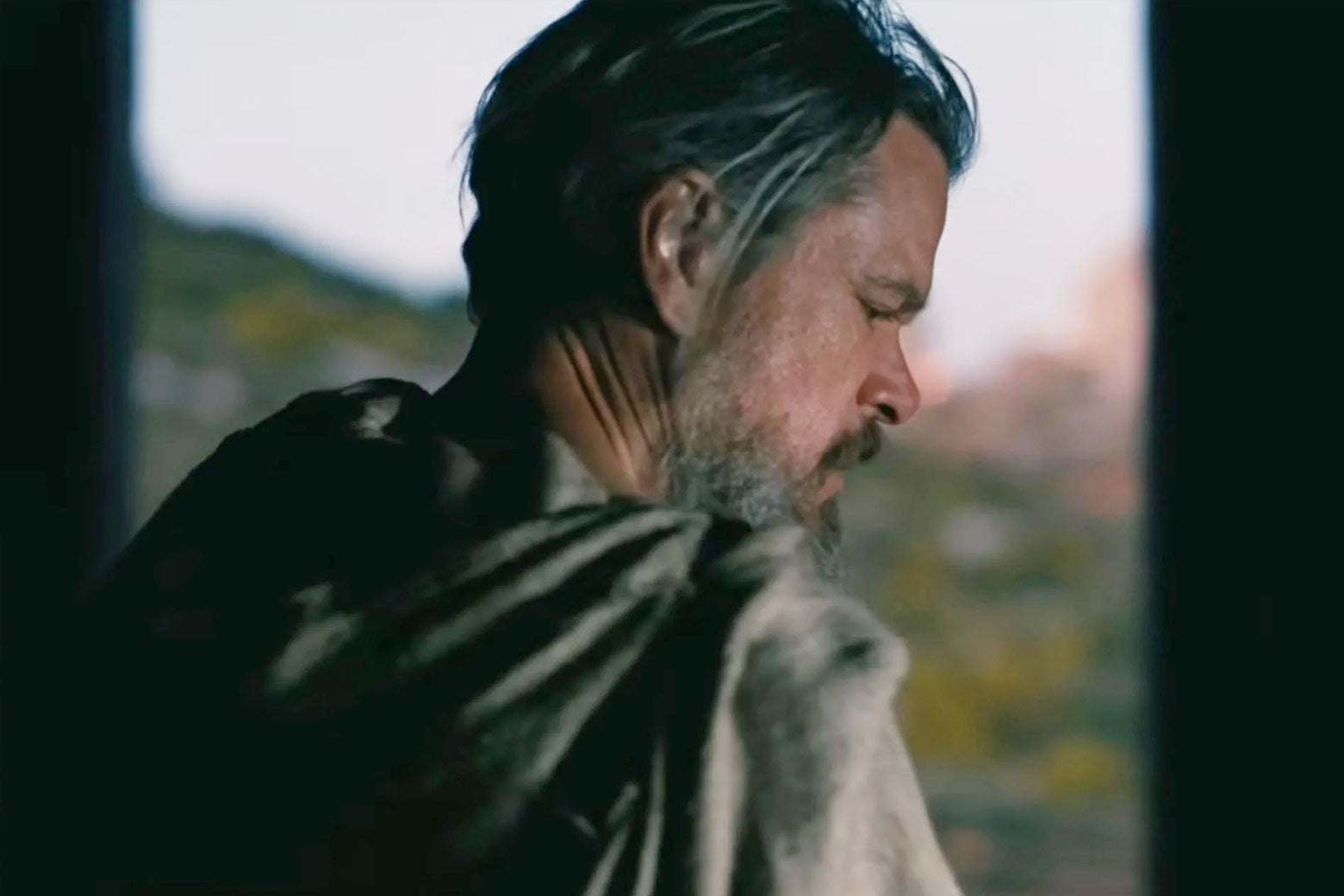
School I Taught My Student the Most Important Lesson From The Odyssey. Then He Lived It. After my student was arrested by ICE agents, I saw the concept of Zeus’ law in action. Universal Pictures Sign up for the Slatest to get the most insightful analysis, criticism, and advice out there, delivered to your inbox daily. Sitting in the theater, watching Christopher Nolan’s The Odyssey on opening day, I tried to calculate how many students had read the ancient epic with me in ninth grade English: perhaps approaching 2,000? I have been teaching it for more than a decade; some of them would now be older than I was when I had them in my classroom. I wondered if they would see the film, wherever life had taken them, and whether they would remember our discussions and debates. Are leaders responsible for their subordinates’ poor decisions? Is it more important to be brave or clever? How can we overcome the inevitable temptation to stray off course? “This isn’t just an ancient myth,” I tell the gaggle of teenagers every autumn as we start our year together. “Homer asks the muse to ‘sing for our time too.’ ” The film was still on my mind at almost midnight, when I got an urgent text from a fellow teacher. One of those students—now just two weeks away from the start of his senior year at our school—had been taken into custody by Immigration and Customs Enforcement agents as he boarded a plane for a prospective college visit, caught in the recent surge of airport arrests that seem to stem from a partnership between the agency and the Transportation Security Administration. In the film, Nolan’s characters invoke Zeus’ law, the ancient code of hospitality, but I teach my students its Greek term, xenia. It comes from the word xenos, meaning “stranger,” and it refers to how one treats neither family nor neighbors but instead those who are different: foreign. The Greeks believed that they were obligated to help those who came to them in need, that if a stranger, posing no threat to you, appeared at your doorstep, you had a sacred duty to give them shelter and treat them as a respected guest, offering them what assistance you could on their journey. This tradition trickled down into early Christian practice. Eurycleia’s washing of beggar-disguised Odysseus’ feet gave rise to a verse from the Gospel of Matthew: “I was hungry and you gave me something to eat, I was thirsty and you gave me something to drink, I was a stranger and you invited me in.” The Greek system of hospitality wasn’t inexhaustible, and guests were expected to operate within the same bounds of respect and good judgment as their hosts. (Nolan’s film illustrates these limitations during the scenes in which the suitors openly disparage and covertly plot against Penelope and Telemachus.) But Zeus’ law is clear: Any traveler willing to behave deserved a safe place. Alim, my student, arrived legally in the United States in May 2022, at the age of 14. Once here in Houston, he and his family began the legal process of seeking asylum from their home country of Russia. I don’t know the circumstances that led them to leave, and I never asked. (Another particularity of xenia is to offer assistance without question or judgment.) What I did know was that Alim is a kind, polite young person who works hard every day to make himself and our school community better. A year after his arrival here, English was still a challenge for him, but he worked diligently to master it; he went from struggling to find the right words when I had him in ninth grade to earning a college-credit-qualifying score on his AP English Language exam in 11th. He started a Russian culture club to share some of his background with his classmates and organized a celebration for International Women’s Day. When I asked for volunteers to stay after school and move heavy boxes to help organize the English Department book room, Alim showed up, day after day. But ICE agents said his visa was no longer valid and, as he was newly 18 years old, separated him from his family and sent him to the adult detention center in Montgomery, Texas. Relative to so many of those arrested under the current surge, Alim was lucky: Within hours, offers of support from journalists, attorneys, educators, parents, and activists came pouring in on social media. The office of our congresswoman, Lizzie Fletcher, immediately began working to advocate for Alim and his family. His friends and classmates, many of whom had participated in a walkout protest of ICE’s tactics and targets six months earlier, started to organize publicity for his case. Part of the logic of xenia is that a visiting stranger, however humble, might be a god in disguise, ready to punish the inhospitable. In the film, though, Robert Pattinson’s Antinous scoffs at this superstition. Nolan’s choice of his signature twist in the climax suggests that it’s humanity rather than the divine that must motivate us to treat others justly. After three days, Alim was released from custody and allowed to return to his family and, presumably in a few weeks, school, where he will once again be in my English class for his senior year and where we will begin by reading Homer’s other epic, the Iliad. Nolan’s Odyssey concludes with Matt Damon’s Odysseus delivering an ominous prediction that a society that cannot abide by Zeus’ law is one that is destined for collapse. While Alim is home safely, thousands of others who have been arrested by ICE and who are just as deserving of grace and mercy are still locked away or sent back to the same lands they fled. Nolan’s muse is singing for our time too. Get the best of news and politics Sign up for Slate's evening newsletter. Books Education Immigration Movies The Odyssey
My Student Was Just Arrested by ICE. The Odyssey, if You Can Believe It, Had a Role to Play.
Full Article
Original Source
Read the full article at Slate →KhanList aggregates and links to publicly available news content. We do not host full articles from third-party sources. Always verify important information with original sources.