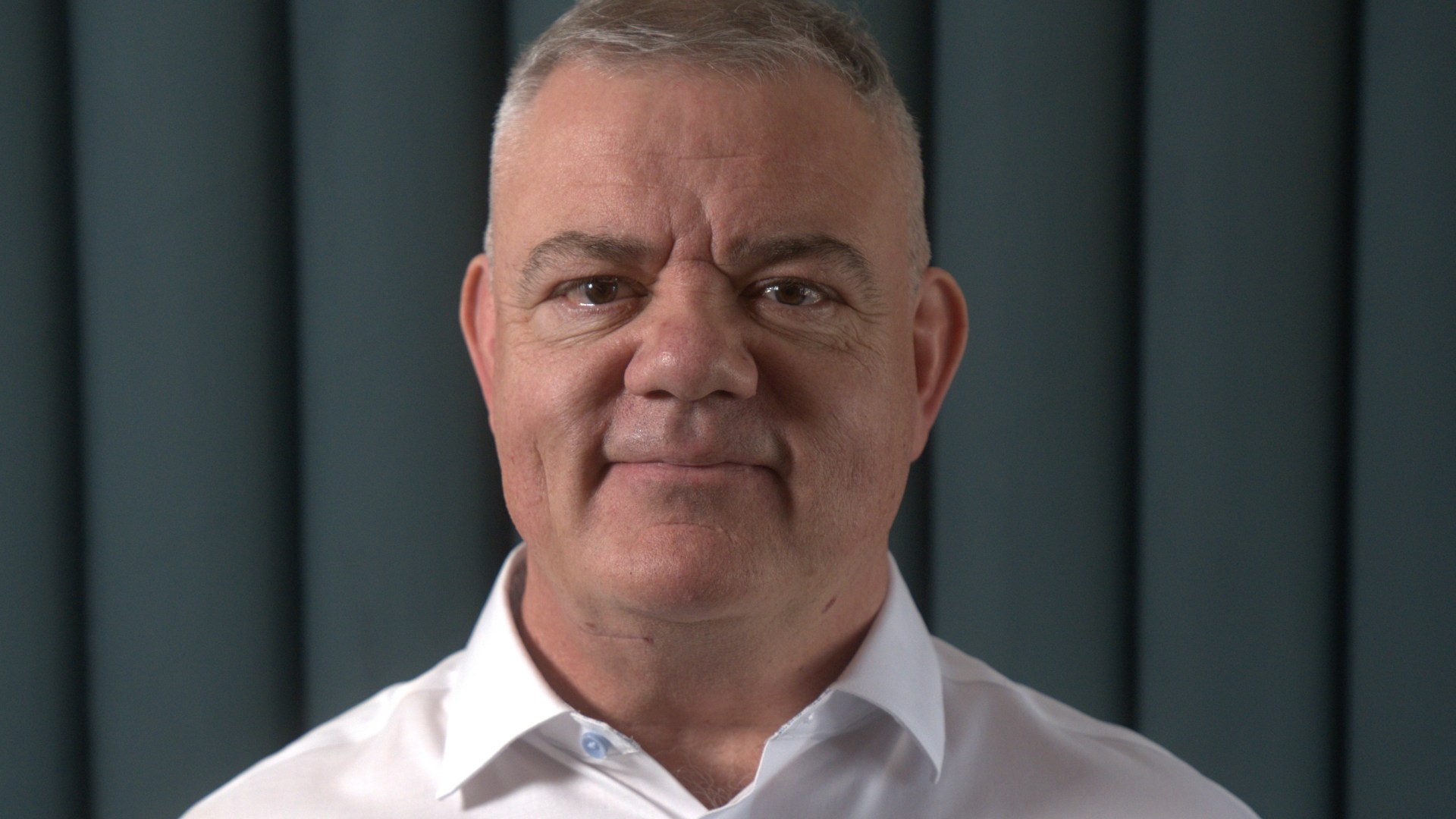
JUST half an hour into his working day, Jeremy Holme was already ready for a nap. Spending most of his day on the road, he was fuelled by caffeine but would pull into motorway services for a kip before collapsing on the sofa at 4pm. Jeremy Holme, 57, found out sleep apnoea would stop his breathing 55 times an hour while he slept Credit: Supplied The condition which affects up to 8million Brits causes snoring Credit: Getty The 57-year-old engineer, from near Warrington, Cheshire, later discovered the reason – sleep apnoea, a condition estimated to affect up to eight million people in the UK. It would stop his breathing 55 times an hour while he slept, starving his brain of oxygen and causing exhausting symptoms the next day. Today, however, the dad-of-two says he feels like a new man thanks to a pioneering NHS implant. Not only has it transformed his sleep, but it’s helped him lose weight, reignited passion in the bedroom with partner Tracey, 51, who works in NHS administration, and given him the energy to enjoy life again. The device, called Inspire, works like a pacemaker. It monitors his breathing and every time Jeremy takes a breath, a gentle pulse moves the tongue and prevents it from collapsing backwards, blocking the airway during sleep – a key reason sleep apnoea occurs. Jeremy is one of around 85 people in the UK currently using the implant with 135,000 benefiting globally. “It sounds dramatic, but I felt reborn,” he tells Sun Health. “The difference after that first night was like black and white. “I slept for nine hours and, for the first time in years, it genuinely felt like I’d slept for nine hours.” Before his diagnosis in August 2020, Jeremy was constantly exhausted – a symptom of the condition, alongside headaches, lack of focus and mood swings. His job involved driving around 25,000 miles a year, testing electrical appliances for safety. “My memory was failing,” he says. “I’d put a postcode into my phone and, by the time I’d walked to the van 30 seconds later to enter it into the sat-nav, I’d forgotten it.” Jeremy regularly had to stop at motorway services to sleep, adding: “I looked knackered. I had bloodshot eyes and bags under my eyes. I’d walk through the door, sit on the sofa and be asleep within seconds.” As his energy levels plummeted, so did his motivation to exercise. “I used to do 50 press-ups every day and that all stopped,” he says. “My muscle tone disappeared and I started putting on weight because I just didn’t have the energy. “I felt like a distant dad – almost like an ornament in the room. There’d be family conversations going on, and I’d think, ‘I just can’t do this.’ Not because I didn’t care, but because I was so tired.” It was a previous partner who first realised something was seriously wrong with Jeremy’s snoring. Jeremy’s life drastically improved thanks to Inspire, a device that works like a pacemaker, and he now enjoys life again Inspire is a small device, around the size of a watch face, implanted beneath the skin. One lead monitors breathing while another stimulates the hypoglossal nerve, which controls the tongue by gently moving it forward during sleep. This prevents the airway from becoming blocked Credit: supplied He says: “She told me I could go 30 seconds without breathing and she’d end up giving me a nudge to get me started again.” She also noticed his snoring had become much worse – one of the most common signs of sleep apnoea. Jeremy visited his GP and was referred to a sleep clinic for tests, which revealed he had obstructive sleep apnoea (OSA), the most common form of the condition. In people with OSA, the tongue muscles and surrounding tissues relax during sleep. When the tongue falls back, the upper airway closes and breathing stops for longer than 10 seconds. The resulting lack of oxygen leads to frequent waking during the night, even if the person does not remember these wake-ups. They may choke, gasp or take a large breath at intervals in the night, as well as snore. Jeremy believes the cause of his OSA is a broad neck. Other causes include obesity, smoking and sleeping on your back. Left unchecked, OSA can be a silent killer, leading to other issues, including heart problems. Jeremy says: “Results showed I was stopping breathing 55 times an hour. “I wasn’t scared. I just wanted to know what we were going to do about it.” Jeremy was prescribed a CPAP (Continuous Positive Airway Pressure) machine, which delivers a steady stream of air through a mask to keep the airway open during sleep. It’s the gold-standard treatment, but Jeremy struggled to tolerate it. “I was overjoyed when I got it because I thought, ‘Great, I’m finally going to get a decent night’s sleep,'” he says. “I’d seen it work for dad [who also has OSA], who is still leading a very active life. “But it just wasn’t for me. I had this piece of technology that was supposed to help me sleep but it kept waking me up.” Despite trying four different masks, he continued to struggle, and it became a running joke between him and his then-partner. “We used to do Top Gun impressions because I sounded like Maverick in the cockpit,” he laughs. It wasn’t exactly attractive.” Determined to find another solution, Jeremy started researching alternatives online and came across Inspire therapy, which was introduced on the NHS in 2023. In November 2024, Jeremy underwent surgery at one of the UK’s specialist Inspire centres at Trafford General Hospital in Greater Manchester. The procedure took less than two hours. A small device, around the size of a watch face, was implanted beneath the skin below his collarbone. One lead monitors breathing while another stimulates the hypoglossal nerve, which controls tongue movement. By gently moving the tongue forward during sleep, it prevents the airway from becoming blocked. Inspire is currently available at 16 treatment centres across England, based within hospitals. Patients who are already using, or have tried CPAP, have moderate-to-severe OSA and are managed by an NHS respiratory medicine or sleep medicine department can request a referral and be considered. According to Ed Holyoak, regional director of the UK and Nordics for Inspire Medical Systems, patients are overjoyed at the results. “We have people who just want to shout from the rooftops about it,” he tells The Sun. “Our satisfaction rates are above 90 per cent, which for a medical procedure is huge. The vast majority of patients prefer it to CPAP.” Jeremy says the procedure didn’t hurt but his neck was swollen for several weeks. The device was activated six weeks after the op and, using a handheld remote control, Jeremy switched it on before going to sleep with Tracey. The next morning changed everything. “Tracey said, ‘Well?’ and I got emotional,” he says. Even talking about it now gives me goosebumps.” The renewed energy quickly spilled over into other areas of his life. Before treatment, tiredness had driven unhealthy habits and Jemery reached 17st. He says: “When you’re just trying to survive the day, you don’t care what you’re eating. “I was drinking loads of coffee and constantly snacking. I got my motivation back and started exercising again. I quite quickly lost about two and a half stone in one year.” He adds: “I’m much more present with my family now. We have proper conversations around the dinner table “There was a time when my daughter would invite me to school events and I’d think, ‘If I have to’. Now she doesn’t even ask. She just gets me a ticket because she knows I’ll be there.” His relationship with partner Tracey has improved too. “Whenever Tracey suggests doing something now, the answer isn’t, ‘No’ or ‘I can’t be bothered’,” he says. And there’s another unexpected benefit. “When I get into bed and don’t switch the implant on straight away, that’s become a bit of a signal these days – a sign there might be some romance on the cards.” He laughs. “I definitely have more energy for romance now. “I’ve always had a healthy appetite for bedroom activities, but now I’ve actually got the energy to go with it. So I’ve got a very happy partner.” For Jeremy, the impact has been immeasurable. “I can’t tell anyone else it will change their life, but it has definitely changed mine,” he says. “I’d tell anyone interested to speak to their sleep specialist and find out what options are available. “If I couldn’t have had this on the NHS, knowing what I know now, I’d have remortgaged my house for it. It’s a no-brainer because it’s completely changed my life.” ALL ABOUT SLEEP APONEA By Dr Allie Hare, a consultant in sleep medicine, at Guy’s and St Thomas’ Specialist Care in London. Sleep apnoea causes oxygen levels in the blood to drop repeatedly during the night and means that sleep is disrupted. People with sleep apnoea can therefore have very disturbed sleep, waking feeling as though they haven’t slept well and can be tired and sleepy in the daytime. If left untreated, people with significant sleep apnoea can be at increased risk of problems with heart disease, strokes and car accidents. Sleep apnoea is very common: in the UK we believe around 8 million people have sleep apnoea, although around 80% of those people are currently undiagnosed. For many people, sleep apnoea is caused by increased weight in their neck area, due to obesity. However, people can also have sleep apnoea without being obese – large tonsils, for example, make the airway more narrow. It is very important to carefully consider the right treatment for the individual. The most effective treatments for sleep apnoea include weight loss (for people who are overweight with sleep apnoea), CPAP therapy, specialised mouthguards, known as mandibular advancement splints, and nerve stimulator treatments, such as Inspire. If CPAP is the right treatment, plenty of support and troubleshooting problems early should be provided. People with sleep apnoea should avoid online ‘quick fixes’ like mouth taping (which can be dangerous in people with sleep apnoea) and nose strips. My top tips are: Maintain a healthy weight: snoring and sleep apnoea both tend to worsen if we gain weight, especially around the neck area. Avoid alcohol and medicines which make you sleepy: these can worsen sleep apnoea. Ensure you have enough sleep at night: for most adults this is between 7 and 9 hours per night. Having a regular bedtime and wake up time can also help improve your sleep. See your doctor early if you are snoring very loudly. People report you stop breathing in your sleep and/or you wake often at night and feel sleepy in the daytime.
My snoring left me grumpy until device ‘cured’ condition that plagues 8MILLION – I’ve lost 2.5st & got my sex life back
Full Article
Original Source
Read the full article at Thesun →KhanList aggregates and links to publicly available news content. We do not host full articles from third-party sources. Always verify important information with original sources.