
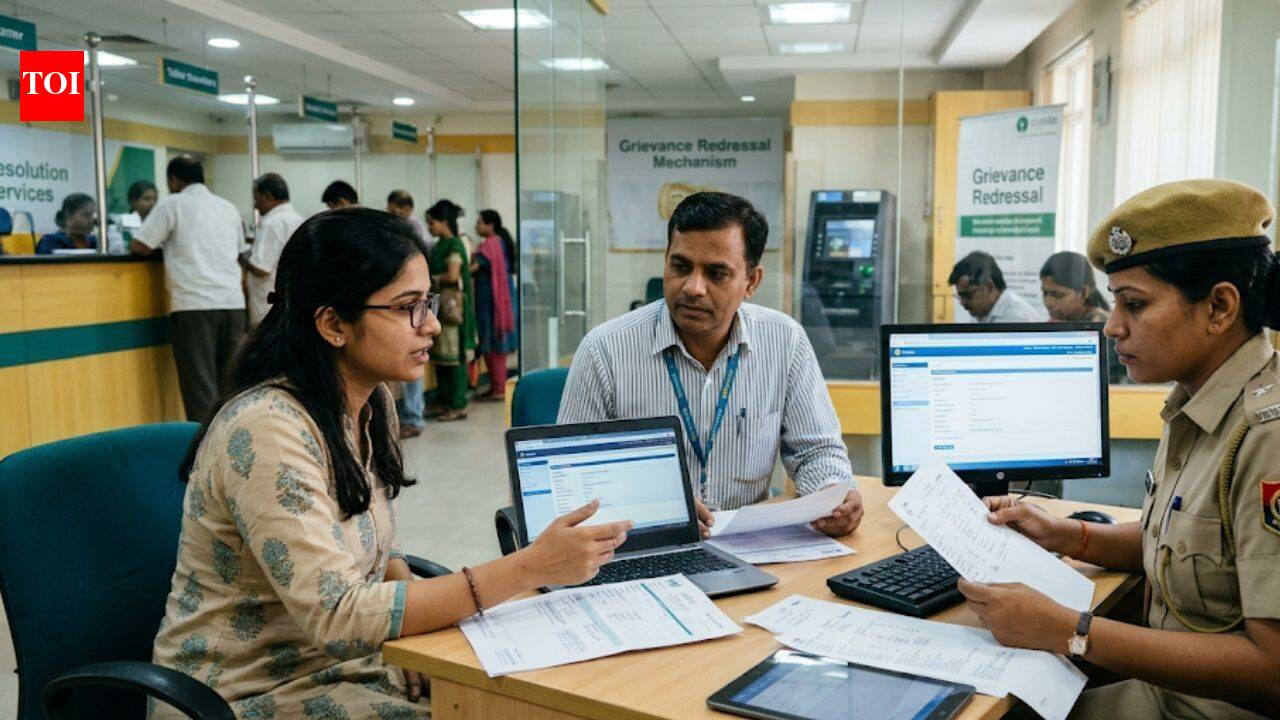
A debit freeze on bank accounts occurs due to accidental transfers linked to cybercrime (AI image)NEW DELHI: What if your bank account gets a debit freeze because someone unknowingly transfers money to you, only for it to turn out that the money is linked to cybercrime proceeds?A debit freeze means your bank has blocked all outgoing money movements—such as ATM withdrawals, UPI payments, internet banking transfers, and card swipes—while still allowing incoming deposits.In some cases, even a portion of the account balance may be frozen, leaving account holders caught in an unexpected legal and financial ordeal. Earlier, getting such accounts removed from the suspicious list and having the freeze lifted was a daunting task, forcing account holders to run from pillar to post. However, with the introduction of the Money Restoration Module (MRM) and Grievance Redressal Mechanism (GRM), the process is becoming simpler, offering a more streamlined resolution process and much-needed relief to affected account holders.MRM and GRM simplify relief for affected account holders.Why these mechanisms matterProtect innocent account holders from arbitrary financial restrictionsEven a suspicious credit of Re 1 may trigger restrictions on the entire accountAccount holders may be unaware of the source of such transactionsAccount freezes can also disrupt essential expenses, business and medical paymentsProvide them an opportunity to explain transactions and establish the legitimacy of fundsRequests and disposalUnder GRM, Delhi Police received 5,833 (from April end) requests, of which 4,820 were disposed of till Oct 19Delhi Police received 17,336 requests under MRM; of these, 15,077 have been resolvedHow GRM worksA customer approaches the bank for unfreezing the account, removal of lien or restoration of digital bankingA complaint is registered through the prescribed grievance channelBank and designated police/grievance officers examine the complaintDissatisfied customers can escalate the matter to district and state grievance officersThe process may involve a meeting between the investigating officer, account holder and bank officialsDefined timelines govern grievance resolutionDirections may be issued for removing the lien, unfreezing the account and restoring banking servicesHow MRM worksCustomer approaches The National Cybercrime Reporting Portal (NCRP) for restoration or interim custody of the disputed amountThe held amount is verified and an application is submittedThe matter proceeds through the police or court, as applicableThe investigating officer examines the transaction and records findingsThe account holder gets an opportunity to respond and submit supporting evidenceA joint meeting with police and bank officials may be conductedThe competent authority then decides whether the money should be restored to the victim or released to the account holderWhy an account is frozenAccording to deputy commissioner of police (IFSO) Anyesh Roy, the defrauded money typically moves into multiple bank accounts. Most of them are mule accounts and putting the defrauded money on hold in these accounts saves the victims’ hard-earned money. But some of the defrauded money may be received by bona fide account holders in lieu of genuine transactions. This mostly happens in the fourth or fifth layers of transactions, after passing through several other accounts. The account holder may be unaware of the unlawful nature of the money involved in these transactions, Roy adds.“When the cyber fraud money trail is investigated, action is taken in two ways: if the account is involved in multiple suspicious transactions, the entire account is debit-frozen, restricting all debit transactions; in other cases, a lien is placed on the suspected amount. In the latter case, account holders can continue using their accounts but cannot withdraw the disputed amount that has been put on hold,” he says.
My money, my account. Why am I locked out?
Full Article
Original Source
Read the full article at Timesofindia →KhanList aggregates and links to publicly available news content. We do not host full articles from third-party sources. Always verify important information with original sources.