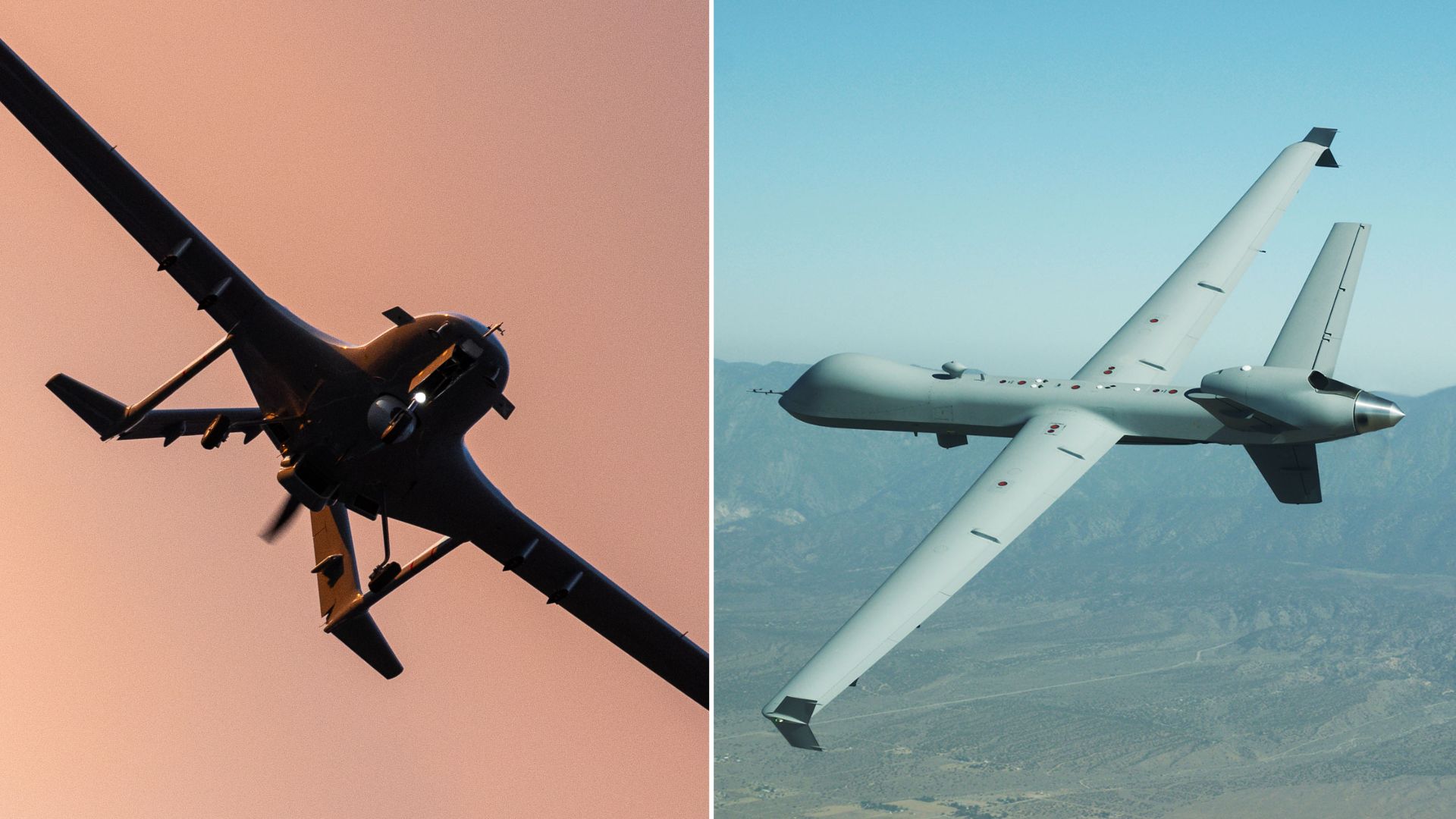
The MQ-9 Reaper and Bayraktar TB2 have become two of the world’s most recognizable combat drones, but comparing them isn’t as straightforward as it seems. Both are classified as Medium-Altitude Long-Endurance (MALE) unmanned aircraft, yet they were designed for very different missions. The American MQ-9 Reaper prioritizes long-range intelligence gathering and heavy precision strikes, while Türkiye’s Bayraktar TB2 emphasizes affordability, operational flexibility, and ease of deployment. So, which drone is more capable? Design philosophies for both platforms According to the U.S. Air Force, the MQ-9 Reaper is employed primarily as an intelligence, surveillance, and reconnaissance (ISR) platform and secondarily as a precision strike aircraft. Its long endurance, advanced sensor suite, satellite communications, and precision-guided weapons allow it to track and engage high-value, time-sensitive targets over vast distances. The Bayraktar TB2, meanwhile, was designed by Baykar as a lighter, lower-cost armed drone capable of performing reconnaissance and precision strikes for countries that may not require, or cannot acquire, a larger system like the Reaper. Baykar describes it as one of the world’s most actively deployed UAVs, with more than 27 hours of demonstrated endurance and fully automatic taxi, take-off, landing, and cruise capabilities. Performance: The Reaper is in another weight class On paper, the MQ-9 Reaper is significantly larger and more powerful. General Atomics states that the MQ-9A has an endurance exceeding 27 hours, a service ceiling of 50,000 feet, a top speed of around 240 knots (about 445 km/h), and a payload capacity of 1,746 kilograms. Powered by a turboprop engine producing roughly 900 horsepower, it is designed for persistent operations across large theatres of war. By comparison, the Bayraktar TB2 has a 12-meter wingspan, a maximum take-off weight of 700 kilograms, an operational altitude of around 16,000 feet, a flight endurance exceeding 27 hours, and a payload capacity of 150 kilograms, according to Baykar. The numbers make one thing clear. The Reaper is not simply a larger TB2. It belongs to an entirely different performance category. Sensors and weapons The MQ-9’s greatest advantage lies in its sophisticated sensor suite. The U.S. Air Force says the aircraft combines electro-optical and infrared cameras, laser designation systems, synthetic aperture radar, and secure multi-mode communications, allowing operators located thousands of kilometers away to conduct surveillance while simultaneously directing precision strikes. Typical weapons include AGM-114 Hellfire missiles, GBU-12 Paveway II laser-guided bombs, and GBU-38 JDAMs. The Bayraktar TB2 carries a more modest but highly effective payload. Its four hardpoints typically employ ROKETSAN MAM-L and MAM-C laser-guided munitions, which have proven effective against armored vehicles, artillery positions, and light fortifications. Although it cannot match the Reaper’s payload, its precision weapons have demonstrated considerable battlefield effectiveness in multiple conflicts. Combat experience Both drones have built impressive operational records. The MQ-9 Reaper has flown extensively with the U.S. Air Force and allied operators in Afghanistan, Iraq, Syria, Africa, and maritime security missions, serving as one of the military’s primary ISR and strike platforms. Its long loiter time allows it to monitor targets for hours before engaging if necessary. The TB2 rose to international prominence during conflicts in Libya, Nagorno-Karabakh, and the early stages of the Russia-Ukraine war, where it was used to destroy armored vehicles, logistics convoys, artillery systems, and air-defense assets. Defense analysts caution, however, that its success depended heavily on favorable battlefield conditions and diminished as more advanced integrated air-defense systems were introduced. Cost and accessibility Perhaps the biggest difference between the two aircraft is cost. Although official procurement prices vary by customer and configuration, the MQ-9 Reaper is a high-end strategic asset that requires sophisticated satellite communications infrastructure, extensive maintenance, and highly trained operators. The Bayraktar TB2 is considerably less expensive to purchase and operate, making it attractive to countries seeking an affordable armed drone with proven combat capability. That lower cost has helped Baykar secure export agreements with dozens of nations and establish the TB2 as one of the world’s most successful military drone exports. Which drone is better? There is no universal winner because the two aircraft solve different problems. If the mission requires long-range surveillance, heavy weapons, satellite-controlled operations, and persistent intelligence gathering, the MQ-9 Reaper remains one of the world’s most capable operational combat drones. If affordability, rapid deployment, and cost-effective precision strikes are the priority, the Bayraktar TB2 offers exceptional value while requiring far less infrastructure. It is also worth noting that this type of drone may prove to be far more effective in high-speed, swarm-defined drone warfare seen in the Russia-Ukraine war or the US war on Iran. Rather than rivals, the Reaper and TB2 represent two distinct philosophies of unmanned warfare. One delivers maximum capability regardless of cost. The other demonstrates how a relatively inexpensive drone can still reshape modern battlefields when paired with effective tactics and operational planning. Recommended ArticlesGet the latest in engineering, tech, space & science - delivered daily to your inbox.Kaif Shaikh is a journalist and writer passionate about turning complex information into clear, impactful stories. His writing covers technology, sustainability, geopolitics, and occasionally fiction. A graduate in Journalism and Mass Communication, his work has appeared in the Times of India and beyond. After a near-fatal experience, Kaif began seeing both stories and silences differently. Outside work, he juggles far too many projects and passions, but always makes time to read, reflect, and hold onto the thread of wonder.
MQ-9 Reaper vs Bayraktar TB2: Which combat drone is more capable?
Full Article
Original Source
Read the full article at Interestingengineering →KhanList aggregates and links to publicly available news content. We do not host full articles from third-party sources. Always verify important information with original sources.