
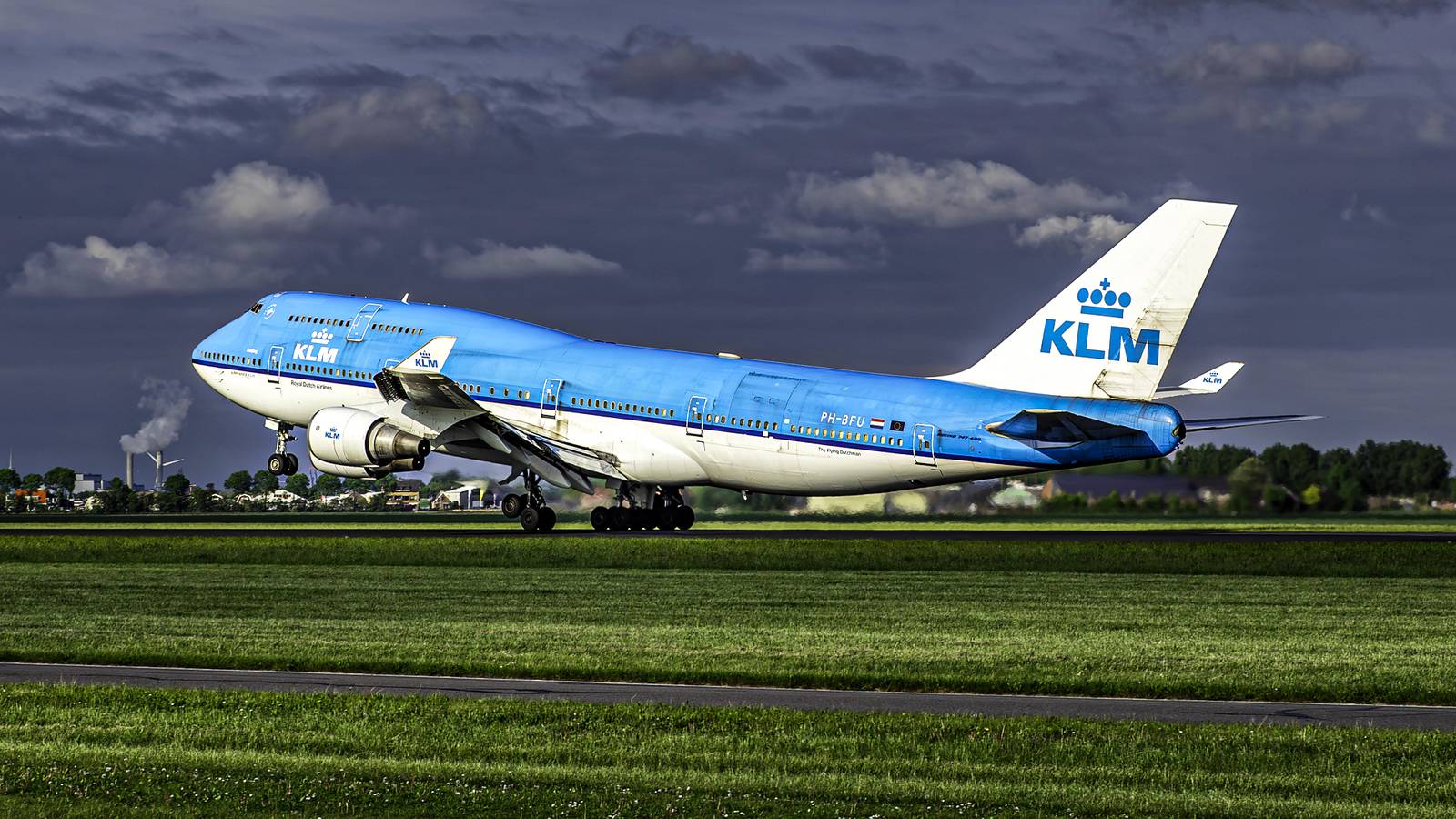
In the late 1980s, as Boeing prepared to launch the definitive variant of its iconic jumbo jet, it handed airline customers an extraordinary level of operational control. Most other aircraft give global carriers a choice of just one or two engine manufacturers, but Boeing designed the 747-400 to seamlessly accommodate three completely distinct powerplants from three competing aerospace giants: General Electric, Pratt & Whitney, and Rolls-Royce. The tri-option compatibility allowed airlines to order the same four-engine widebody customized to their existing maintenance ecosystems, pilot type ratings, and regional manufacturer loyalties. Integrating three radically different engine builds onto a single wing was a massive structural and financial undertaking. Each engine variant needed bespoke nacelle designs, flight deck indication logic, and expensive airworthiness certification flight tests. Why exactly did Boeing willingly absorb the staggering development costs required to certify three competing engines for a single aircraft program? All Airlines Could Be Catered For The biggest motivation behind offering three distinct engine options on the 747-400 was securing commercial market dominance by removing barriers to purchase. During the late 1980s, major long-haul carriers had fierce loyalty to specific engine manufacturers based on existing overhaul infrastructure and local supply chains. As highlighted by Simple Flying, ensuring that General Electric, Pratt & Whitney, and Rolls-Royce were all available on the airframe meant that engine preference never became a reason for an airline to look toward competing widebody designs. Boeing certified the 747-400 with the Pratt & Whitney PW4056, the General Electric CF6-80C2B1F, and the Rolls-Royce RB211-524G/H. According to technical documentation from Aircraft Commerce, these modern turbofans produced between 56,500 lbf (251 kN) and 63,300 lbf (282 kN) of static thrust depending on the sub-variant, delivering vastly superior fuel efficiency and payload range over early-generation 747 powerplants. This customer-first engineering philosophy was not born overnight. Instead, it was the natural culmination of two decades of operational feedback, market evolution, and rapid fleet expansion across earlier iterations of the Queen of the Skies. When Boeing initially launched the 747 program in the late 1960s, a single-engine approach was necessary to get the massive airframe off the ground efficiently. However, as international routes expanded and global competition intensified, airlines made it clear that airframe versatility was just as vital as raw lift capacity. Setting The Foundation For The Future When the original Boeing 747-100 entered commercial service in 1970, it was powered exclusively by Pratt & Whitney’s JT9D turbofans. However, as international airlines expanded their long-haul networks throughout the 1970s, carriers operating mixed fleets demanded engine options that matched their existing equipment. As recorded by Airliner World, Boeing responded during the development of the 747-200 and 747-300 by integrating General Electric's CF6 and Rolls-Royce's RB211, establishing the multi-engine paradigm that would later define the 747-400 program. The economic incentive for airlines to maintain engine commonality across their fleets was overwhelming. An airline already flying CF6-powered Douglas DC-10s or RB211-powered Lockheed L-1011 TriStars could seamlessly integrate the 747-400 without investing millions of dollars in duplicate ground support tooling, specialized mechanic training, or spare engine inventory. Historical fleet analysis from Boeing-747.com notes that this operational flexibility allowed flagship carriers like British Airways, Lufthansa, and Cathay Pacific to optimize their long-haul maintenance budgets while scaling up international routes. In addition to the financial benefits of fleet commonality, the three powerplants offered on the 747-400 formed two different approaches to jet engine engineering. General Electric and Pratt & Whitney favored a traditional dual-spool design that prioritized mechanical simplicity and established maintenance procedures, whereas Rolls-Royce pursued a complex triple-spool design engineered for higher thermal efficiency and rapid throttle response. Boeing allowed international carriers to select not only an engine supplier, but the exact internal mechanical philosophy that best aligned with their long-term operational and engineering strategies. The Key Internal Differences Moving to the internal engine design, the key differentiator between the engines is the two-spool versus three-spool design. The General Electric CF6-80C2 and Pratt & Whitney PW4056 used a classic two-spool configuration, where concentric shafts connect high-pressure and low-pressure turbine stages to their respective compressors and fan sections. As detailed in technical analysis from Aircraft Commerce, the two-shaft arrangement reduced the overall count of rotating bearings and internal seals, lowering initial overhaul complexity and offering a proven, highly reliable mechanical baseline for long-haul operators. In contrast, Rolls-Royce equipped its RB211-524G/H with a unique triple-spool layout featuring three independent, concentric shafts rotating at different optimal speeds. According to information from Embry-Riddle Aeronautical University, splitting the compressor into low, intermediate, and high-pressure sections allowed each stage to operate closer to its peak aerodynamic efficiency across varying altitudes and flight regimes. The three-shaft design yielded superior surge margin protection, faster engine acceleration during go-arounds, and reduced overall blade stress, though it needed more specific shop tooling and unique maintenance procedures during heavy C and D checks. The existence of these contrasting mechanical designs gave airlines unprecedented flexibility in structuring their engineering departments. However, beyond thermodynamic efficiency and spool counts, offering three competing powerplants provided airlines with a critical operational safety net against catastrophic fleet groundings. When Commonality Becomes Problematic In commercial aviation, an Airworthiness Directive (AD) or unforeseen safety issue targeting a specific engine family can instantly paralyze an airline’s widebody operations. If an airframe is built around a single exclusive powerplant, any fleet-wide grounding directive immediately halts long-haul schedules and costs carriers millions of dollars per day in lost revenue. As highlighted in Simple Flying coverage, the multi-engine compatibility of the 747-400 provided major international airlines with an invaluable operational insurance policy, allowing carriers to hedge their long-term fleet risk across multiple engine manufacturers. For large global flag carriers operating massive long-haul networks, this risk mitigation strategy played out in several ways. Some carriers chose to split their total 747-400 orders between two distinct engine types, so that a technical fault or supply chain problem on one engine line would never completely freeze their international timetable. Other operators banked on their mixed-engine experience to negotiate better power-by-the-hour maintenance contracts and spare parts support, using competition between General Electric, Pratt & Whitney, and Rolls-Royce to drive down total operating costs across the entire lifecycle of the airframe. The multi-engine paradigm defined the peak of widebody customer choice throughout the 1980s and 1990s. Despite this, as aerospace development costs soared and aerodynamic integration requirements grew ever more precise, Boeing's flexible manufacturing philosophy would ultimately vanish on the final iteration of the jumbo jet family. Staying Exclusive For The 747-8 Despite the commercial success of offering three engine options on the 747-400, the multi-powerplant philosophy did not survive into the final generation of the jumbo jet family. Boeing launched the 747-8 in the mid-2000s, and it abandoned the tri-option strategy entirely, selecting General Electric as the exclusive engine supplier. As detailed by Simple Flying, the 747-8 was powered solely by the GEnx-2B, which was a decisive shift away from customer engine choice toward sole-source airframe-engine integration. The transition to a single-engine provider was driven by the immense cost and aerodynamic complexity of modern widebody engineering. Designing, flight testing, and certifying three distinct engine nacelles, pylon structures, and digital bleed air systems for a modern airframe ends up totaling hundreds of millions of dollars in duplicate development capital. Furthermore, aerospace manufacturers realized that optimizing a wing structure for a single, tightly integrated engine casing offered far greater aerodynamic efficiency and fuel savings than designing multiple bespoke pylon structures and strut fairings to hang three competing engine geometries from the same wing box. Boeing's shift away from multiple engine choices came from general trends seen across the entire commercial aviation industry. As sole-source engine agreements became the standard on flagship programs like the Airbus A350, the 747-400 stood out as the last grand monument to an era when airline preference dictated airframe design. When Choice Was A Necessity The 747-400, even today, is one of the most versatile and adaptable widebody airliners ever constructed, largely because Boeing allowed the needs of international carriers to shape its core engineering. The 747 accommodated two-spool designs from General Electric and Pratt & Whitney alongside the three-spool architecture of Rolls-Royce, fitting seamlessly into almost any global airline’s existing maintenance ecosystem. It gave operators total freedom over fleet planning, protective hedges against engine groundings, and strong negotiating power with overhaul providers. In today's commercial aviation landscape, where exclusive sole-source engine deals dominate new aircraft development, the multi-engine legacy of the 747-400 feels like a distant golden age of customer flexibility. Modern airframers prioritize wing-nacelle aerodynamic integration and streamlined certification costs over engine choice, so that future long-haul jets will rarely offer three competing powerplants on the exact same wing assembly. The remaining 747-400 passenger and freighter airframes are now gradually moving toward retirement, and they leave behind a unique industrial legacy. The Queen of the Skies demonstrated that an airliner could achieve global supremacy not by forcing carriers to adapt to a rigid factory baseline, but by offering the engineering versatility required to power international flight on an airline’s own terms.
Most Versatile? Why Boeing Made The Iconic 747-400 Compatible With 3 Distinct Powerplants
Full Article
Original Source
Read the full article at Simpleflying →KhanList aggregates and links to publicly available news content. We do not host full articles from third-party sources. Always verify important information with original sources.