
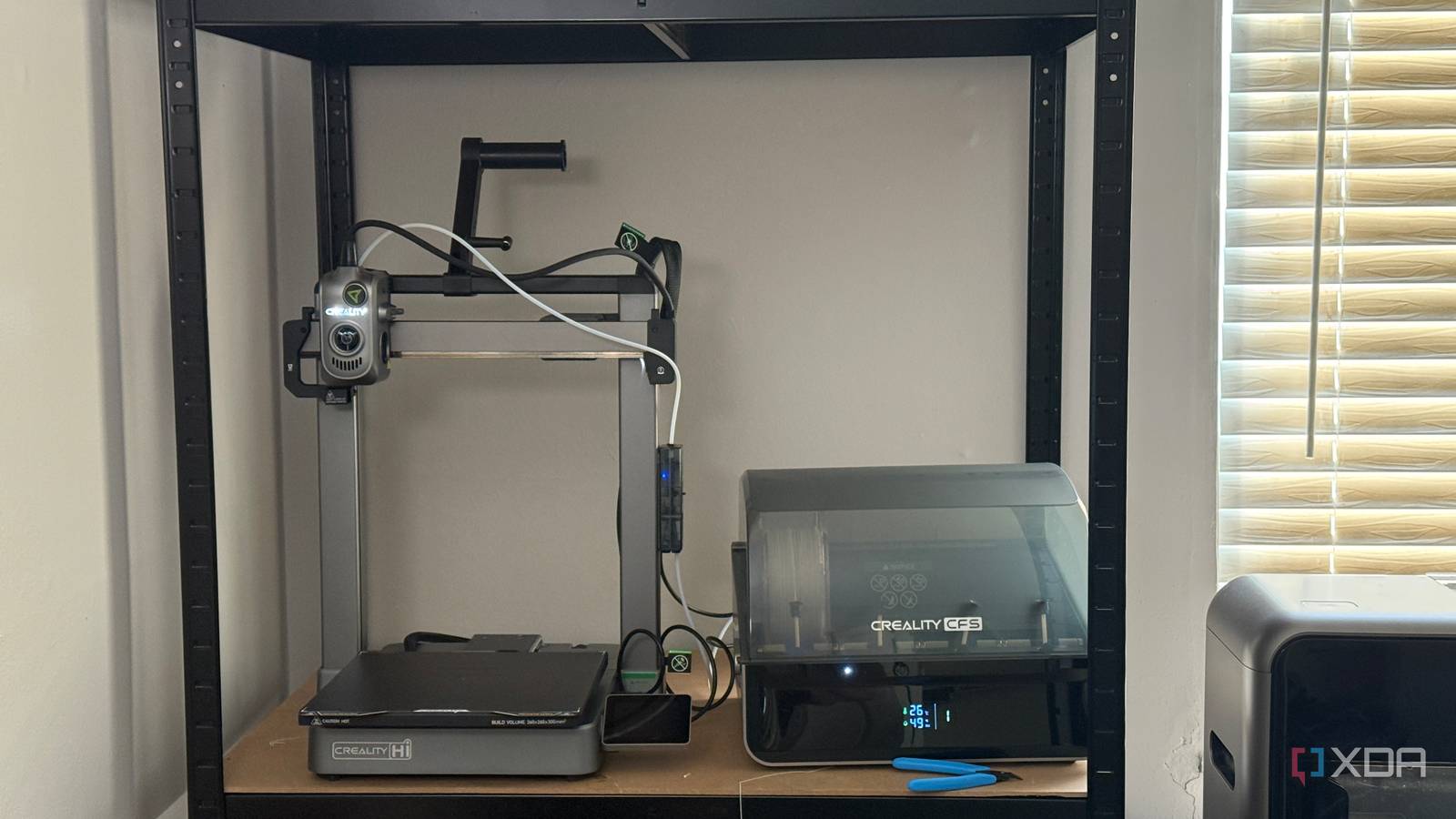
Published Nov 10, 2026, 7:00 AM EST Anmol has been interested in tech for close to two decades now and has been covering all things tech for more than a decade. He started his journey with a blog post, when Google Blogger used to be cool and has covered everything from Windows Phone to Windows 11. Anmol has written for MSPoweruser and Neowin in the past, and is always keen to get his hands on the latest gadgets. When not doomscrolling, you would find him playing video games, reading or catching up on football. 3D printing is a great hobby and at times a great way to solve actual problems around your house. While 3D printing has come a long way, it still requires basic housekeeping and best practices to ensure optimal results. One of the best ways I've done this is by using a dry box to store filament, which helps keep it dry and provides a tidy way to store filament you're not using. Wet filament makes printer problems look like printer faults What moisture does inside the nozzle Credit: Makers Manual/MakerWorld 3D printing filament has a tendency to absorb moisture from the atmosphere, and this can be more of a concern in places with high humidity. Everything is usually fine when the filament is vacuum-sealed with a desiccant, but things quickly change once the seal has been opened. If you plan to leave them out in the open, be it on a multi-material setup like the AMS or on your table, the filament will absorb moisture over time. Wet filaments, in turn, can cause problems when printing, which are often blamed on the 3D printer or incorrect calibration. There are usually telltale signs when printing with a 3D printer. In case you are unaware, 3D printing works by heating up the nozzle inside a tool head to melt plastic filament. This works well with a dry filament, but with a wet filament, you can get rough surfaces and stringing as the moisture in the filament evaporates. You can also hear a popping sound or bubbles/blobs as the moisture rapidly evaporates out of the filament. Wet filament is deceptive because those symptoms look like tuning problems. You can spend a weekend changing settings that were never wrong. A dry box only has one job Keep dry filament dry Credit: Makers Manual/MakerWorldCredit: werner_rh/Printables.com A dry box helps keep your filaments dry by preventing moisture from seeping in while you store them. Instead of leaving filaments out in the open after I finish printing, I move them into my dry box. This simple habit ensures your filaments don't absorb moisture from the air when sitting out in the open. I personally bought a few cheap airtight containers off Amazon along with a few hygrometers and about 1kg of rechargeable silica gel beads. The whole setup cost me close to $25 per filament spool. I printed desiccant boxes from Makerworld on my Bambu Lab printer, filled them with silica gel, and placed them inside the container with the filament. I had already recorded the outside humidity in the room, which was about 58%. However, within hours of putting the filament in the box with desiccant, the humidity inside the box dropped to close to about 20%. I used rechargeable silica gel for this experiment, which changes color when it absorbs moisture, so you know when to change. The good part about them is that they are reusable, so when they have changed color, you can put them in the oven or microwave to dry and then reuse them again. Not all filaments need a dryer Start with storage before you buy a dryer Credit: Creality A dry box is a great entry-level, inexpensive way to store filaments while ensuring they don't absorb too much moisture. If you print with basic materials like PLA and PETG, you can get away with a good dry box with desiccant as long as you live in a dry climate. Unfortunately, for people living in humid weather, a dryer can become a necessity even for basic materials. The good thing is that you don't always need a dedicated dryer as well. For materials like PLA, a food dehydrator can also do the job, as it can maintain a set temperature for extended periods. Many modern printers, like some Bambu Lab printers, also have a dryer setting that heats the bed and chamber, letting you dry your filaments inside the 3D printer itself if you don't have something like an AMS 2 Pro, which includes a dryer function. Don't use a microwave or an oven to dry filaments, as they usually are not able to regulate temperatures with precision, which can result in uneven drying or can even destroy the filament spool. If the temperature crosses the Glass Transition Temperature of the filament, it can permanently damage the spool or even fuse the filament together. Nevertheless, using a dry box is a great habit even if you have a filament dryer that you use to dry them before printing. It's not usually required to dry basic filaments like PLA, as overdrying or "over-baking" can impact the polymer chains in the filament and can make it brittle. Excessive heat can also discolor the filament. This is again a bigger issue with basic filaments like PLA, while more resilient filaments like TPU can and should be dried every time before use, as they are extremely hygroscopic. Drying a filament is different from using a dry box. A dry box ensures that the filament is not getting exposed to moisture in the atmosphere and maintains the humidity inside the box. It does not magically make a wet filament dry, as it can't extract already absorbed moisture from the filament. If you have a wet filament, you should first dry it using a filament dryer or a food dehydrator before storing it in a dry box. A dry box is a habit worth keeping Fix storage before you chase tuning problems Wet filament is an easy-to-overlook problem when troubleshooting prints. It isn't visible to the eye, but it plays a vital role in determining whether a print succeeds or fails. A well-made dry box takes away the guesswork. Drying and storing half-used spools of filament can feel like a chore, but they definitely can save you a lot of time and effort in the long run. A dry box also lets you store your filaments neatly, so they aren't scattered around your workspace or printer. Personally, a dry box is a must-have for everyone, and it doesn't even cost much to make one yourself. At the end of the day, it's better to keep your filament dry and avoid spending hours drying it every time you decide to print, not to mention the toll multiple dry cycles can take on the filament.
Most of my 3D print failures came down to moisture, and a $25 dry box solved them
Full Article
Original Source
Read the full article at Xda-developers →KhanList aggregates and links to publicly available news content. We do not host full articles from third-party sources. Always verify important information with original sources.