
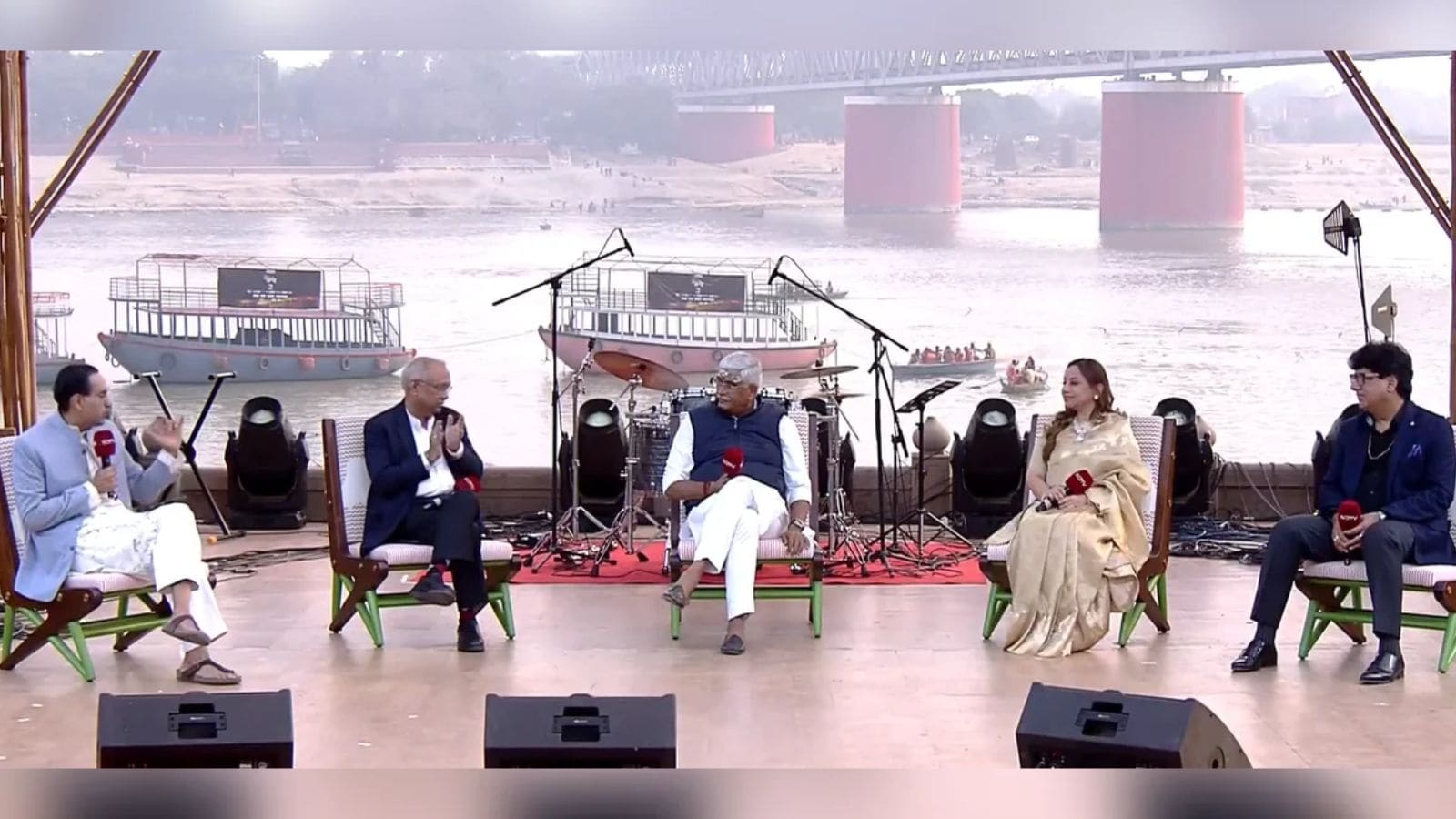
New Delhi: India must develop 500 tourist destinations by 2047 as both foreign and domestic travellers move well beyond traditional circuits in search of immersive experiences, Union Tourism Minister Gajendra Singh Shekhawat said at the NDTV Creators' Manch in a session moderated by NDTV Editor-in-Chief Rahul Kanwal.Responding to a question on whether the government should develop 50 tourist destinations simultaneously or in stages, Shekhawat said that given India's vast cultural, geographical and natural diversity, taking up 50 sites at once is itself a phased approach."Fifty is the smallest number which we can think of to develop tourism or a tourist destination in a phased manner. By 2047, we will have to go to 500 destinations," Shekhawat said, adding "people are looking for and chasing experiences."Shekhawat said global travel patterns have moved away from India's traditional tourism circuit."Earlier, for a foreign traveller coming to India, the Golden Triangle - Jaipur, Delhi and Agra - used to be India for almost 80 per cent of travellers. That is no longer the case," he said.According to the Union minister, they have started seeing all of India and even domestic tourists too are travelling everywhere. "They prefer to go beyond."He said the moving away from monument-centric sightseeing to experience-driven travel offers a big opening for India's tourism sector."Earlier, people used to travel to see monuments, maybe natural or some heritage places, but now people travel to experience. This gives a big opportunity for a country like India, where we need not write stories, we need not create stories. We have stories," Shekhawat said.While communication infrastructure has already been built, both the Centre and state governments are investing heavily to upgrade visitor experiences, he said, adding that India's fast-growing economy will expand domestic travel demand in equal measure. Shekhawat said the role of public-private partnership (PPP) in driving cultural tourism is an important factor and cited the Venice Biennale, the Banaras Biennale and the upcoming India Biennale in Delhi."The biggest biennale is happening in Delhi, which will be the world's largest. It will go on for 108 days," he said, describing the collaboration between the government and industry as the finest example of PPP.NDTV Creators Manch, in association with Banaras Biennale, is a celebration of creativity, culture and conversations. Rooted in the rich cultural heritage and timeless spirit of Kashi, the platform aims to create a space for meaningful dialogue, artistic expression and creative exchange.At the event, Namrata Adani, non-executive director of Adani Group, spoke about the inspiration behind her involvement in the Banaras Biennale. She said seeing the Venice Biennale prompted her to connect with the initiative in Uttar Pradesh."I have witnessed the Venice Biennale and that was my inspiration. How do I connect the dots? The moment I heard about the biennale here, I wanted to get associated somehow. As I have an association with Uttar Pradesh, I was born and brought up in Kanpur, I am very much connected to this part of Uttar Pradesh," she said.She said her visit to Banaras Hindu University (BHU) led her to focus on creating lasting opportunities for students by linking young artists with the expanding hospitality and corporate sectors."When I went to BHU, I wanted to have something for the students, very meaningful and long-lasting. So many hotel industries are coming up... I wanted to get them into a mentorship programme where art can be talked about in any way."Describing the bamboo stage created for the NDTV Creators Manch with BHU students, she said the collaboration was based on the city's heritage and evolution.
More Than Monument-Centric Travel, Tourists Want Experiences Now: Union Minister At NDTV Creators Manch
Full Article
Original Source
Read the full article at Ndtv →KhanList aggregates and links to publicly available news content. We do not host full articles from third-party sources. Always verify important information with original sources.