
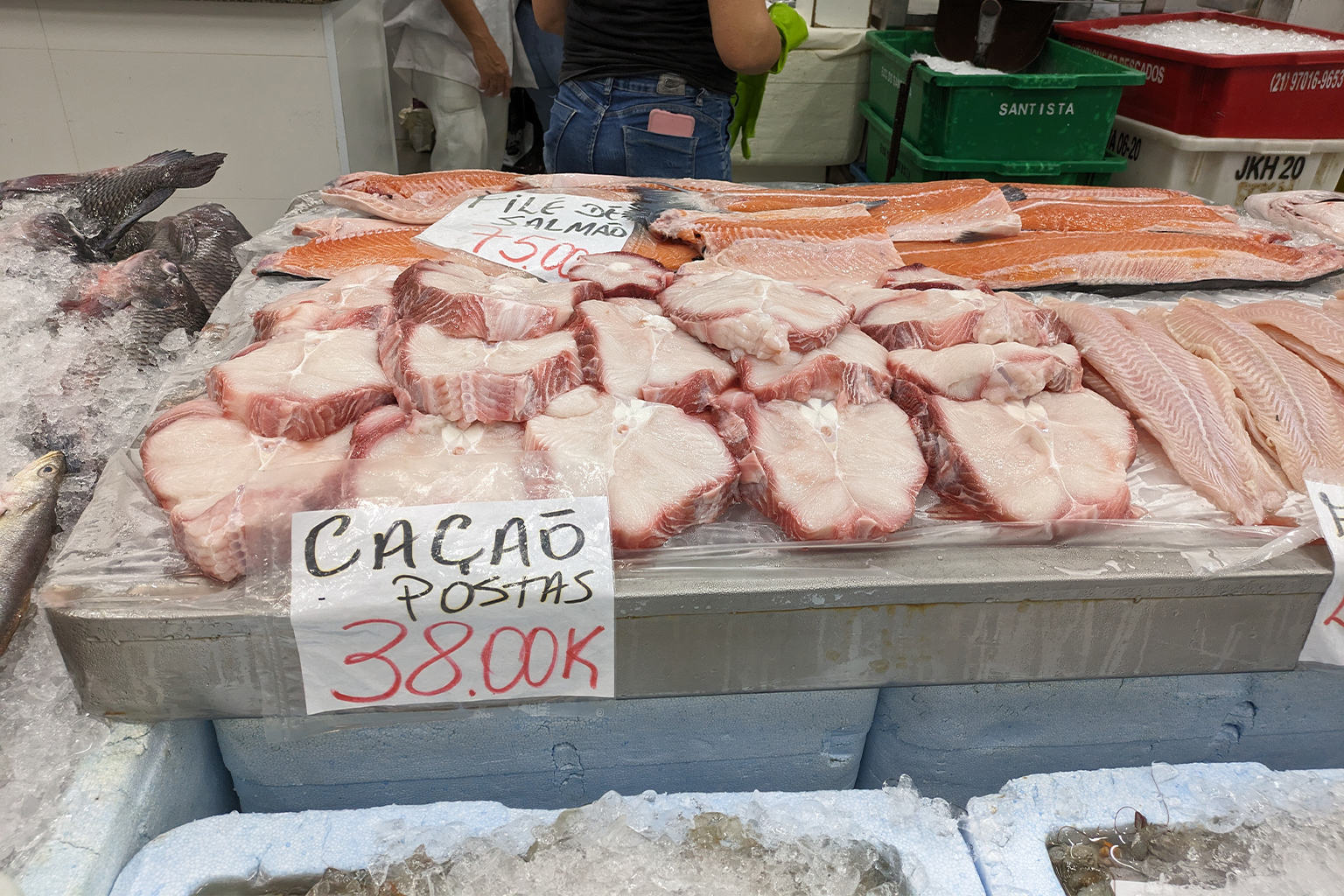
A Mongabay investigation that revealed large-scale government purchases of shark meat for schools, hospitals, prisons and other public institutions in Brazil has been named as a finalist for two Brazilian journalism awards . Published in 2025 in collaboration with the Pulitzer Center, the investigation tracked 1,012 public procurements issued since 2004 to purchase more than 5,400 metric tons of shark meat, worth at least 112 million reais ($20.1 million). The findings sparked environmental and public health concerns. Sharks, some of them endangered, accumulate heavy metals such as mercury and arsenic in their tissues. High levels of these contaminants can pose health risks, particularly for children. Mongabay’s reporting is one of three finalists for the Cláudio Weber Abramo Data Journalism Award in the investigation category, which recognizes “work of high social impact that applies data analysis to shed light on topics of public interest.” The series is also one of 25 finalists for the Mosca Award, which honors investigative reporting and projects focused on transparency, access to public information and open data. Senior editor Philip Jacobson and investigative reporters Karla Mendes and Fernanda Wenzel reported the series for Mongabay, working with Kuang Keng Kuek Ser, then data editor at the Pulitzer Center. The investigation has had widespread impact, prompting a request for a public hearing in Brazil’s lower house of Congress and stirring debate in the fishing industry over the risks of eating shark meat. Shark meat was banned in 1,200 schools run by the Rio de Janeiro State Department of Education. The move came after the marine conservation NGO Sea Shepherd Brasil also released a report about shark meat in Brazil, following Mongabay’s report. Brazil’s National Environmental Council, known as CONAMA, cited the series in a motion to ban shark fin exports, while the Ministry of the Environment and Climate Change said the reporting contributed to a review of the legal framework governing the shark trade. In February, the investigation took first place in the higher education category of Brazil’s National Association of Directors of Federal Higher Education Institutions (Andifes) awards and second place in the national category of the 67th ARI/Banrisul Journalism Award in December 2025. The investigation was also featured on several multimedia platforms including the U.S. public radio program The World; Rádio Novelo, Brazil’s largest journalistic podcast production company; Mongabay’s podcast; and in the video series “Unpacking the Story” produced by the iMEdD International Journalism Forum. Banner image: Shark meat labeled as cação. Image by Philip Jacobson/Mongabay. Credits Topics
Mongabay shark meat investigation shortlisted for two journalism awards in Brazil
Full Article
Original Source
Read the full article at News →KhanList aggregates and links to publicly available news content. We do not host full articles from third-party sources. Always verify important information with original sources.