
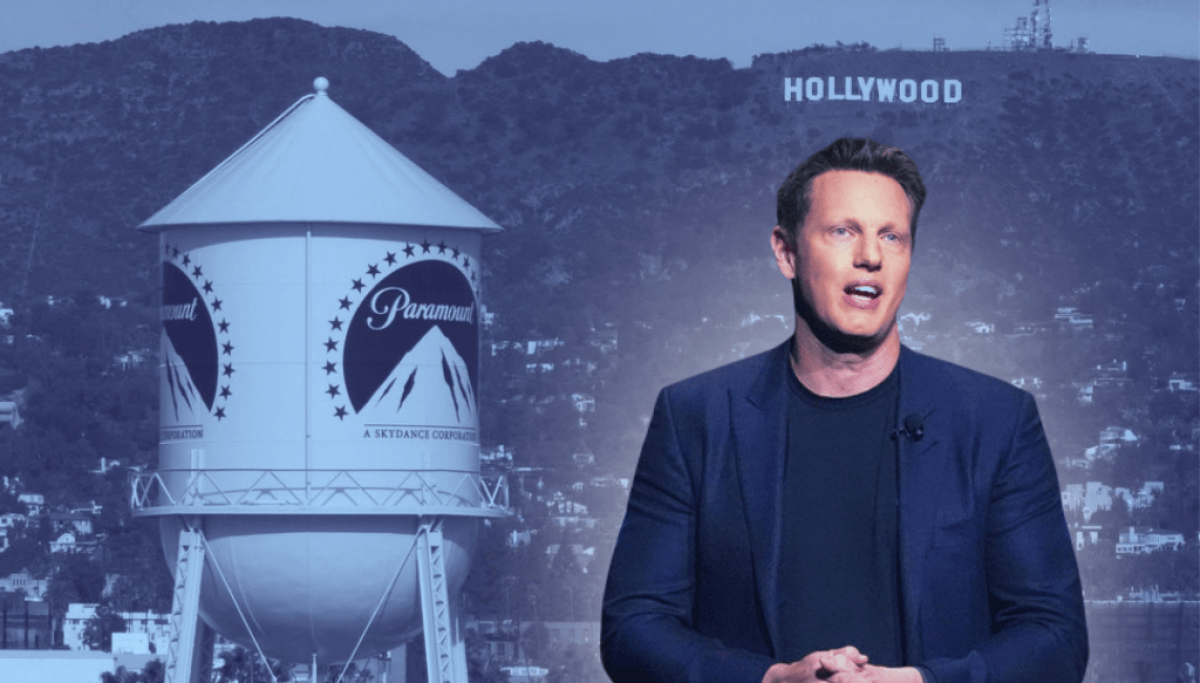
A new name was announced last week for the Paramount Skydance-Warner Bros. Discovery merger. Paramount Skydance CEO David Ellison said the new company, Skydance, will be a “creative-first home for bold, quality storytelling.”The announcement marks a significant defeat for progressive activists who devoted considerable money and political muscle to stopping the merger.The two main groups behind the “Block the Merger” campaign are well known to those who follow left-wing dark money. Norm Eisen’s Democracy Defenders Action and Democracy Defenders Fund have poured money into the effort. Eisen claims that his groups were “proud to help build” the campaign, which became the principal opponent to the merger.Eisen was joined by the usual cast of progressive donors who use buckets of cash to remake American society. From 2023 to 2024, George Soros’s Open Society Foundations donated at least $5 million to Democracy Defenders, and during the same time period, the former Arabella Advisors network donated close to $900,000. In 2024, Democracy Defenders received a $250,000 donation from Democracy Fund Voice, an activist group backed by Pierre Omidyar, the eBay founder and shadowy progressive megadonor.In April, Block The Merger, with Eisen’s help, penned an open letter opposing the merger, drawing considerable media attention to its opposition and gathering signatures from Hollywood’s elite.Right on cue with the union of dark money and Hollywood elites, Democrats in power saw an opportunity to simultaneously please their funders and the scriptwriters of their radical ideology by throwing the weight of their offices to block the merger.In July, attorneys general from 12 states, led by Rob Bonta of California, filed suit challenging the merger. Their suit claimed that the merger would harm competition in the movie industry and result in lower pay and fewer job opportunities for industry professionals. The attorneys general argued that the merger would hurt consumers by driving up prices of cable packages and movie tickets and offering fewer news and entertainment choices.“We have antitrust laws and merger controls for a reason, because competition is the lifeblood of a healthy and vibrant economy. Competition pushes companies to produce their best work, to innovate, and to offer fair and reasonable prices,” Bonta said in a press conference.After the suit was filed, Eisen’s group celebrated its role in bringing the case about.“The lawsuit follows months of organizing and advocacy by the Block the Merger coalition, whose open letter urging state attorneys general to act has drawn thousands of signatures from actors, writers, producers and workers across the entertainment industry,” it boasted in a press release.“Since the initial release of the open letter, support for the effort to block the merger has swelled to include thousands of leading voices across the film, entertainment, journalism, and pro-democracy landscape,” the release continues.Progressives folded their opposition to the business merger into their wider commitment to the omnicause: potpourri activism which spans the gamut from communism to support for pro-terror groups, now labeled simply as “pro-democracy.” As is often the case on the Left, there are few distinctions ideologically between specific objectives — it all blends into one.Unfortunately for Eisen, actor Mark Ruffalo gave away the game. His objections were not confined to antitrust policy or the economics of Hollywood. They were part of something much more disturbing.In late August, Ruffalo boosted a post from the anti-Israel boycott, divestment, and sanctions movement, slamming Oracle Executive Vice Chairwoman Safra Catz, who spoke openly about the company’s assistance to Israel following the Oct. 7, 2023, Hamas attack. The BDS clip Ruffalo shared accused Oracle of being “complicit in war crimes and crimes against humanity — including apartheid and genocide against Palestinians.” In reference to the Catz clip, Ruffalo told his followers to “look how she revels in what we now have come to see as a genocide, which was built on an apartheid system of oppression powered by Oracle.”Ruffalo reshared the post to his own Instagram story, taking aim at Oracle co-founder Larry Ellison, David Ellison’s father. He claimed that the elder Ellison was using Oracle “to fund his son David’s Warner Bros acquisition.”Ruffalo immediately drew criticism for trafficking in antisemitic tropes. “Words like ‘genocide’ and ‘apartheid,’ applied to a corporate transaction, aren’t just wrong — they’re a bridge too far, and they cheapen the very real suffering those words are meant to describe,” Paramount Skydance responded. “This doesn’t deserve a response in kind — and to be clear, we don’t tolerate prejudice of any kind, against anyone.”Eisen reportedly sprang into action to clean up the mess, contacting his former Obama administration colleague, Anti-Defamation League CEO Jonathan Greenblatt.“One source says Greenblatt rebuffed his old pal Eisen because he wasn’t ‘interested in laundering Mark Ruffalo’s reputation,’” Page Six reported. “Another source says the ADL chief ‘couldn’t help’ the four-time Oscar nominee, prompting Eisen to pivot to an open letter defending Ruffalo.”The effort never survived Ruffalo’s blunder, and after Paramount Skydance threatened to leave California for greener pastures in Nashville, Tennessee, the attorneys general announced a truce. The merger will be over the finish line in the coming days.Block the Merger was marketed as a fight over competition, consumer prices, and Hollywood’s future. But Ruffalo demonstrated how quickly that supposedly narrow antitrust crusade could mutate into attacks on a Jewish corporate executive and insinuations about a Jewish billionaire financing his son’s media empire and genocidal ambitions. When the rhetoric became too ugly to ignore, the same political network that had helped build the campaign reportedly scrambled to contain the fallout.The campaign against the merger was never just a collection of actors exercising their First Amendment rights. It was an organized effort backed by enormously wealthy progressive donors, amplified by Hollywood celebrities, and ultimately embraced by Democratic attorneys general wielding state power.Despite all of that, the merger survived.DEMOCRATS’ NEW ANTITRUST TEST: GO WOKE OR GO BROKEPerhaps that is the more consequential story. For years, progressive activists have assumed that enough money, celebrity signatures, activist pressure, and friendly government officials can turn their political preferences into institutional reality. This time, the machinery failed.Skydance will now have the opportunity to make good on David Ellison’s promise of a “creative-first home for bold, quality storytelling.” If it does, Hollywood may discover that audiences care far more about good stories than about having every movie studio, corporate boardroom, and business transaction drafted into the progressive omnicause.
Money, celebrities, and state power couldn’t stop the Paramount-Warner Bros. merger
Full Article
Original Source
Read the full article at Washingtonexaminer →KhanList aggregates and links to publicly available news content. We do not host full articles from third-party sources. Always verify important information with original sources.