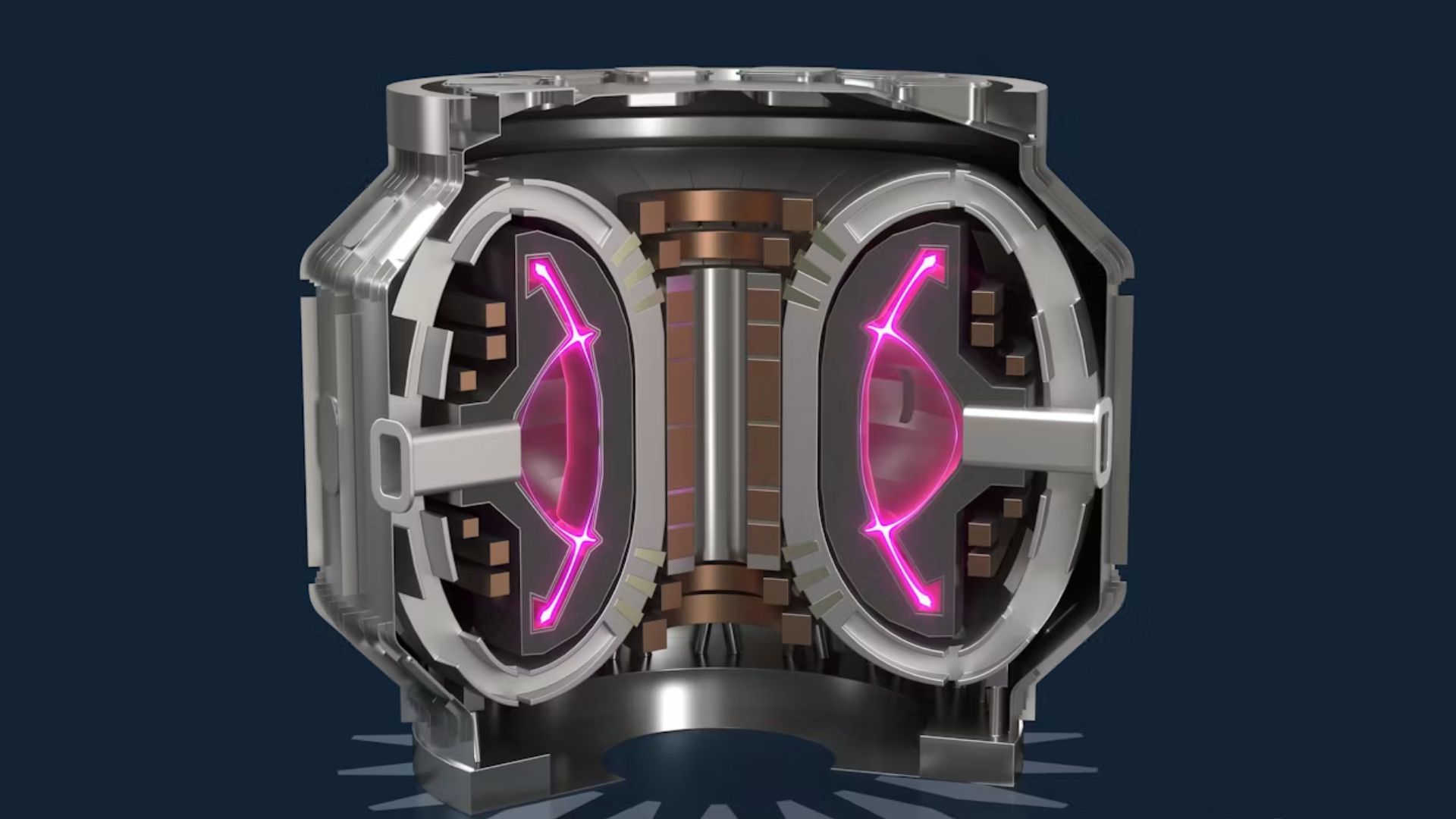
A team of researchers from the Massachusetts Institute of Technology (MIT) have looked into the economic challenges of fusion power and built a framework to make it commercially feasible. The framework is technology agnostic and takes into account the physical inputs need to build and operate a fusion power plant which is competitive in energy markets. Nuclear fusion is regarded as the future of energy, which is non-polluting, abundant and cheaply available. In principle, it recreates the reactions that occurs in stars, where hydrogen in a state of high temperature plasma fuses to form helium and releases large amounts of heat, without any carbon emissions or radioactive waste as a by product. In 2022, the National Ignition Facility at the Lawrence Livermore National Laboratory (LLNL) achieved a positive energy gain with a fusion energy setup, the first for the approach. Funding from the government as well as private equity is flowing in and startups and national laboratories alike are working to turn fusion power into reality. However, MIT researchers, Dennis Whyte and Andrew W. Lo, do not think that this is sufficient to make fusion energy a commercial success. Profits for success Whyte, professor of nuclear science and engineering at MIT, is also the co-founder of Commonwealth Fusion Systems, a MIT spin-off and global leader in fusion energy industry. Along with Lo, Whyte has also co-founded Rutherford Energy Ventures, a consultancy firm that is working with the Oak Ridge National Laboratory to build a consortium for fusion research. While there are multiple approaches to building a nuclear fusion facility, Whyte and colleagues believe that at the end of the day, the facility should be in a position to generate more money that has gone in to building and operating it, otherwise it won’t last for long. This is irrespective of the technological approach to generate and maintain the plasma or the size of the reactor. Researchers in fusion energy are often aware of the cost of their experiments but Whyte and Lo suggest that accounting of all costs must be done as rigorously as possible. “It’s all the things that come along with finding, allocating, and spending money at this scale,” explained Whyte in a press release. “If we want this technology to actually be meaningful in the world economy, we have to start getting straight with ourselves about these topics.” 10 parameters in the framework The researchers were inspired by the Lawson Criterion that helps in the calculation of ‘plasma Q’, a ratio of fusion power produced to external power required to sustain the reaction. Derived in the 1950s, the Lawson Criterion describes the combinations of temperature, plasma density, and energy confinement needed to net energy production from fusion plasma. The framework proposed by Whyte and Lo is more like an economic Q for fusion energy, comparing money earned versus money spent. Among the 10 parameters included in the framework are engineering features like power density, efficiency of converting fusion power, durability of components, costing and market parameters surrounding capital as well. As more funding pours into fusion energy, Whyte and Lo believe that the time to assess economic viability is now. They do expect uncertainties and challenges to come up as fusion energy tries to achieve commercial success and their framework will help people quantify their work. “When you’ve got a framework to evaluate it in a quantitative way, it tells you about the literal worth of making a particular design decision. That seems to me at this moment of fusion development absolutely critical, and what we’ve been missing,” concluded Whyte. The framework has been published in The Journal of Fusion Energy. Recommended ArticlesGet the latest in engineering, tech, space & science - delivered daily to your inbox.Ameya is a science writer based in Hyderabad, India. A Molecular Biologist at heart, he traded the micropipette to write about science during the pandemic and does not want to go back. He likes to write about genetics, microbes, technology, and public policy.
MIT scientists’ new framework could make nuclear fusion power a commercial reality
Full Article
Original Source
Read the full article at Interestingengineering →KhanList aggregates and links to publicly available news content. We do not host full articles from third-party sources. Always verify important information with original sources.