
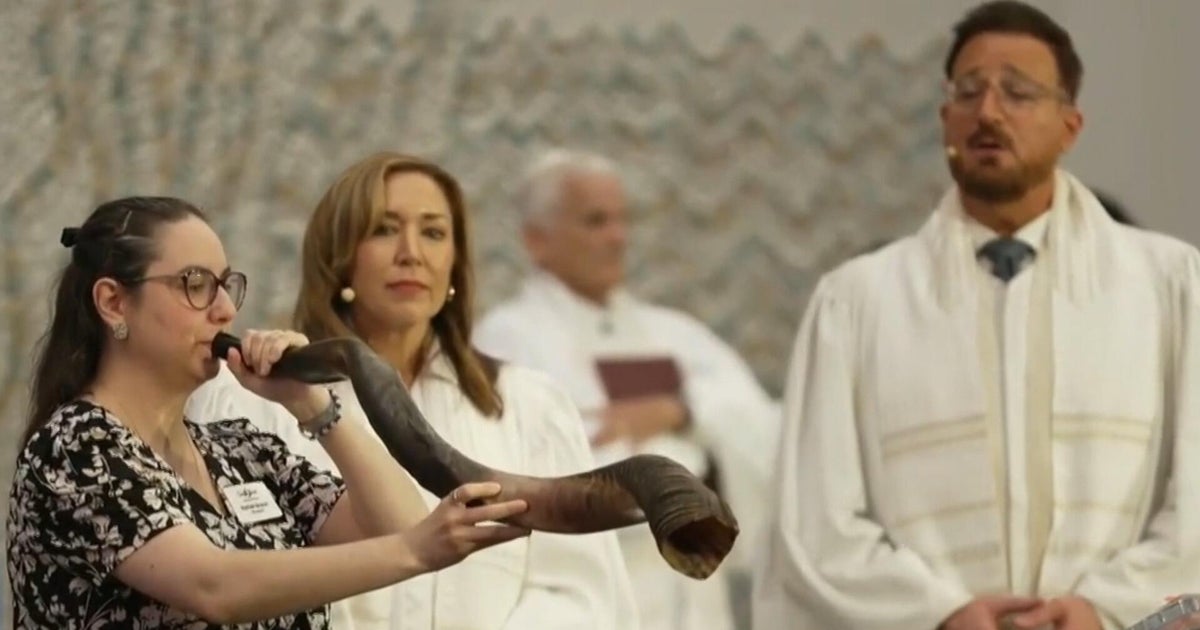
By Jonah Kaplan Investigative Reporter Jonah Kaplan is an award-winning correspondent and investigative journalist who has built a strong reputation for his balanced reporting, thoughtful interviews, and deeply researched coverage of high-impact issues affecting the communities across the country. Based in Minneapolis, his work appears on all of CBS News' programs and platforms, including the CBS Evening News, CBS Mornings and CBS 24/7. Read Full Bio Lucia I Suarez Sang Associate Managing Editor Lucia Suarez Sang is an associate managing editor at CBSNews.com. Previously, Lucia was the director of digital content at FOX61 News in Connecticut and has previously written for outlets including FoxNews.com, Fox News Latino and the Rutland Herald. Read Full Bio September 18, 2026 / 11:14 AM EDT / CBS News Add CBS News on Google A Michigan synagogue is reopening in time for the Jewish High Holidays, six month after it was targeted in a terror attack.The congregation at the Temple Israel synagogue in Michigan, one of the largest synagogues in the country, returned to its sanctuary last week for the first time since March to celebrate Rosh Hashanah, the Jewish New Year.The Detroit-area religious center was attacked on March 12 when 41-year-old Ayman Mohamad Ghazali rammed his truck packed with fireworks and gasoline deep into the building. The FBI called it a "targeted act of violence against the Jewish community."More than 140 people took shelter, with children abandoning their lunches in classrooms. Temple relics were destroyed by water damage and smoke."There were two classrooms. Our youngest children who were there – our babies and our toddlers who were in that room," said Rabbi Arianna Gordon as she showed CBS News just how close Ghazali came to committing a massacre."We will tell the story of the great miracle that happened here on March 12th for generations to come," Rabbi Jennifer Kaluzny said during the Rosh Hashanah service.Temple Israel estimates the cost of rebuilding its home could top $40 million, not including an extra $12 million for heightened security measures, including a newly built security balcony in the main sanctuary. "We could feed hungry people; we could take care of the elderly, things that we really want to be doing. And instead, we have to keep ourselves alive," Rabbi Jen Lader said.As to how it feels to be back after six months, Rabbi Paul Yedwab acknowledged that people entering the temple for the first time will have many feelings."But that's not a bad thing," he said. "Because through the service, through the celebration, when they walked out, they were feeling uplift and optimism and even joy."Kaluzny said their message has been that it's "not time to turn away from Judaism," but instead, it is time to lean into it. "We're here, we are not going anywhere," she said. "We have to make changes to feel secure in our home, but we're coming home."Ghazali, a Lebanese-born U.S. citizen, died from a self-inflicted gunshot wound during the attack, which happened just over a week after an Israeli airstrike in Lebanon killed his two brothers and several other members of his family. Federal officials labeled the attack as an act of terrorism inspired by Hezbollah, the Iran-backed militant group designated by the U.S. as a foreign terrorist organization since 1997. A freelance journalist working for CBS News in Lebanon learned from sources there that Ghazali's two brothers were members of a Hezbollah rocket unit in southern Lebanon. In: Terrorism Judaism Michigan
Michigan synagogue reopens 6 months after terror attack
Full Article
Original Source
Read the full article at Cbsnews →KhanList aggregates and links to publicly available news content. We do not host full articles from third-party sources. Always verify important information with original sources.