
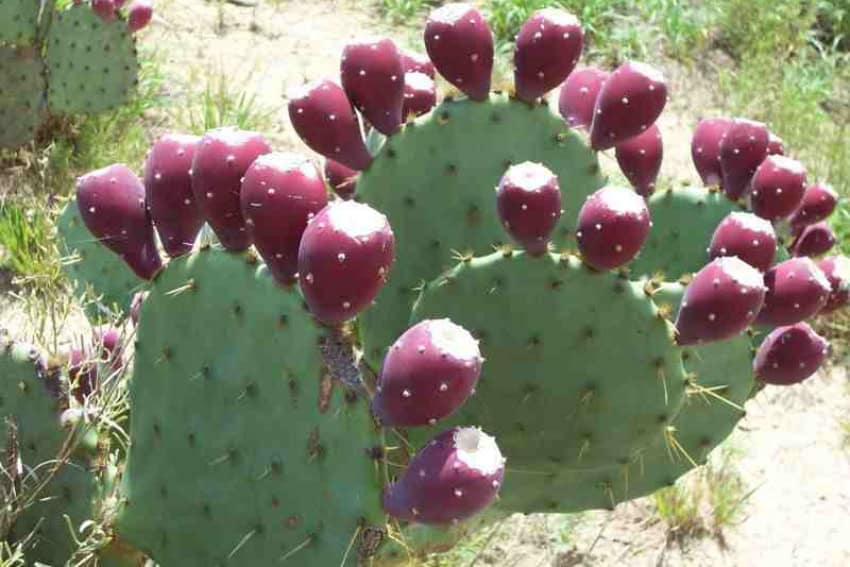
We all know the cactus fruit and have maybe tasted its juicy flesh and hard seeds protected by a spiny skin. But most of us have never tried — or even heard of — the fermented beverage that can be made from it. César Iván Ojeda-Linares, a researcher at the Instituto de Ecología of the Universidad Nacional Autónoma de México (UNAM), takes us on a journey through Mexico’s prickly pear landscapes, where he encountered colonche, a traditional fermented drink made from the fruit. He explores its connections with the people who make it, the vessels in which it ferments, and why this heritage is at risk. What first drew you to Mexico’s fermented drinks? During my master’s degree, I was studying evolutionary developmental ecology, and I went to Japan for a research stay. There, I realized I wasn’t enjoying working only with models, genes and model plants as much as I had expected. One evening, I was invited to a sake tasting by my mentor at Kyoto Sangyo University. I saw the diversity of sake and thought, “This is amazing — Mexico has a diversity of drinks, too.” I returned to Mexico wanting to investigate fermented drinks, the plants used to make them and their relationships with people and microorganisms. Early in my doctorate, I noticed that plants and fermentation were often studied separately, and people were missing the big picture. What interested me was how people select or manage something invisible: microorganisms. How did colonche become part of that research? When I was applying for my doctorate, I wanted to study many things. I was living in Michoacán, a central region in Mexico, and I included pulque, mezcal and fermented corn drinks in my plans because of corn’s symbolic and cultural importance in Mexico. Agave: The noble plant at the heart of Mexican culture Then I was reviewing an old book about Mexico’s drinks and came across colonche. There wasn’t much information. When I searched scientific databases, I found at most two articles at that time and only two records of yeast strains isolated. So I started looking for where it was made. How did you find the colonche producers? At first, I went to Guanajuato and couldn’t find anything. I would ask about colonche, and people would say they had no idea what it was. Then I got hungry and stopped somewhere selling gorditas, in a community called La Chirimoya. After eating, already feeling a little discouraged, I asked whether they knew about the colonche fair. A woman told me, “My friend organizes it.” That was the connection. I went there, began taking notes, met producers and started my fieldwork. I think I interviewed about 13 producers in the community at that time. The landscape also astonished me. We were walking among nopales more than 3 meters tall. They rose above us and provided shade. Getting to know the producers and the territory was an exploration of a landscape that was new to me. For someone who has never tried it, what is colonche — and how do people make it? Colonche is a fermented drink made from prickly pears, especially the red fruits producers call cardonas. There are many ways to prepare it. The one I particularly like comes from Laguna de Guadalupe, Guanajuato. Producers collect the fruit and peel it where they harvest it. They take it home, squeeze out the pulp, and put it into their pots to ferment. Some of those pots are more than 80 years old. There is a detail I find beautiful: The peels are left where the fruit is harvested, and cows come along and eat them. Their mouths become stained red — it looks as though they are wearing lipstick. In San Luis Potosí, I encountered another method. Producers heat the fruit in a metal pot to extract the pulp. Some add anise or other spices. To start fermentation, they may add colonche saved from the previous season or locally produced pulque. Many colonche producers there also make pulque. Pulque, an ancestral Mexican beverage, is often made in San Luis Potosí by the same producers who make colonche. (Tradición es cultura) In Zacatecas, I encountered a woman who heated the fruit juice and added aguardiente. She had spent time in the United States and, after being deported, did not know how to prepare colonche, so that was the method she used. From a microbial perspective, what is happening in the pots used in Guanajuato? Part of the microbial community carrying out fermentation is in the pots themselves. Producers do not necessarily need to add a starter culture or a fermentation “mother.” Their pot is, in effect, their fermentation mother or starter. Those pots have been in families for generations. Their porosity gives yeast small spaces where they can remain and become active again when liquid and suitable conditions return. There is another layer to this relationship: the pottery itself. San Felipe Torres Mochas, near Laguna de Guadalupe, specialized in making these pots. That production has been declining, and fewer people make them now. So the pot connects the microorganisms, the family and a local craft tradition. Hopefully, the producers of these containers will survive or maintain the tradition; otherwise, it will shift to plastic containers and it might be a loss of flavors or aromas. How does heating the juice and adding a previous batch change the fermentation? Heating kills some of the wild yeast and bacteria, and it also changes the material they will ferment. It is no longer the same juice coming directly from the fruit, and that changes the possibilities for other yeast to establish themselves. It is like an open space to conquer. Using a previous batch is also interesting because it involves selection driven by humans. Certain groups of yeast and bacteria survive and are carried over to the next fermentation, reproduced from one fermentation to the next. The role of microorganisms is one of the most fascinating aspects of colonche production, notes Ojeda-Linares. (Yo Amo San Luis/Facebook) In a study we published, we found much lower microbial diversity in the inocula — the material used to start fermentation. That allows us to identify selection for particular, more limited groups of microorganisms. So in a broad sense, the producers are selecting a consortium of microbes that helps them to reproduce what, culturally, they conceive as a good colonche. What interests you about people selecting organisms they cannot see? Selection is well studied in plants and animals. With corn, for example, you can see changes in the grain, its size and its uses — whether it is for pozole, tortillas or popcorn. With microorganisms, it is fascinating because you are not selecting something you can see. You are selecting something you can taste or smell, and you are not selecting only one species; you select a community. What pressures have you seen on colonche production? There are fewer producers now than when I began. Some have died, and others have stopped making colonche because of poor seasons for prickly pears and other social and environmental conflicts. The spaces where people collected fruit are also being fragmented. Land that was used for gathering and communal resources is being divided into plots. In some places, large areas once covered with nopales are being converted to bean monocultures. Some producers have also told me that colonche no longer comes out the same — that it does not taste the way they remember it, mostly because different environmental factors changed the flavor of the cactus prickly pear fruits. What did working with Comcáac producers in Sonora teach you about fermentation’s relationship with a landscape? Indigenous Comcáac peoples in Punta Chueca, Sonora ferment a drink from cardón fruit, allowing Ojeda-Linares to study traditional techniques. (Sectur) I worked in Punta Chueca in the northern state of Sonora with Indigenous Comcáac producers who make a drink from cardón fruit. We held a fermentation workshop: They explained how they made it, and I brought a microscope so we could see what was growing in the fermentation. Most of the producers were women, and they invited their children to participate. One of the most valuable lessons came when we were collecting fruit. I asked why they did not collect fruit that had not opened. They explained that it was not fully ripe, and that if animals had not visited it, fermentation took much longer. They described bats, bees and flies visiting the fruit. I have not been able to evaluate that relationship directly because of limited time and funding. But their understanding connects fruit availability, animal visitors and fermentation. So, I really see that Indigenous communities have a very detailed way to characterize how these interactions occur, and it has different layers of understanding their relationship with the environment, even with invisible beings such as microbes. This popular pulque bar’s owner is a kindly, knife-wielding grandma The drink is also part of their New Year celebrations and rituals associated with asking for rain and good harvests. Defending the territory therefore means defending not only the land, but also food systems and practices that depend on it. Why is colonche difficult to separate from the place where it is made? It continues fermenting, which makes transporting it difficult. I used to carry samples to the laboratory in a cooler. Once, I closed a container without leaving a way for the carbon dioxide to escape, and it burst. The car’s trunk was covered in red liquid and smelled for weeks. That is part of what makes it so local. You need to visit the place to know the drink, the people and the ecosystem. In one sense, that protects its uniqueness. At the same time, it limits how widely it can become known. I think drinking this beverage is a privilege: a chance to enjoy good conversation while taking in the landscape. I know that globalization encourages people to seek out new tastes, and that the “gastronomification” of food fuels this desire. But some things give a place its magic, and colonche is certainly one of them here. Perhaps part of that magic lies in enjoying it in the landscape and among the people who give it life. Katy Alivraz is a contributor to Mexico News Daily.
Mexico’s forgotten cactus spirit: An interview about colonche with César Iván Ojeda-Linares
Full Article
Original Source
Read the full article at Mexiconewsdaily →KhanList aggregates and links to publicly available news content. We do not host full articles from third-party sources. Always verify important information with original sources.