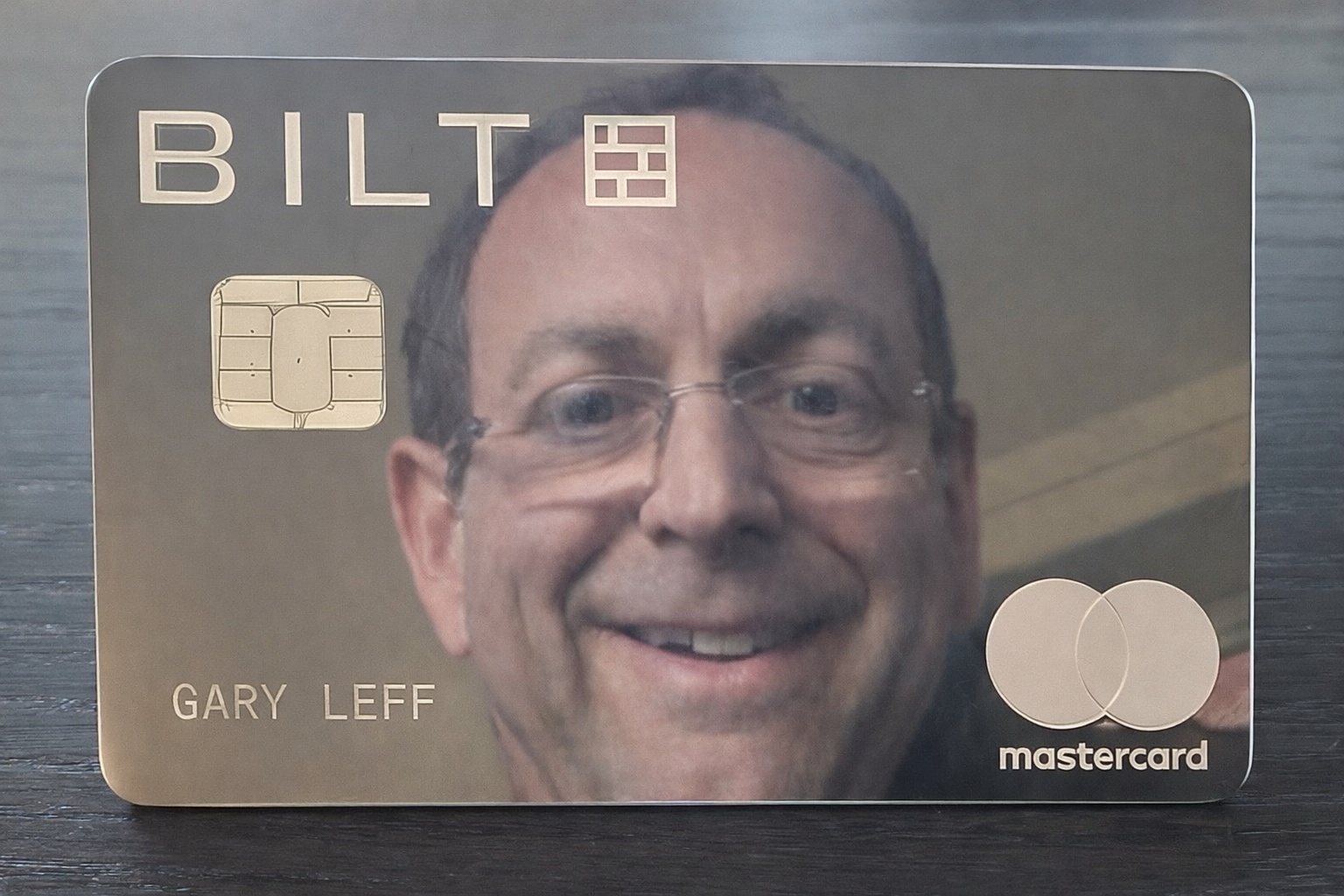
Everyone knows you’re not supposed to care what your credit card looks like, it’s the rewards that matter! Except that part of being human is that the look and feel of people, places and things matters quite a lot. So it appeals to us in ways we’re not quite comfortable admitting. The Atlantic has a new piece arguing that metal cards have completed the status-symbol life cycle: Rare and genuinely distinctive: The Amex Centurion’s titanium card conveyed exclusivity because almost nobody had one. Aspirational: Chase Sapphire Reserve brought the experience to affluent mass-market consumers in 2016. Ubiquitous: Now no annual fee cards are metal, while premium issuers resort to mirrors, polishing cloths, aircraft aluminum, and solid gold. Self-parody: This investment in physical cards doesn’t even matter as much as payments move increasingly digital. The piece argues that digital payments may be helping rather than killing the investment in physical cards, because once it’s no longer needed as a payment tool, it becomes an ornament, collectible, and social media prop. I’m not sure that’s right, and the piece overemphasizes the importance of metal. Amex Platinum isn’t successful because of metal, you can pocket over $3,000 in rebates for your $800 fee and you don’t even need to put your regular spend on the card to do this. Bilt Palladium isn’t a strong card because of the mirror finish option and microfiber cloth, it’s a points beast that earns the most valuable points and earns them faster than other cards. Sapphire Reserve made a splash a decade ago because it earned 3x on travel and dining, came with a Priority Pass, and rebated most of the card’s annual fee with an easy-to-use travel card. Still, given hundreds of billions in potential charge volume that’s on the line, premium issuers spending an extra $15 per card is cheap insurance in case it moves the needle even at the margin. And given cardmember acquisition costs in the thousands, an extra $15 per approved cardmember becomes a rounding error even if it’s a significant investment across all cards in a portfolio. The piece is right that metal is table stakes and even unnecessary, and that generating real value from the physical card requires taste and ingenuity. Metal itself was cool in 2009, when George Clooney plunked down his carbon fiber ConciergeKey card in a hotel lounge in Up in the Air and Vera Farmiga declared it “sexy.” It was even still cool when it was still rare circa 2013-2014. Now, metal communicates nothing when a no annual fee Amazon card has the same weight as Sapphire Reserve. Anyone that gets excited over metal itself is probably seen as gauche. Premium cards have leaned more into design and this is something to be appreciated by the cardholder, there’s nothing wrong with enjoying holding pretty things, but not so much something to impress minimum wage store clerks with. A mirror design, at least, still stands out (although now has ‘been done’ just a year later). In the first couple of months that it was available, half a million Amex Platinum cardmembers requested the mirror version of the card last year. Now Bilt has mirror, too. Any additional uses of the concept simply seem derivative. So what else works? American Express reaped real praise for its limited-edition Delta card made with a bit of Boeing 747 metal. Metal now brings something that once conferred status to a no annual fee price point Mass affluent status requires taking something that’s become commonplace and elevating it with design, not just heft Some issuers have let consumers customize the design of the card but that can lead to controversy when they choose designs that are polarizing or contrary to the issuer’s values. It’s also controversial when telling consumers they can design their card any way they want, except for the way that they want. These are the 10 heaviest generally available cards I’m aware of, with data from U.S. Credit Card Guide. As a benchmark, a non-metal card clocks in at about 5mg. Rank Card Weight 1 J.P. Morgan Reserve 27g 1 Robinhood Platinum 27g 3 Luxury Card Mastercard Gold 22g 4 Bilt Palladium 21g 5 Citi Strata Elite 19g 6 Citi Prestige 18g 6 Citi AAdvantage Executive 18g 8 Amex Centurion 17g 8 Amex Platinum 17g 8 Capital One Venture X 17g These cards are more difficult to dispose of. One reader used a blow torch rather than returning his card to Chase. But how often do you dispose of a credit card? I’m not sure it’s often enough to matter. I think my favorite comments when Bilt came out with the mirror finish on its Palladium card – and included a microfiber cloth to polish it in the package – were “A polishing cloth for my credit card. I swear to God we are in some bad bad times as a society” and “Of all the things Bilt has struggled with, showmanship is not one of them.” When everyone’s cards are metal, it’s no longer driving share shift and becomes purely defensive. You don’t want your cards to look cheap! There’s a sense that if you are going to charge $395, $795, or $895 for a credit card it can’t just be a piece of plastic. I don’t think metal helps so much as avoids ‘looking cheap’ the way older cards do by comparison. The investment avoids a negative rather than driving positive association. I have never once felt that I ‘couldn’t wait’ to pull out my Venture X card… except at their New York JFK lounge and their New York LaGuardia and Washington National Landings, but that’s for access and not spending, and you can pull up the equivalent ‘lounge pass’ in their mobile app instead. Nonetheless, card issuers do get some free social media distribution out of unboxing videos of fancy cards – plus weight comparisons, drop tests, and numerous “what’s in my wallet?” posts (itself a callback to Capital One). Topics on this page
Metal Credit Cards Went From Status Symbol To Cliché, So Banks Made Them Even More Ridiculous
Full Article
Original Source
Read the full article at Viewfromthewing →KhanList aggregates and links to publicly available news content. We do not host full articles from third-party sources. Always verify important information with original sources.