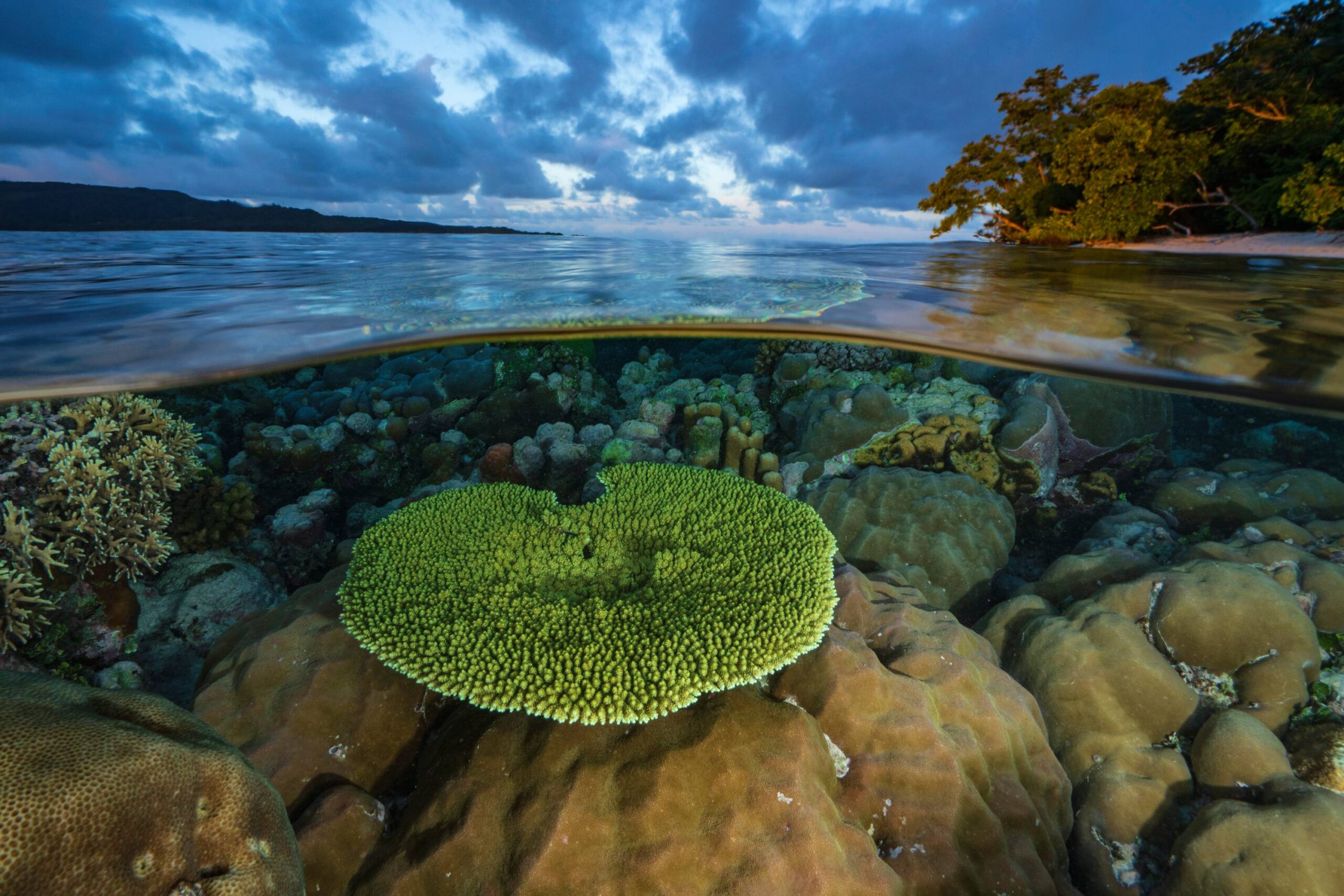
Solomon Islands is the latest Pacific island nation to sign on to a new network of marine protected areas (MPAs) known as the Melanesian Ocean Corridor of Reserves, or MOCOR, which was announced by Papua New Guinea, Vanuatu and Fiji at the first Melanesian Ocean Summit in May.Located in the southwestern Pacific, Melanesia is a hotspot for marine biodiversity and the discovery of new species.While large marine corridors can be more effective than isolated MPAs, researchers caution that robust management and enforcement are necessary to prevent them from becoming so-called “paper parks.”Details about MOCOR’s size, configuration, precise location, governance, enforcement mechanisms and community consultation processes are scarce. A group of Pacific island nations have agreed to formally establish the Melanesian Ocean Corridor of Reserves (MOCOR), a massive transboundary marine protected area (MPA) that will span their territorial waters. Papua New Guinea (PNG), Vanuatu and Fiji made a joint declaration announcing plans for the corridor at the first Melanesian Ocean Summit in May. Solomon Islands joined the initiative in late June. Melanesia, a subregion of Oceania in the southwestern Pacific that also includes the French territory of New Caledonia and parts of Indonesia, is one of the world’s most biodiverse regions. Located in the Coral Triangle, its ocean waters contain an estimated 75% of known coral species, along with iconic marine megafauna, including sharks, rays, dugongs and whales. This part of the ocean is also a hotspot for the discovery of new species. “The initiative represents a bold and timely step forward, recognizing that our oceans do not end at national boundaries, and that our stewardship responsibilities must therefore extend across them,” Fiji Prime Minister Sitiveni Rabuka told leaders at the summit in Port Moresby, Papua New Guinea. The U.S.-based NGO National Geographic Pristine Seas, the exploration and conservation partner of the MOCOR initiative, has confirmed to Mongabay that the MOCOR is an entirely separate initiative from the Melanesian Ocean Reserve (MOR), which was announced by Solomon Islands, Vanuatu and PNG at the 2025 United Nations Ocean Conference in France. A variety of corals in the shallows off Manus Island, Papua New Guinea. Image courtesy of Ollie Velasco/ National Geographic Pristine Seas. Following the MOCOR announcement, PNG pledged to establish the Western Manus National Marine Sanctuary, a 214,000-square-kilometer (82,626-square-mile) area roughly the size of Great Britain that will form part of the larger reserve corridor. The sanctuary will be a “no-take zone,” a level of protection that bans all commercial fishing and other extractive activities. “We take our commitment to protect 30% of our waters by 2030 very seriously, and this new MPA brings us one large step closer to that goal — in addition to ensuring environmental sustainability for present and future generations,” said Yvonne Tio, executive manager at PNG’s Conservation and Environment Protection Authority, in a press release announcing the initiative. Tio was referring to PNG’s pledge to achieve the 30×30 goal under the Kunming-Montreal Global Biodiversity Framework. At the summit, Vanuatu also announced it would establish a fully protected 71,000 km2 (27,413 mi2) Torba National Marine Protected Area, while Fiji committed to protecting 15% of its waters by the end of 2026. Vanuatu coastline. Image by Sarah Stewert via Flickr (CC BY-SA 2.0). Hazy plans Beyond the inclusion of those foundational MPAs, details about MOCOR’s size, configuration, precise location, governance, enforcement mechanisms or community consultation processes are scarce. There are no publicly available planning documents, maps, or project website. Official boundary zones for the corridor will only be revealed after legal designation, according to National Geographic Pristine Seas. Mongabay contacted the relevant government offices of Papua New Guinea, Vanuatu, and Fiji but did not receive responses regarding specific implementation strategies or community integration plans for MOCOR. The Samoa-based Pacific Regional Environment Programme (SPREP), an intergovernmental body and secretariat for the Noumea Convention, is providing the policy, legal and funding frameworks required for cross-border cooperation and marine spatial planning for MOCOR, according to Sefanaia Nawadra, the secretariat’s director general. Nawadra told Mongabay that SPREP’s focus is on helping nations meet global biodiversity targets, noting that implementation of MOCOR “may also include areas beyond national jurisdiction.” This means protections could eventually stretch into international waters outside of any country’s legal borders to safeguard migratory marine life that travels between and beyond the region’s archipelagos, he said. An island in Fiji. Image by Rhett Butler/Mongabay. Benefits and risks of large MPA corridors From an ecological perspective, transboundary corridors like MOCOR are far superior to isolated MPAs, Verónica Relaño, a postdoctoral fellow at Spain’s University of Santiago de Compostela whose work focuses on marine protection effectiveness, told Mongabay in an email. Relaño is also the oceans director at the Germany-based NGO Onewater. “Marine life — especially migratory species, larvae, and pelagic fish — does not adhere to EEZ [Exclusive Economic Zone] boundaries,” Relaño said. “Isolated MPAs often end up functioning as ecological islands and industrial fleets simply wait at the edges to ‘fish the line’. A corridor design connects critical habitats and protects entire migration routes.” But large-scale designs can make governance challenging, according to Relaño, who codeveloped an index identifying “paper parks” by measuring the gap between a site’s formal protection status and on-the-ground enforcement. Relaño said that while well-protected MPAs can halt extraction and allow depleted populations of fish and other marine species to bounce back to healthy levels, paper parks lacking adequate management and enforcement often permit fishing fleets to continue extraction. Because these ineffective protected areas still count toward global 30×30 targets, nations might prioritize quantity over quality, she said. “The greatest risk in a corridor design is the ‘weakest link’ scenario. If one country in the network lacks the monitoring or managing capacity or the political drive to enforce its boundaries, illegal and distant-water fleets will concentrate their extraction in that specific zone, undermining the integrity of the entire corridor,” Relaño said. The exact enforcement protocols for MOCOR remain unclear. Fishers in Papua New Guinea. Image by Alex Fanaso via Pexels. How will MOCOR integrate Indigenous peoples? Another question looming over MOCOR is how and whether it will incorporate Indigenous stewardship and governance. While both MOCOR and the previously announced MOR share the same foundational goal of protecting regional waters, they rely on different models of governance, according to Watna Mori, a Papua New Guinean lawyer who leads the Center for Melanesian Law & Governance and attended the summit. Mori told Mongabay that MOCOR emphasizes enforcement systems and science-policy integration, while MOR incorporates an Indigenous-led structure with customary kastom governance. But, according to Mori, both MOCOR and MOR raise concerns about who gets to make decisions over shared ocean space and how that power is structured. “Which Indigenous stewards were consulted before announcing a framework that sits over their customary tenures and responsibilities over those waters?” Mori said, adding that regional ocean governance frameworks are moving faster than the groundwork needed to determine how they can best be harmonized with existing governance systems. She pointed out that Indigenous communities have governed these seas for thousands of years through their own customary systems. Today, those traditional structures coexist and occasionally overlap with modern state frameworks. “In PNG, we’ve legislated our maritime boundaries, but we haven’t dealt with what happens when customary boundaries overlap with them, and yet, we’re developing regional governance frameworks that will sit over the top of all of that,” she said. Mori said the way forward lies in acknowledging the presence of multiple systems of governance, and finding ways for them to coexist. “The first step is to revitalize and strengthen customary governance systems and work outward from there,” she added. Whether MOCOR lives up to its conservation goals depends on whether local communities are supported and the law is used to uphold their ways of protecting the ocean, Relaño said. When communities are genuinely included, she added, they become the most reliable monitors of an MPA. “If an official MPA is imposed top-down, it usually disrupts the community by overriding traditional management systems like the Pacific tapu concepts and alienating the locals,” Relaño said, referring specifically to the ancestral practice of seasonal fishing bans to maintain ecological balance. “However, if the designation acts as a legal shield that formally recognizes and funds existing stewardship, it greatly benefits the community by providing legal leverage to keep out industrial fleets,” she said. A whitetip reef shark (Triaenodon obesus) stalks the reef at Luf Island, Papua New Guinea. Image courtesy of Ollie Velasco/ National Geographic Pristine Seas. Banner image: A split-view image of an underwater seascape and coastline of Mussau Island, within the Manus Marine Protected Area, Papua New Guinea. Image © Justin Hofman. Pacific island nations launch plan for world’s first Indigenous-led ocean reserve Citation: Relano, V., & Pauly, D. (2023). The ‘Paper Park Index’: Evaluating marine protected area effectiveness through a global study of stakeholder perceptions. Marine Policy, 151, 105571. doi: 10.1016/j.marpol.2023.105571 Feedback: Use this form to send a message to the editor of this post. If you want to post a public comment, you can do that at the bottom of the page. Cite this articleAshley Yeong (2026). Melanesian nations announce intention to create massive ocean reserve corridor. Mongabay Conservation news. DOI: https://doi.org/10.66709/news-323862 Credits Topics
Melanesian nations announce intention to create massive ocean reserve corridor
Full Article
Original Source
Read the full article at News →KhanList aggregates and links to publicly available news content. We do not host full articles from third-party sources. Always verify important information with original sources.