A year ago, President Ferdinand Marcos Jr. vowed to prosecute everyone involved in corruption in flood control projects. “Sa mga susunod na buwan, makakasuhan ang lahat ng mga lalabas na may sala mula sa imbestigasyon. Pati na ang mga kasabwat na kontratista sa buong bansa,” Marcos said in his fourth State of the Nation Address on July 28, 2025. (In the coming months, we will file charges against those found at fault. Including their accomplices, contractors all over the country.) “Mahiya naman kayo sa kapwa ‘nyo Pilipino,” he said. (Feel some shame toward your fellow Filipinos!) One year later, cases have been filed against at least 30 individuals in different courts. At least 24 are officials of the Department of Public Works and Highways (DPWH). The list also includes Senator Jinggoy Estrada and former senator Bong Revilla. Most of those facing cases have been detained. Former Ako Bicol representative Zaldy Co — linked to several construction companies — remains at large. The scandal, however, has extended far beyond those formally charged. Rappler’s investigation found that some members of the Marcos Cabinet, dozens of House members, and local officials — from mayors and vice mayors to councilors — also served as government contractors, securing multimillion-peso infrastructure projects and raising questions about conflicts of interest. Even the President’s cousin, Leyte 1st District Representative Martin Romualdez was implicated, prompting him to resign as speaker. The Office of the Ombudsman described him as “the central figure in a scheme built on the diversion of public funds meant for flood control projects.” Former budget secretary Amenah Pangandaman also resigned after being implicated in the alleged budget manipulation that enabled millions of pesos in public funds to be diverted. In July, she was appointed chair and chief executive officer of the state-run Al-Amanah Islamic Investment Bank. The flood control corruption controversy sparked nationwide protests, with thousands of Filipinos taking to the streets. Some demonstrations also called for Marcos’ resignation. Both the House of Representatives and the Senate launched investigations into the alleged anomalies. The House inquiry, however, ended after only a few hearings, after lawmakers said the probe would give way to a new investigation commission created by Marcos. The House-led probe had itself come under scrutiny because dozens of lawmakers allegedly had ties to government contractors or were contractors themselves. The congressional investigations also implicated legislators, including senators and members of the House. Even then-public works secretary Manuel Bonoan became embroiled in the controversy. Under his watch, a construction firm linked to his daughter secured about P2.5-billion worth of DPWH contracts. Bonoan later resigned. Bonoan is now under hospital arrest. Money lost No one knows exactly how much public money was lost to flood control corruption. Senator Panfilo “Ping” Lacson has estimated that about 60% of the country’s flood control budget had been pocketed. MONEY. Wads of cash inside a house within the perimeters of the DPWH Bulacan 1st DEO, as shown by whistleblower Engineer Brice Gonzalez to the House of Representatives on September 9, 2025. Over the past 15 years, the government has allocated more than P1.9 trillion for flood control projects under the DPWH. By Lacson’s estimate, that translates to roughly P1.14 trillion lost to corruption. So far, authorities have recovered only P611.379 million from individuals linked to the scheme, including: DPWH Undersecretary Roberto Bernardo – P290 million DPWH Bulacan District Engineer Henry Alcantara – P180.379 million DPWH NCR District Engineer Gerard Opulencia – P120 million Contractor Sally Santos – P20 million The Anti-Money Laundering Council Bank also froze the assets of officials linked to the flood control corruption mess. The investigation also revealed how millions of pesos stacked on tables were divided among DPWH engineers, among others, and cash packed into suitcases for delivery to politicians. Meanwhile, social media users highlighted the lavish lifestyles of nepo babies or the children of contractors and other personalities linked to the scandal. Some DPWH engineers from Bulacan also burned millions of pesos in casinos, as exposed by Senator Ping Lacson in a privilege speech. Clean up To clean up the corruption-plagued DPWH, Marcos appointed one of his closest allies, former transportation secretary Vince Dizon, to lead the agency. On his first day in office on September 1, 2025, Dizon ordered the “unqualified courtesy resignation” of all incumbent undersecretaries, assistant secretaries, regional directors, bureau directors, service directors, project directors, and district engineers. He then traveled across the country inspecting flood control projects, eventually identifying dozens of alleged ghost and substandard projects. According to Dizon, government agencies had uncovered at least 421 ghost flood control projects nationwide. FLOOD CONTROL. President Ferdinand Marcos Jr. inspects a flood control project in Baliwag City, Bulacan, on August 20, 2025. The administration also launched a public reporting portal for suspected anomalous projects. Within less than a month, it received at least 12,000 complaints. Marcos also created the Independent Commission for Infrastructure to investigate not only flood control anomalies, but also other major infrastructure projects over the previous decade. The commission operated for only six months, after saying that its job was done. Its three-member panel gradually unraveled. Former DPWH secretary Rogelio “Babes” Singson resigned first. Weeks later, Rossana Fajardo also stepped down, leaving only the commission’s chairman Andres Reyes Jr. Throughout its brief existence, the commission faced criticism over its limited powers, lack of resources and transparency, and questions about its independence. Even Singson publicly questioned whether it had the authority needed to fulfill its mandate. Before effectively ceasing operations, the commission turned over its findings to the Office of the Ombudsman. Budget reforms The scandal also reshaped the national budget process. The House abolished its so-called “small committee,” a powerful group of lawmakers that traditionally handled individual amendments even after the proposed budget had passed second reading. For the first time, bicameral conference committee deliberations were livestreamed, giving the public a rare glimpse into negotiations that had long taken place behind closed doors. The House also launched a public budget website aimed at making appropriations more transparent. Meanwhile, under Dizon, the DPWH removed P252-billion worth of locally-funded flood control projects from its proposed 2026 budget. Congress is set to deliberate the 2027 national budget next. While hundreds of millions of pesos have been recovered, that amount is still only a fraction of the estimated losses. And while dozens are facing cases, many other officials implicated in the controversy continue to hold public office. With only two years left, can Marcos really get to the bottom of this multi-billion corruption scheme? – Rappler.com
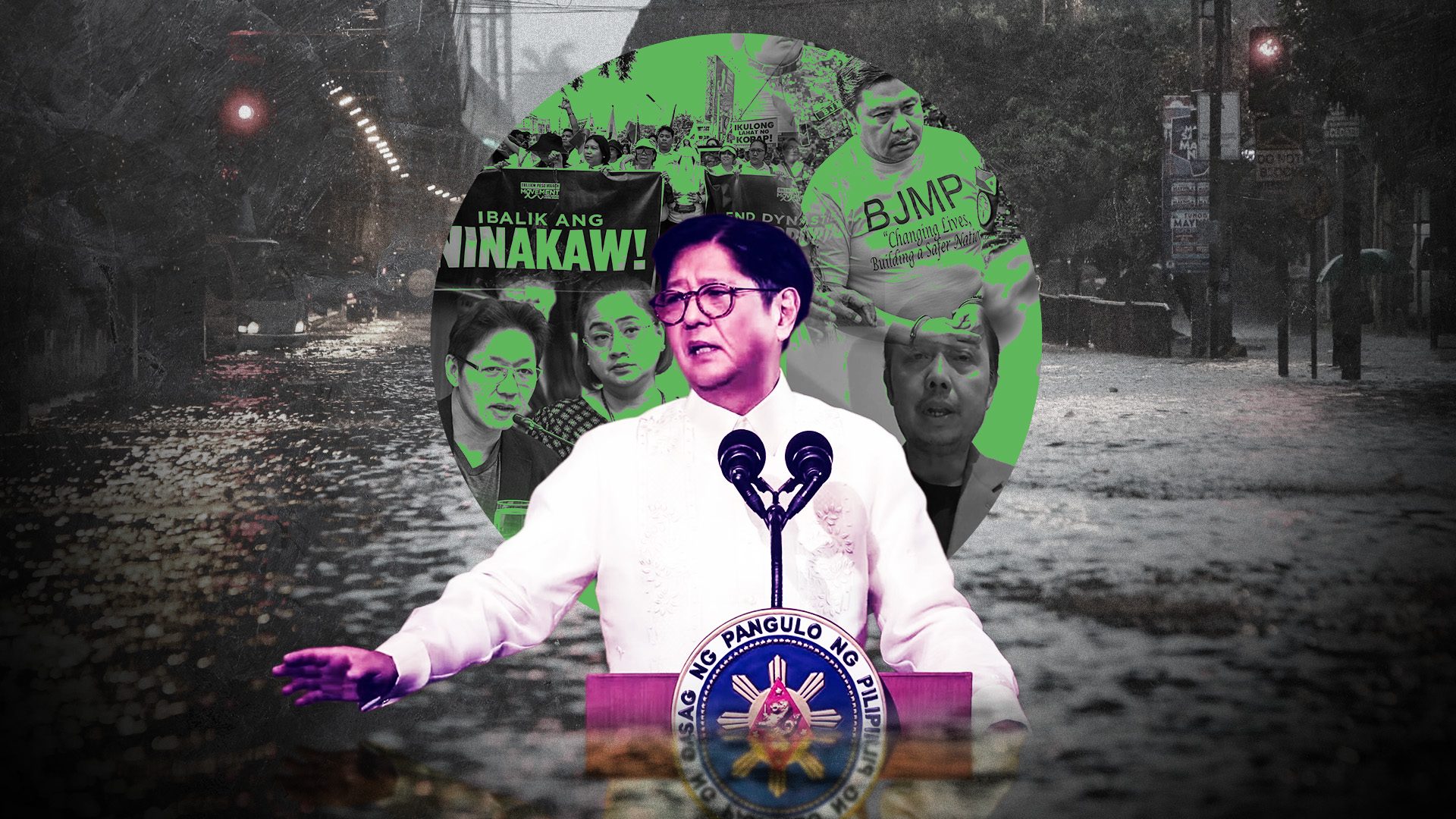
Marcos promised a crackdown on flood control corruption. What happened a year later?
Full Article
Original Source
Read the full article at Rappler →KhanList aggregates and links to publicly available news content. We do not host full articles from third-party sources. Always verify important information with original sources.