
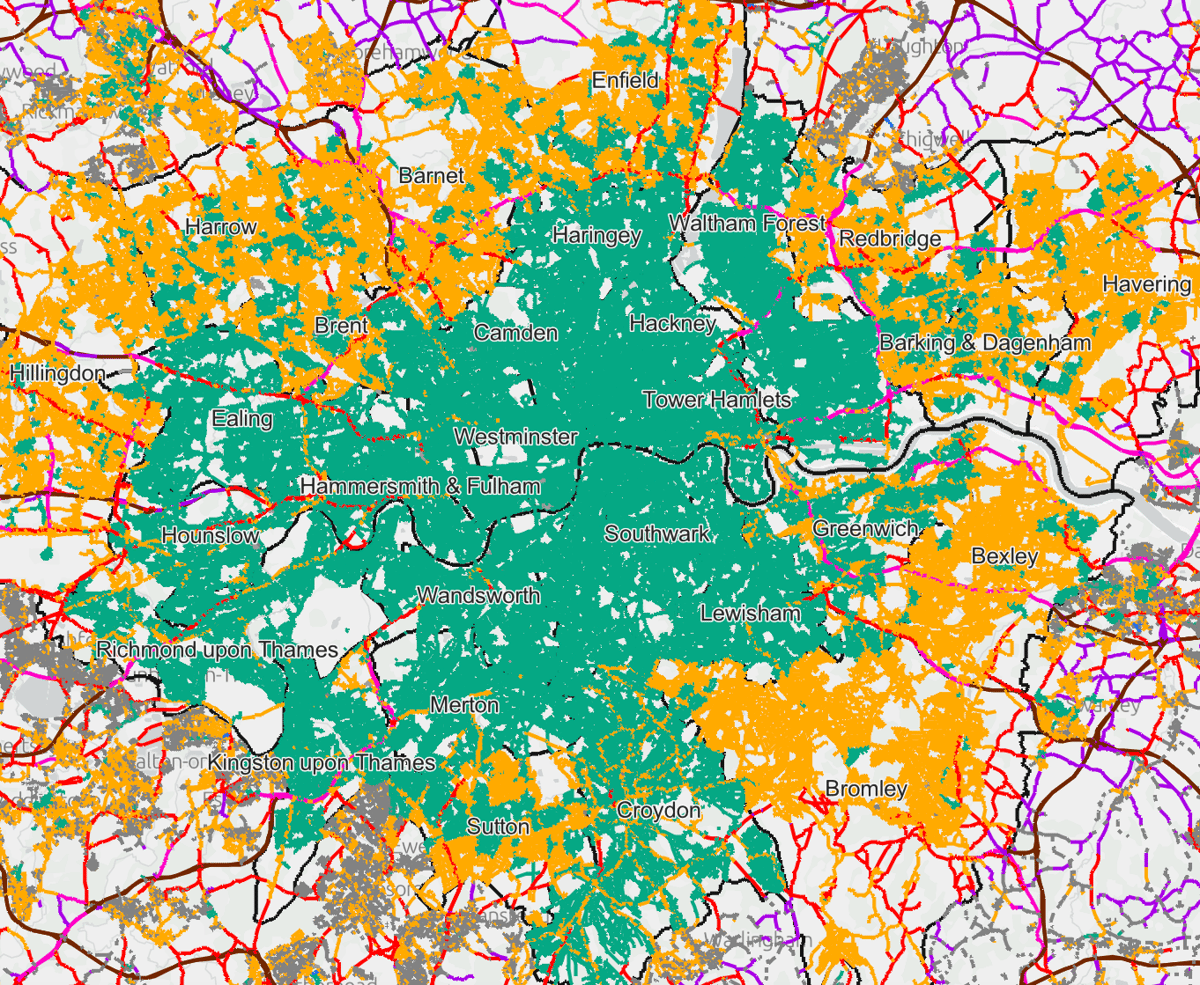
Slowly but surely, 20mph limits are redrawing the map of London’s roads.If you head towards outer London, the picture changes dramatically, with swathes of road remaining at 30mph and higher.Bromley, Bexley and Havering stand out as areas where a number of roads remain at 30mph, while boroughs including Croydon, Brent and Harrow show a more mixed picture as 20mph zones continue to creep in.Further towards the capital’s fringes, faster 40mph, 50mph and even 60mph routes are more prominent.Seventy-two per cent of Greenwich roads already have 20mph zones, but the Council is looking to expand this in the interest of safety and to simplify its roads for drivers.According to Transport for London data, more than three quarters of serious injuries or deaths on Greenwich roads in the last 10 years were on roads of more than 20mph.There will be some exceptions to the rule, and no final decisions have been made yet.But Greenwich’s cabinet member Calum O’Byrne Mulligan said the move would “save lives and create safer, more welcoming streets” while “making it easier for drivers to understand and follow” road rules.According to the London Boroughs Healthy Streets Scorecard, which ranks all 32 of London’s boroughs based on how well they encourage safe and sustainable travel, 61.7% of borough-managed roads across London are now 20mph, up from 60.9% in 2025.Seventy-two per cent of Greenwich roads already have 20mph zonesPANineteen boroughs have reached 95% or more, while Bromley, Hillingdon, Bexley and Havering remain below 10%.The topic of 20mph zones has long been a contentious one. Supporters argue the expansion of 20mph limits is necessary to save lives on Britain’s roads, while critics say they make driving more frustrating, causing awkward acceleration and leaving drivers feeling the need to constantly check their speedometers for fear of fines.Read MoreAmong vulnerable groups, the findings were even more striking, with child fatalities falling by 75 per cent in the areas studied.Jeremy Leach from campaign group 20's Plenty for Us said: "Greenwich has done a great job in recent years in making its residential roads safer with 20mph limits. “But, as with most of London, it is those busy main roads where people and vehicles mix in large numbers such as high streets, town centres and public transport hubs where the vast majority of road casualties happen. “20mph limits are proven to reduce casualties and the good news for people in Greenwich is that main roads with 20mph limits will be safer, quieter, calmer and easier to cross and more people will feel safe to use shops and services in their local area."A man walks next to a low traffic neighbourhood (LTN) barrier GettyBut opponents argue that lower speed limits, combined with Low Traffic Neighbourhoods (LTNs) and clean-air schemes, are making driving through the capital increasingly slow and frustrating.Tradespeople and taxi drivers are among those who say the restrictions come with a financial cost. They argue that longer journeys mean fewer service calls, deliveries and fares can be completed over the course of a working day.Dave Barnes, a Taxpayers’ Alliance representative from Islington previously described the scheme as a “complete waste of money”, adding “it will make life more difficult and slow everything down.” For businesses covering long distances across London, they say those lost hours translate into higher operating costs which will ultimately be passed on to customers.The Conservative party has pledged to scrap blanket 20mph zones, claiming there is a “war on drivers” and that these zones have slowed “whole towns to a crawl while doing little for real safety”.Shadow Transport Secretary Richard Holden previously said: “Town halls have spent years waging a war on the very people who get up early, drive to work and keep the economy turning.”There is clearly a stark divide, not only on London's inner and outer borough map, but over what the capital's streets should prioritise — keeping traffic moving or slowing it down in the name of safety.
Mapped: How 20mph road speed limits have spread across all of central and inner London - as outer boroughs hold out
Full Article
Original Source
Read the full article at Standard →KhanList aggregates and links to publicly available news content. We do not host full articles from third-party sources. Always verify important information with original sources.