
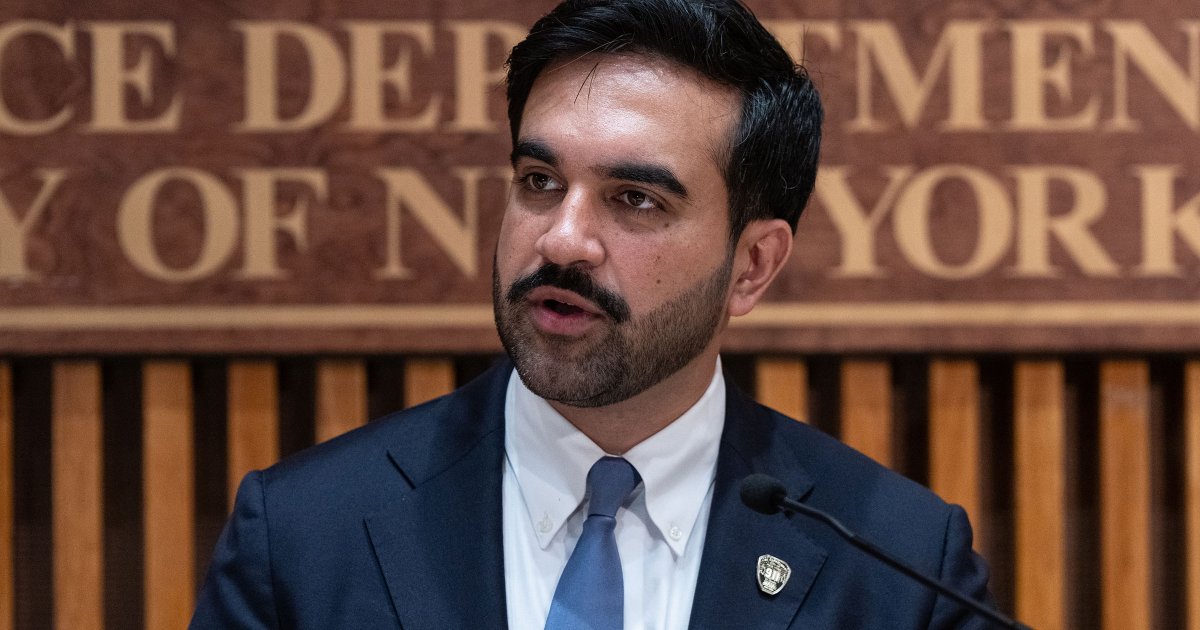
Lev Radin / Shutterstock New York City mayor Zohran Mamdani blasted Google’s decision to block its search engine in schools that restrict its AI features. “Google is trying to use its monopoly power to force AI into our public schools,” he wrote in a social media statement. “No corporation should have the power to dictate how we teach our children.” “Our public schools exist to serve students,” Mamdani added, “not to grow the profit margins of Big Tech.” Google announced Tuesday that it would turn off AI features in its software for students unless school administrators specifically chose to activate them — something educators have been asking for. But with this seeming act of goodwill, Google smuggled in a twist: if schools decide to restict all its AI features, it would also disable their access to Google Search. In a statement to the New York Times, which first reported the decision, Google vice president for education Chris Phillips offered little by way of explanation, stating that “Search and AI are deeply integrated.” Strictly speaking, this is true, and by being intentionally vague Google is giving the impression that it’s a technical problem, not a deliberate choice to ice out AI-wary schools. Its search engine is now laden with AI features. And even before the post-2022 chatbot boom, it long used AI algorithms to improve its search results. Search and AI are indeed “deeply integrated,” then, but does it have to be this way? Before chatbots, the way Google Search integrated AI still encouraged you to perform the actual act of searching through information instead of giving you entire answers. Even its old-school “featured snippets” that appeared above search results pulled stuff from a webpage word-for-word, prominently linking to the original source and ensuring that nothing was being lost in AI hallucination. Since then, Google has added its AI Overviews and a full-blown AI mode, turning the experience into something more like using a chatbot. Now, when you search on Google, the top of the page features an AI summary and chat window that will automatically synthesize lengthy answers to even the most specific queries, presenting them authoritatively despite the AI being notoriously prone to hallucinating. A casual user, or the average student, has almost no reason to chase down actual sources of information. That’s worrying to parents and educators, who want their children to develop critical thinking skills and the ability to research problems independently. The problem is only exacerbated when a child is given access to a full-fledged chatbot product, such as Google Gemini. Along with the wealth of studies suggesting a reliance on these tools impacts critical thinking , many school districts are wary of thrusting a technology that’s become synonymous with effortless cheating at school assignments into students’ hands. Mamdani has made AI in education a key part of his agenda. In September, he announced a one-year moratorium on New York City schools using AI in the classroom, a policy he called the “most comprehensive of its kind anywhere in the country.” For Google, amid all these concerns, to tell schools it’ll now cut off their search access if they restrict AI comes off as an unusually spiteful move. It is by far the dominant search engine and most people’s gateway to the internet. Its bargaining power in this standoff with schools is incalculably outsized — hence Mamdani’s accusation that it’s using “monopoly power to force AI into our public schools.” A federal judge, on that note, ruled in 2024 that Google held an illegal monopoly over the search engine market and used its dominance to shut out competitors. There’s a compelling argument that it’s now doing something similar with schools, hoping that it can strong-arm them into submission so it can guarantee that this generation of children will be future customers by getting them hooked on its AI ecosystem. More on education: The Tech Industry’s Aggressive Push to Integrate AI Into Schools Is Turning Into a Disaster
Mamdani Blasts Google for Using Monopoly to Bully Schools That Ban AI
Full Article
Original Source
Read the full article at Futurism →KhanList aggregates and links to publicly available news content. We do not host full articles from third-party sources. Always verify important information with original sources.