
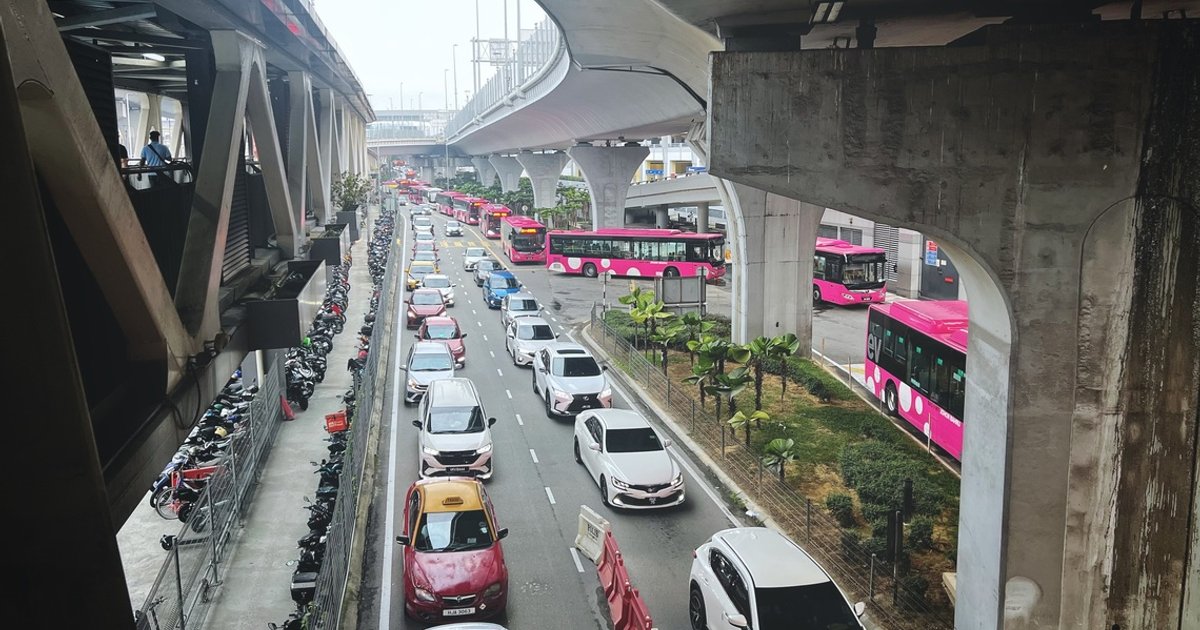
KUALA LUMPUR - A covered pedestrian walkway linking Kuala Lumpur landmarks like Independence Square and the Central Market. More restored heritage buildings. Larger duty-free perks.These are among the measures Malaysia is banking on to woo more tourists, as it steps up efforts to improve the visitor experience and connectivity ahead of the RTS Link launch.The Visit Malaysia 2026 campaign, which started its promotions in 2025, will be extended to 2027, with RM935 million (S$293 million) earmarked for tourism in the 2027 budget unveiled on Oct 9, up by 32.6% from RM705 million in 2026.In 2025, Malaysia attracted a record 42.2 million tourists, the most among South-east Asian countries that year. While the target for 47 million tourists for 2026 has been extended to 2027, around 28.8 million tourists visited in the first eight months of 2026, with Singaporeans leading the Chinese and Indonesians in arrivals.The government is also betting on heritage restoration to attract visitors. Drawing from the success of the restored colonial Sultan Abdul Samad Building, which PM Anwar Ibrahim said in his Budget speech had attracted half a million local and foreign visitors since its reopening in February, the Kuala Lumpur Railway Station, the century-old KTMB Railway Administration Building and iconic skyscraper Dayabumi Complex in KL are next in line to be restored.The restored Sultan Abdul Samad Building, one of Kuala Lumpur’s most recognisable landmarks, attracted half a million visitors since it reopened earlier this year. ST PHOTO: HAZLIN HASSANFurther north and in eastern Malaysia, travellers are set to enjoy a higher limit of RM10,000 for their duty-free purchases in Langkawi and Labuan if they stay at least 48 hours, up from RM1,000 with separate one-litre limits for alcohol previously.Johor steps up transport plans ahead of RTS launchBeyond tourism, Malaysia is seeking to ease congestion in Johor ahead of the planned February 2027 launch of the Rapid Transit System (RTS) Link between Singapore and Malaysia. Better connectivity is also central to its ambitions for the Johor-Singapore Special Economic Zone (JS-SEZ).Unveiling the 2027 budget on Oct 9, Anwar, who is also the Finance Minister, said traffic congestion in Johor had to be addressed urgently. He said the Elevated Autonomous Rapid Transit (e-ART) system will be the main solution, alongside more bus routes, higher KTM Komuter train frequencies and Grab Shuttle services.These will help with traffic dispersal and onward connections to other parts of Johor from Bukit Chagar, where the RTS Link train carrying up to 10,000 passengers an hour from Singapore’s Woodlands North will stop.The Bukit Chagar RTS Link station in Johor Bahru. ST PHOTO: KELVIN CHNGKTM Komuter trains can connect travellers arriving at JB Sentral to other parts of Johor including tourist destinations such as Kluang and Kulai. Grab Shuttle also offers a shared-ride option from Johor Bahru’s city centre to key locations like shopping malls and hospitals.The e-ART could particularly benefit travellers unfamiliar with local roads, encouraging tourists to explore beyond the immediate station area, said USCI’s Professor Hanafi Hamzah, a tourism management expert.He also welcomed the plan to build 22km of covered walkways in KL linked to tourist landmarks, especially for tourists from neighbours Singapore and Thailand without a car.“Walking is an attractive way to discover a city,” he told The Straits Times. “More pedestrian movement may encourage spontaneous visits to cafes, craft outlets, local restaurants, and smaller attractions.”Malaysia is also preparing its border infrastructure for greater cross-border traffic. The allocation for the Malaysian Border Control and Protection Agency (AKPS) will rise more than 13-fold, from RM37 million in 2026 to RM490 million in 2027.In a statement on Oct 10, the border agency said it would prioritise strengthening its officers’ competencies as it prepares for RTS Link operations, so as to keep pace with the increased movement of people, goods and trade, with the Singapore Business Federation projecting Singaporeans spending $1.05 billion more across the Causeway.JS-SEZ seeks to draw more investmentIn his budget speech on Oct 9, Anwar also gave an update on the JS-SEZ, noting that it had recorded RM132 billion in investments from 2025 until June 2026.The special economic zone was first conceptualised in January 2025, with a 3,505 sq km area intended to promote investment and free up movement of goods and people between Johor and Singapore.The JS-SEZ’s master plan will be jointly launched with Singapore Prime Minister Lawrence Wong at the end of 2026, said Anwar. Malaysia had previously said that the blueprint would be released during the next Malaysia-Singapore leaders’ retreat, expected in December.Anwar also offered new details about the Nexus Sedenak industrial hub, first mentioned by the Finance Ministry in June, saying that it has the potential to draw RM12 billion in investments and create 45,000 jobs.The Budget provides for upgrades to roads leading to the 1,188ha site, redeveloped from a palm oil plantation. Anwar said a “Queen Bee approach” would be used, with an anchor investor helping to attract other businesses.Leo Leow, the country director for Malaysia at consultancy Turner & Townsend, said the ideal Queen Bee could be a major advanced manufacturing leader, especially in semiconductors or electronics, that can attract a wider ecosystem of suppliers and technology partners.He said improved connectivity in Johor could benefit a host of sectors, especially occupants of the JS-SEZ.“Manufacturing, industrial and logistics operators can benefit from improved access to labour... Retail, hospitality and commercial operators can also benefit from improved accessibility for customers and employees,” he told ST.Tax perks to attract regional and global headquartersAnwar also pinpointed a need to make it easier to do business in Malaysia, both through tax incentives and greater flexibility in allowing companies to bring in skilled talent.An enhanced Global Services Hub (GSH) incentive, which offers a special 5% tax rate to new companies joining the scheme for up to 30 years, is the standout measure among the Budget’s offerings for regional and global businesses, said Steve Chia, tax leader for PwC Malaysia.Under the scheme, a company must be incorporated in Malaysia, where it runs the regional or global operations of the group, according to the Malaysian Investment Development Authority. Income from qualifying GSH activities, including those in the JS-SEZ, will be taxed at 5%.“This gives groups the long-term certainty to locate regional headquarters, shared services, and treasury centres in Malaysia,” he added.
Malaysia Budget 2027: More tourism spending, investment perks and plans to ease Johor congestion
Full Article
Original Source
Read the full article at Straitstimes →KhanList aggregates and links to publicly available news content. We do not host full articles from third-party sources. Always verify important information with original sources.