
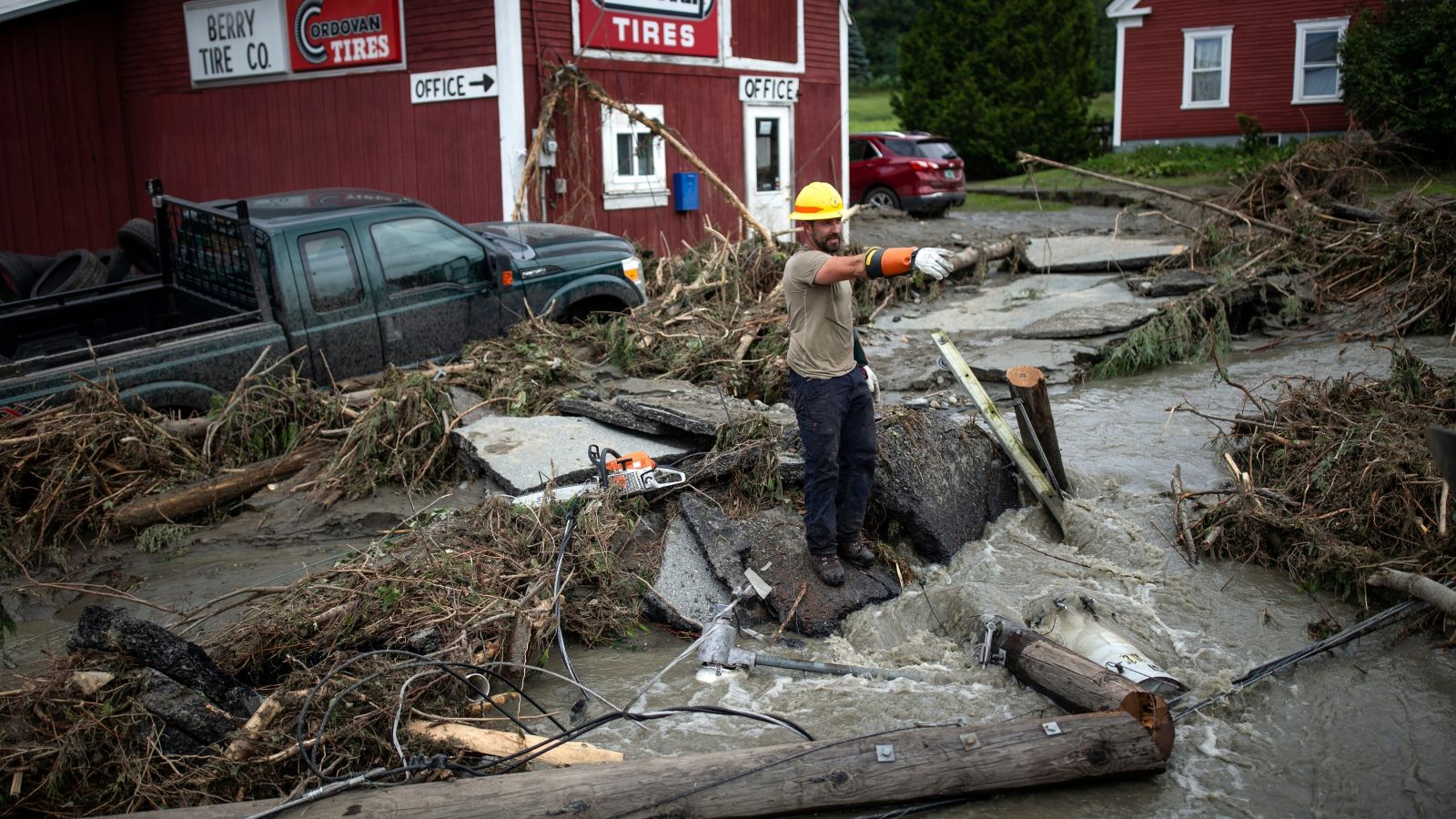
Zac Drown, of Lyndon Electric Company, stands amid flood damage inin Lyndon, Vt., Tuesday, July 30, 2024. (Image credit: AP Photo/Dmitry Belyakov) Transcript: In July, 2023, heavy rain unleashed catastrophic flooding across much of Vermont. Then, a year later to the day, it happened again. For hard-hit cities and towns, the expense of clearing debris and repairing roads and other infrastructure was staggering. And in some small municipalities, the cost far exceeded their entire annual budget. Gaughan: “And so caused an issue where they, in select cases, were pushing up against the amounts that their banking relationships would lend to them.” Michael Gaughan is executive director of the Vermont Bond Bank, which stepped in to help. The state created the bond bank in 1970 to help cities and towns access low-interest financing for infrastructure. Gaughan: “For over 50 years, we’ve had the backs of our communities in Vermont.” In response to the flooding, the bond bank launched a municipal climate recovery fund that offers low-interest loans to help cities and towns rebuild. Gaughan says the fund has helped municipalities across Vermont cover critical costs while they wait for FEMA reimbursements. This fall, Indiana’s bond bank launched a similar program after floods there. And other bond banks across the U.S. could follow suit as climate change fuels more extreme weather. Reporting credit: ChavoBart Digital Media
Low-interest loans help Vermont towns recover from devastating floods
Full Article
Original Source
Read the full article at Yaleclimateconnections →KhanList aggregates and links to publicly available news content. We do not host full articles from third-party sources. Always verify important information with original sources.