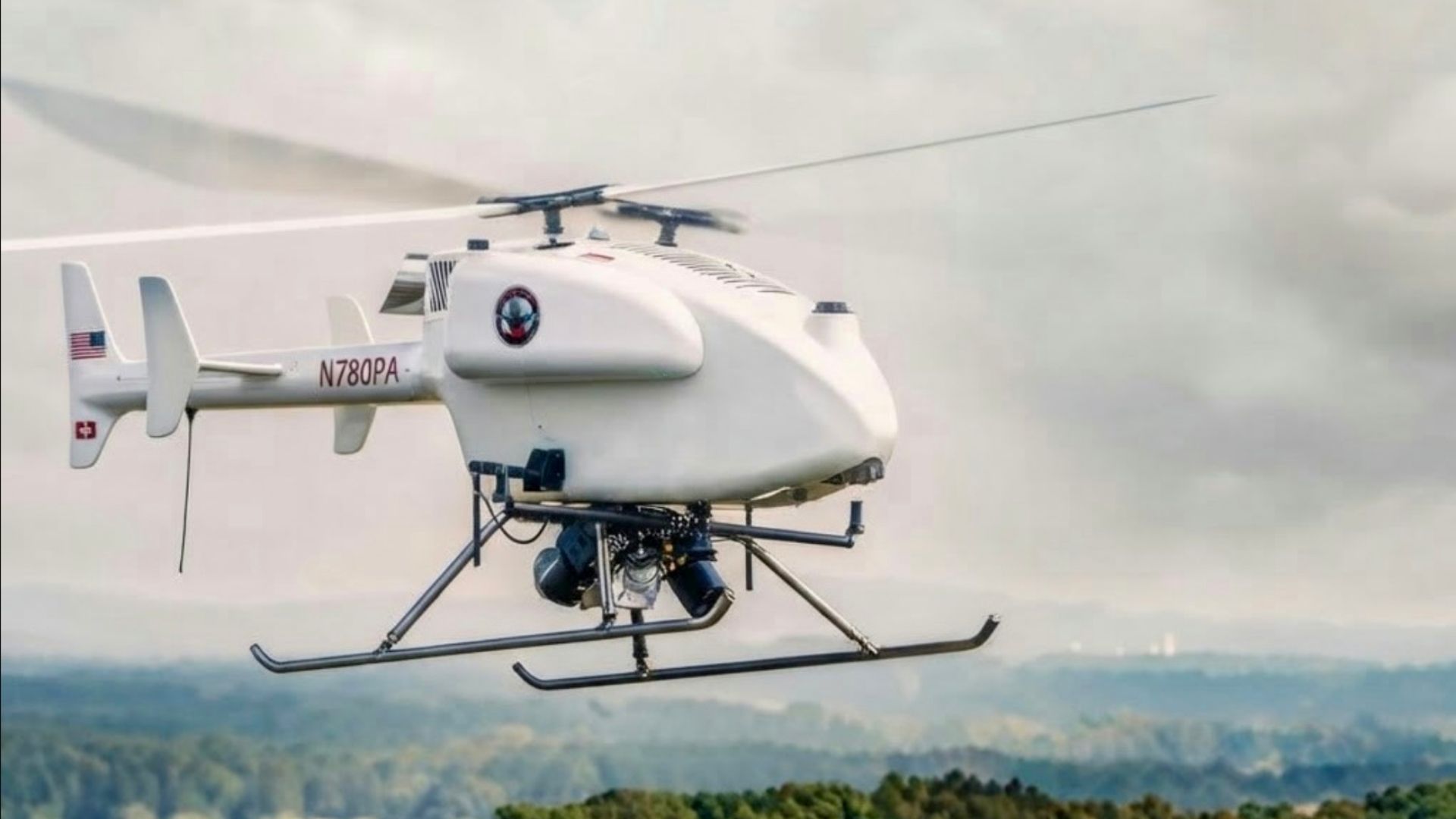
SwissDrones Operating AG and its subsidiary Xplorate Pacific are expanding their integrated long-range drone inspection platform into the United States, the companies announced on August 7. The move targets energy, utility and transportation operators managing pipelines, powerlines and other critical infrastructure across large geographic areas. The companies plan to combine SwissDrones’ turbine-powered uncrewed helicopters with Xplorate’s beyond-visual-line-of-sight (BVLOS) operating experience, sensor integration and data-processing workflows. US programs will be introduced individually under applicable Federal Aviation Administration approvals as regulators work toward more routine BVLOS operations. From aircraft to infrastructure intelligence The platform is designed to address the limitations of small drones, which can lack the range, endurance, communications and payload capacity required to inspect long-linear assets. SwissDrones’ commercially available SDO 50 can carry LiDAR, RGB, multispectral and other industrial sensors. Potential applications also include methane detection. “Industrial customers need more than an aircraft. They need a complete operating capability that combines aircraft performance, regulatory approvals, trained personnel, sensor integration, and data delivery,” said Larry Berkin, Group CEO. “The SDO 50 provides a platform for those missions today, and the SD120 is being developed to extend the mission set further.” he said. Collected information can be georeferenced, processed and delivered to engineering, integrity, environmental and compliance teams. This links aerial operations directly with decisions about maintenance, emissions, damage and infrastructure condition. Australian operations provide a working model Xplorate already operates the SDO 50 along a 550-kilometer pipeline corridor in Queensland, Australia. Recurring commercial missions use configurations and flight procedures determined by customer requirements, local conditions and regulatory authorizations. The operator also holds authorization covering roughly 58,000 square kilometers of Queensland’s Surat Basin. Subject to operating conditions, it permits day and night BVLOS flights around pipelines, powerlines, well sites, processing facilities and other remote assets. Satellite-enabled command and control can support missions where terrestrial communications are limited, although its use depends on mission-specific approvals and safety requirements. This capability could be especially relevant across isolated American energy corridors. US expansion prepares for wider BVLOS use SwissDrones and Xplorate intend to establish customer-support capabilities closer to North American operators. Their approach combines aircraft, trained personnel, safety cases, sensor collection, analytics and data delivery instead of supplying the drone alone. “Our objective is to give infrastructure operators a practical way to evaluate and deploy long-range uncrewed inspection under the regulatory pathways available in the United States,” Berkin said. “We will approach the market program by program, with safety, regulatory compliance, and customer requirements determining each operating model,” he continued. Meanwhile, SwissDrones is developing the larger SD120 with increased payload, endurance, redundancy and system assurance. It is being engineered to support operations targeting SAIL IV under Europe’s Specific Operations Risk Assessment framework, though that classification does not constitute aircraft certification. “The SD120 builds on the operating experience and engineering foundation developed through the SDO 50,” said Lukas Obrist, Chief Technology Officer of SwissDrones. “Our objective is to increase mission capability and system assurance while developing an aircraft and operating system that can support demanding regulatory and customer requirements,” he added. Recommended ArticlesGet the latest in engineering, tech, space & science - delivered daily to your inbox.Atharva is a full-time content writer with a post-graduate degree in media & amp; entertainment and a graduate degree in electronics & telecommunications. He has written in the sports and technology domains respectively. In his leisure time, Atharva loves learning about digital marketing and watching soccer matches. His main goal behind joining Interesting Engineering is to learn more about how the recent technological advancements are helping human beings on both societal and individual levels in their daily lives.
Long-range drones to deliver aerial intelligence on US critical infrastructure
Full Article
Original Source
Read the full article at Interestingengineering →KhanList aggregates and links to publicly available news content. We do not host full articles from third-party sources. Always verify important information with original sources.