
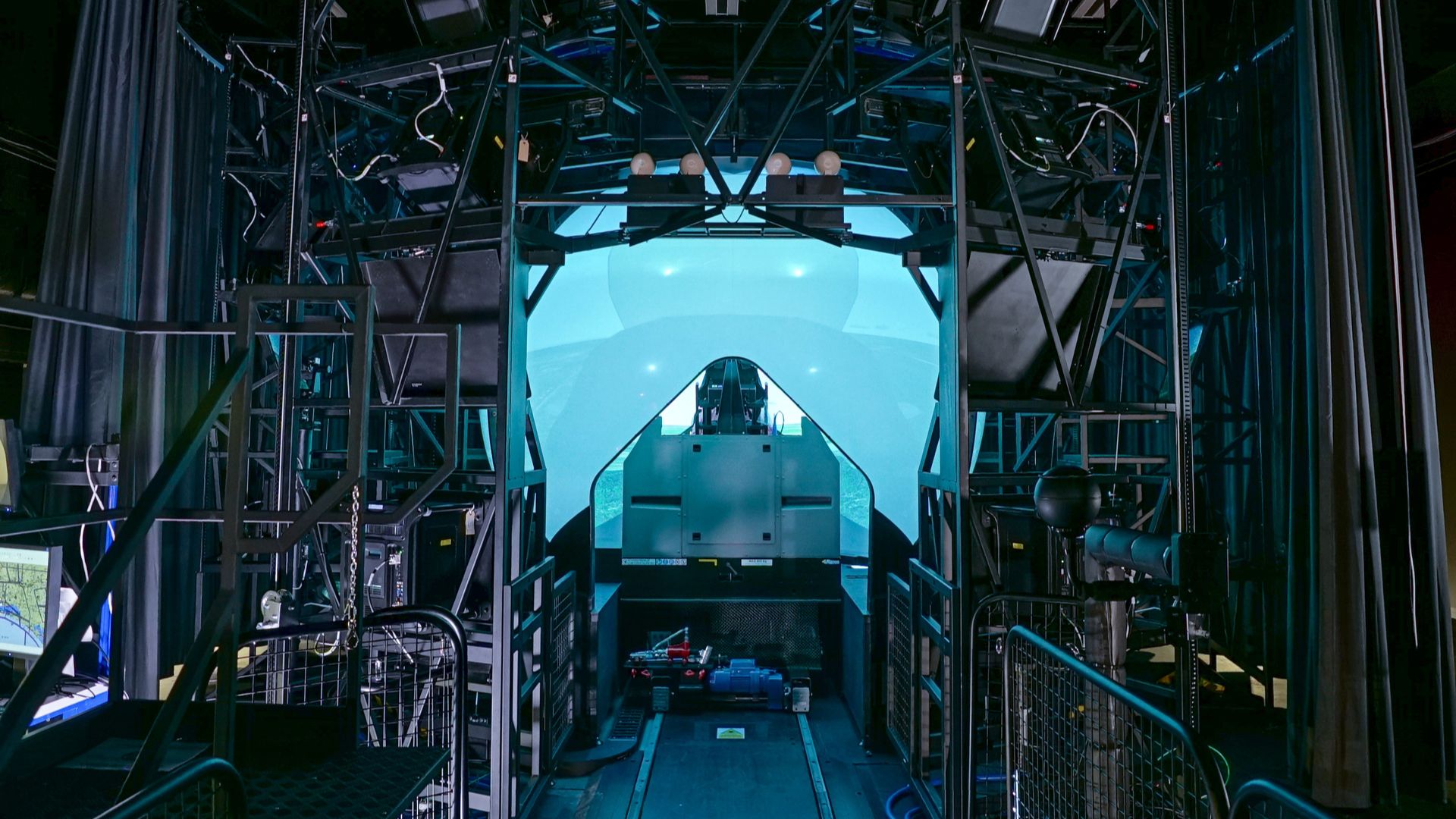
Lockheed Martin connected 16 F-35 full mission simulators across four military bases for a two-hour distributed mission rehearsal. The exercise also brought F-18 simulators and an E-2D Hawkeye controller into the same virtual mission from a fifth location. The event tested how crews stationed thousands of miles apart could coordinate during a simulated multidomain operation, the company said Monday. The participating sites maintained command-and-control links and completed every training objective during the exercise. The F-35 simulators operated from Marine Corps Air Stations Yuma, Miramar and Iwakuni, along with Naval Air Station Lemoore. The F-18 simulators and E-2D Hawkeye controller joined from Naval Air Station Oceana in Virginia. The arrangement allowed geographically separated crews and controllers to train together while working from their respective bases. Each team could operate within a common operational picture during the exercise. The setup also brought together U.S. Marine Corps and U.S. Navy units in a single training event. This gave participants experience coordinating with other platforms and units without moving aircraft or crews to one location. Air, surface and cyber operations Lockheed Martin used its tactical environment simulation to recreate a mission involving air, surface, and cyber operations. The scenario required participants to coordinate their actions while responding within the shared virtual environment. The exercise focused on maintaining communication and situational awareness as information moved between the participating locations. Command-and-control links remained active throughout the event, according to Lockheed Martin. Teams reported uninterrupted situational awareness and data exchange. The company said it completed every planned training objective during the two-hour rehearsal. “This exercise enabled warfighters to train the way they fight,” said Ken Garrett, vice president of F-35 Training and Logistics. “They complete complex missions in coordination across distances – their training should represent their missions.” Training across distances The exercise gave units based at separate installations a chance to rehearse coordination over long distances. Such training can help crews practice working with other units before taking part in live operations. The distributed format also allows participating forces to remain at their home bases during a joint rehearsal. That can support training between units that are separated by large geographic distances. The event showed how simulator networks can connect different aircraft and command platforms during the same mission. It also demonstrated the ability of participating teams to maintain a shared picture throughout the exercise. Building mission readiness The successful rehearsal adds to Lockheed Martin’s work on distributed training for the F-35. Connecting simulators at multiple installations gives military units another way to prepare for missions that require coordination across locations. “Mission rehearsal across multiple bases builds the readiness, interoperability and confidence required to win tomorrow’s missions,” Garrett added. For forces operating from different regions, networked exercises can provide opportunities to train together without bringing aircraft to a common base. The latest event showed that geographically separated crews could complete a shared mission while maintaining communication and situational awareness throughout the exercise.Get the latest in engineering, tech, space & science - delivered daily to your inbox.A versatile writer, Sujita has worked with Mashable Middle East and News Daily 24. When she isn't writing, you can find her glued to the latest web series and movies.
Lockheed connects 16 F-35 flight simulators across four bases for combat drill
Full Article
Original Source
Read the full article at Interestingengineering →KhanList aggregates and links to publicly available news content. We do not host full articles from third-party sources. Always verify important information with original sources.