
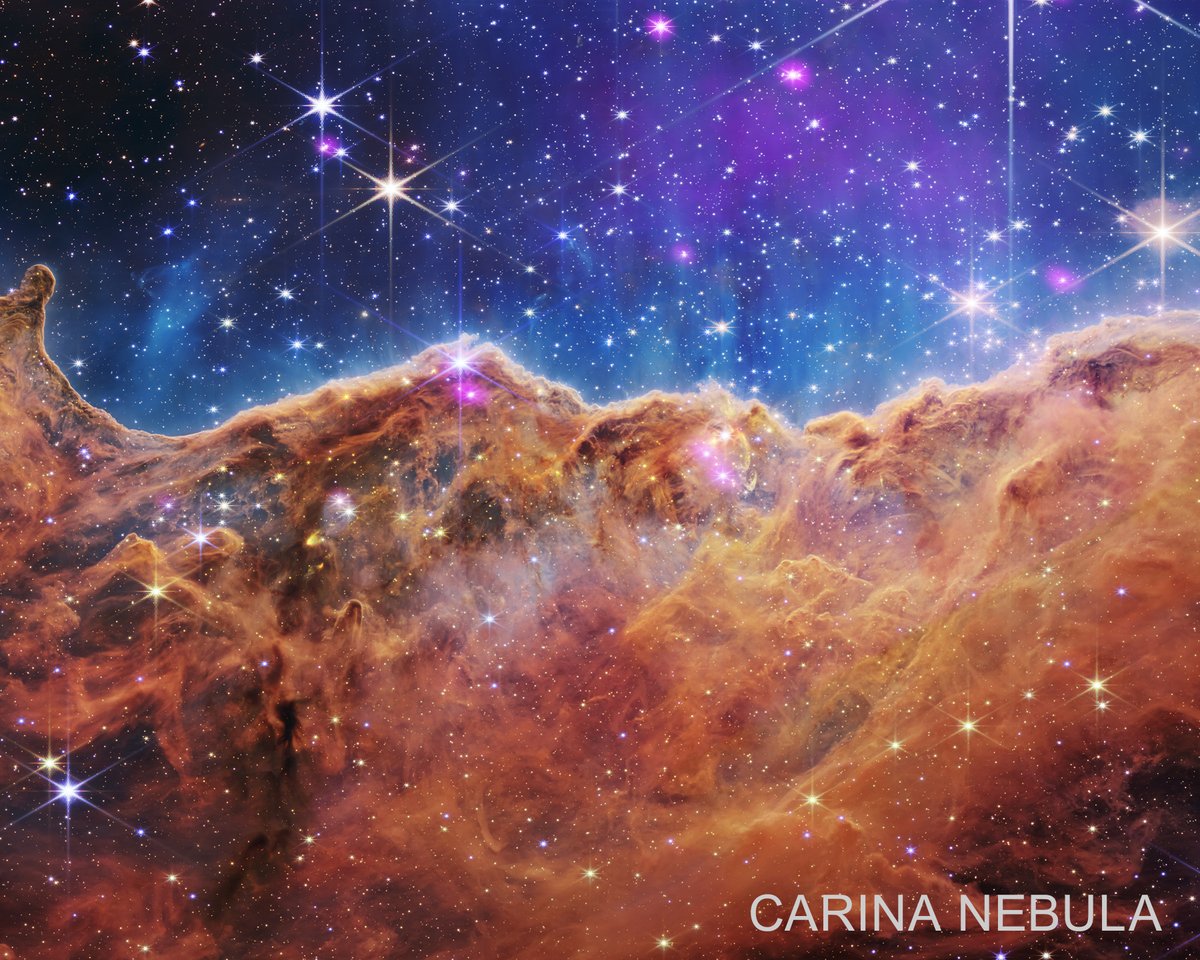
November 22, 20261 min read Add Us On GoogleAdd SciAmNASA just released a new album of sounds created from observations of stellar formationThe Carina Nebula. NASA/CXC/SAO/K. Arcand, SYSTEM Sounds (M. Russo, A. Santaguida)Join Our Community of Science Lovers!The nominations for the upcoming Grammy awards may be in, but the stars we’re listening to are even bigger than Olivia Rodrigo and Bruno Mars.This week, NASA released an album created from observations of baby stars across the galaxy performed by the Chandra X-ray Observatory. The album includes four sonifications of actively forming stars in which data are mapped to sounds, turning stellar formation into a musical journey.Listen to each “star song” below.On supporting science journalismIf you're enjoying this article, consider supporting our award-winning journalism by subscribing. By purchasing a subscription you are helping to ensure the future of impactful stories about the discoveries and ideas shaping our world today.NASA/CXC/SAO (x-ray); NASA/ESA/STScI (optical); NASA/JPL-Caltech (infrared); NASA/CXC/SAO/L. Frattare, J. Major, and K. Arcand (image processing); NASA/CXC/SAO/K. Arcand, SYSTEM Sounds (M. Russo, A. Santaguida) (sonification)Stars are almost constantly forming and dying in Messier 82, which is full of hot gas from the explosions of young, giant stars. X-ray data are captured by high-frequency sounds here, and infrared can be heard as a low drone sound. In between those pitches, visible light is mapped to different musical sounds.NASA/CXC/SAO (x-ray); NASA/ESA/CSA/STScI/M. Mccaughrean, S. Pearson (infrared); NASA/CXC/SAO/K. Arcand and J. Major (image processing); NASA/CXC/SAO/K. Arcand, SYSTEM Sounds (M. Russo, A. Santaguida) (sonification)Just below the Orion constellation’s belt, more than 1,000 young stars twinkle in this sonification. Even the dust and gas in an infrared image are converted to sound as low musical notes and distorted strings here.NASA/CXC/MIT/C. Canizares (x-ray); NASA/ESA/CSA/STScI/K. Pontoppidan (infrared); NASA/ESA/STScI/Alyssa Pagan, NASA/CXC/SAO/L. Frattare and J. Major (image processing); NASA/CXC/SAO/K. Arcand, SYSTEM Sounds (M. Russo, A. Santaguida) (sonification)In the Carina Nebula’s sonification, individual baby stars each get their own string sound, and other instruments reflect the mountainous shape of the galactic region.NASA/CXC/MIT/C. Canizares (x-ray); NASA/ESA/CSA/STScI/K. Pontoppidan (infrared); NASA/ESA/STScI/Alyssa Pagan, NASA/CXC/SAO/L. Frattare and J. Major (image processing); NASA/CXC/SAO/K. Arcand, SYSTEM Sounds (M. Russo, A. Santaguida) (sonification)Consider this the emo track, with dark dust clouds bringing silence in the middle of the song. Beyond that, young stars and a variety of dust observations create an eerie sound experience.Subscribe to Support Independent JournalismGreat science journalism requires human expertise, time, effort and creativity. And it costs money. That’s why I and the journalists here at Scientific American hope you’ll join our community.When you subscribe, you are supporting staff and freelance journalists who are passionate about telling science stories that are true, important and compelling. Our editors and reporters are often experts in their fields, which means they understand the nuances of big discoveries and can untangle the breakthroughs from the hype. With a subscription, you are also supporting rigorous fact-checking to ensure the words we publish are precise and accurate. And you’re supporting original illustrations, graphics and photos that bring you closer to an advanced laboratory, an ice sheet in Antarctica or a space mission in orbit. You’re helping us craft other types of high-quality journalism as well: Our newsletters are carefully written, edited and curated by staffers you have or will come to know and love. Our Science Quickly podcast is based on original reporting, collaboration with editors and scientists and exacting production.Subscriptions keep this engine running so we can continue to deliver thoughtful, rigorous and independent science journalism to you. In an era of viral misinformation, this work is crucial. If you value what we do, I hope you’ll consider joining us as a subscriber
Listen to the sounds of a baby star as it explodes into life
Full Article
Original Source
Read the full article at Scientificamerican →KhanList aggregates and links to publicly available news content. We do not host full articles from third-party sources. Always verify important information with original sources.