
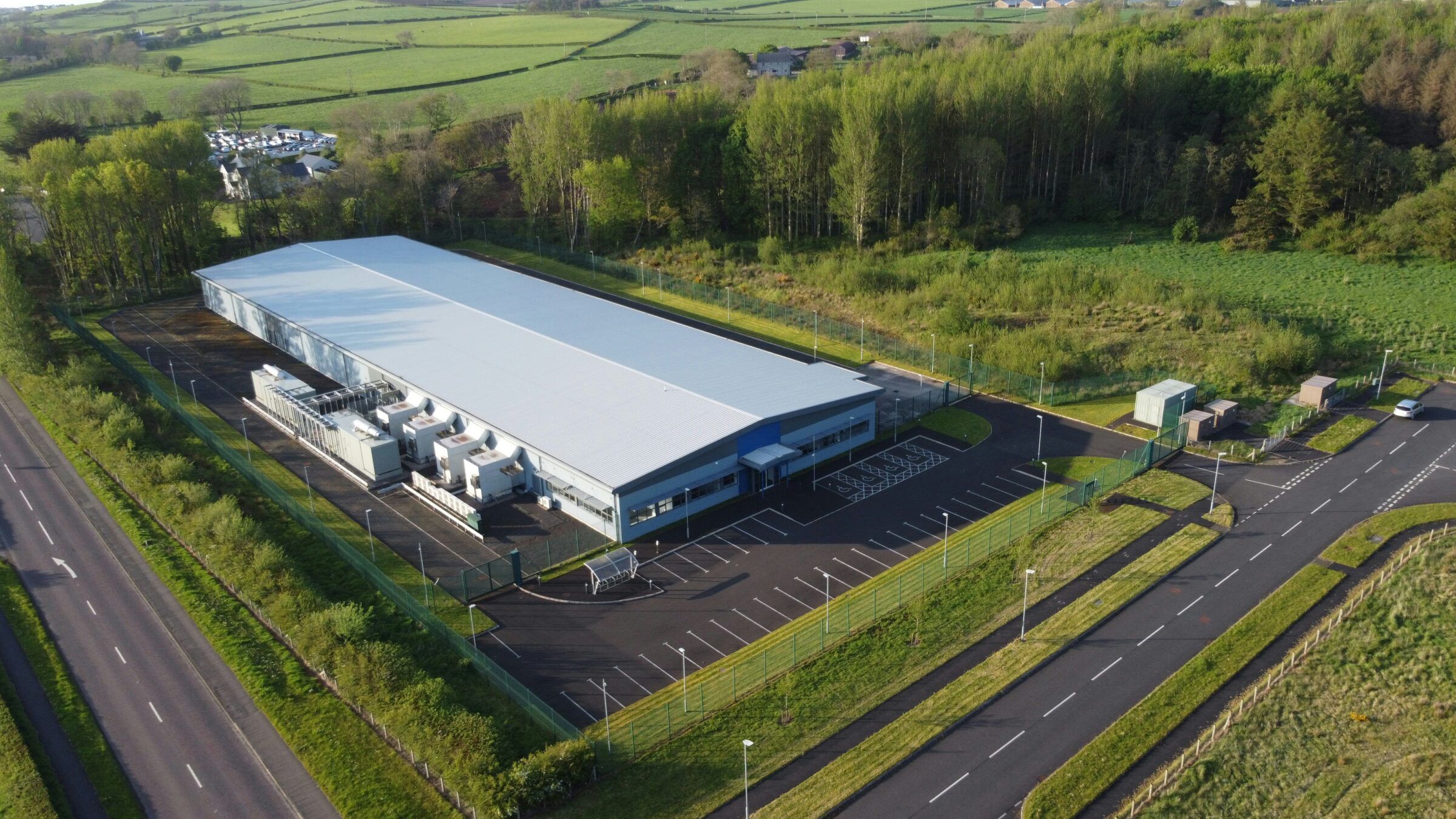
€30bn. That’s how much the EU wants to mobilise to build data centres. But this ambition might run up against an obstacle. In recent years, protests against data centres have been emerging across the European Union. Can local residents influence the AI race? And can Europe make progress on this issue without the support of local communities? Montes Torozos, north-western Spain. Wide plateaus and beautiful hills, small stone villages, castles and monasteries. And soon, perhaps, a large data centre in the middle of this historic, dry landscape. The small municipality of Torrelobatón, home to fewer than 400 people, is where the company DC Mudarra S.L.U. has chosen to develop a data centre across 120 hectares. A little further east, in Aragon, Microsoft and Amazon are also looking to roll out their AI factories. Over the past three years, rural areas in northern Spain have become increasingly attractive to tech giants. Why? Simply because these sparsely populated regions offer large areas of available land. And that’s exactly what these massive infrastructures require. But Sofía Corral Alonso, an opponent of the Torrelobatón data centre, interviewed by El Salto, our Spanish partners within the Sphera network, sees another reason: “For AI companies, it is easier to go to areas where there is so little population density that they think that no one is going to fight against it, or that we are not going to read the 500 pages of the project.” Except the people of Torrelobatón did. And so they started a petition against the project. Torrelobatón and Spain are no exception. For years, citizens have been mobilising against new data centres, everywhere from Europe to the United States. Why is that? At the heart of these battles is, of course, access to resources. Data centres require thousands of cubic metres of water for cooling, on top of the water needed to produce the electricity that powers them — and they need a lot of that, too. The problem is that Spain, like other places, already faces severe water stress. This is why Sofía Corral Alonso fears that her region “will end up being exploited to the point of becoming uninhabitable.” At stake, there’s also a democratic question: who gets to decide? Across Europe and the United States, people opposing data centre projects are not necessarily anti-AI. Nor do they necessarily belong to one particular political camp. This is what our Italian colleagues at VD News explain in an article: “The question is not whether we need data centres. It is who decides how and where they are built — and who pays for their environmental, energy and social impact?” Now, is Europe taking these concerns into account? The EU seems to be focusing more heavily on another issue: its technological sovereignty. It launched a call for projects this summer to build seven so-called AI gigafactories across the continent. What the EU wants is to be able to develop its own AI models and not be dependent on US or Chinese technologies. And it needs data centres for that. According to 2025 figures from Stanford University in California, around 60 percent of the world’s most advanced AI models come from the United States, around 30 percent from China, and less than five percent from Europe. But while the EU can encourage the AI race, it does not have the final say on approving a project and allocating land. This remains in the hands of national governments and local authorities. And some of these authorities are now putting the brakes on. Amsterdam, for instance, introduced a moratorium on new data centre development until 2030. Ireland, on the other hand, saw its electricity bill rise by €1.4bn, largely as a result of the growing electricity consumption of its more than 80 data centres. So the Irish government now requires tech giants to contribute to producing the electricity they consume themselves. But other countries or local authorities are keener to quickly authorise the installation of data centres. That’s why the Spanish collective Tu Nube Seca Mi Río — “Your Cloud Dries Up My River” — is calling for a moratorium. Similar demands are also being made by civil society groups in France. The idea of a moratorium is not necessarily to stop the race for technological sovereignty altogether. But to pause it, to make sure that it does not happen without consulting the communities directly affected by it. Because without that conversation, the risk is that it could create a new source of social and political polarisation
Listen: Can local opposition derail Europe’s data centre boom?
Full Article
Original Source
Read the full article at Euobserver →KhanList aggregates and links to publicly available news content. We do not host full articles from third-party sources. Always verify important information with original sources.