
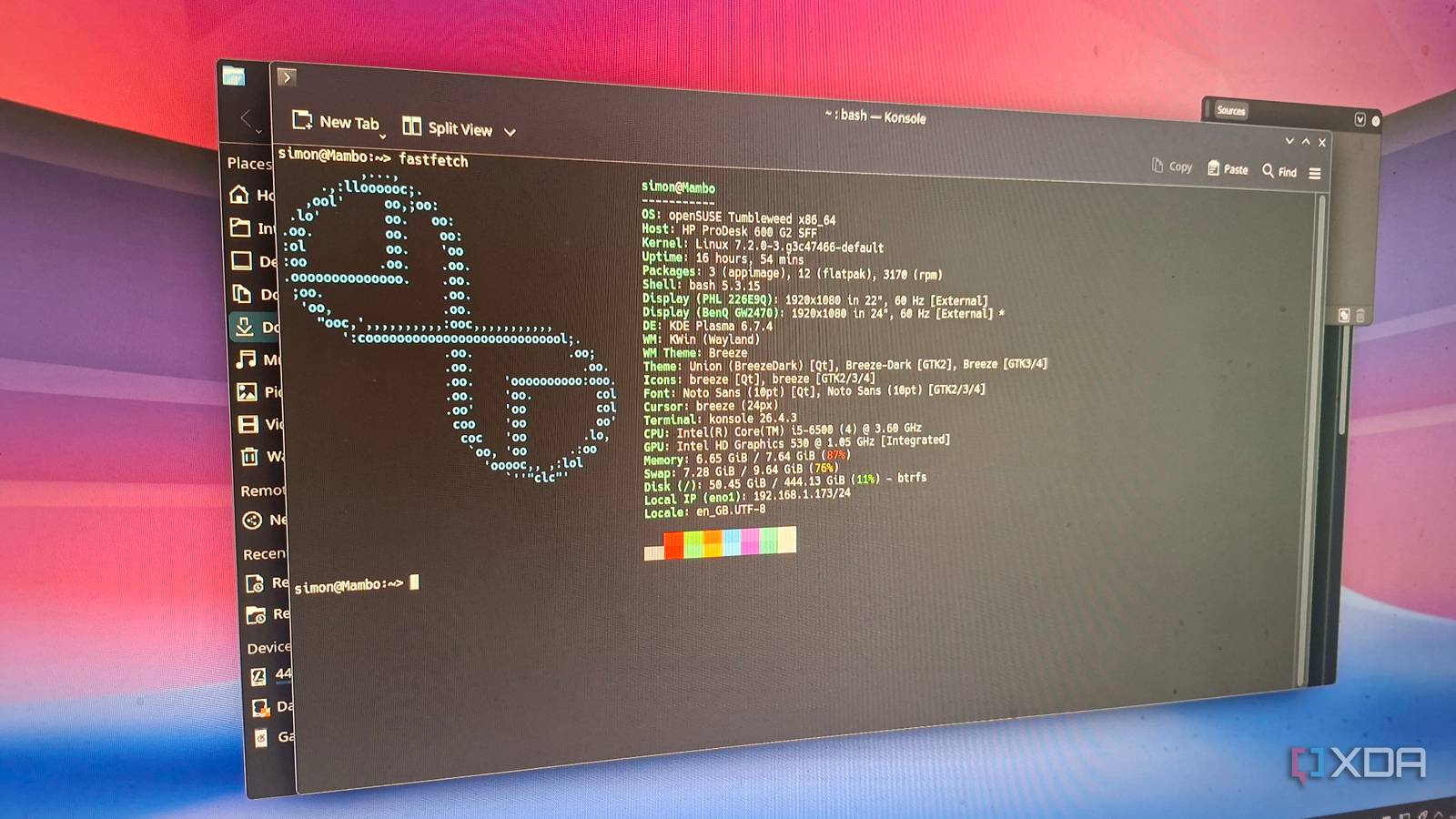
Published Aug 26, 2026, 9:00 AM EDT Simon is a Computer Science BSc graduate who has been writing about technology since 2014, and using Windows machines since 3.1. After working for an indie game studio and acting as the family's go-to technician for all computer issues, he found his passion for writing and decided to use his skill set to write about all things tech. Since beginning his writing career, he has written for many different publications such as WorldStart, Listverse, and MakeTechEasier. However, after finding his home at MakeUseOf in February 2019, he would eventually move on to its sister site, XDA, to bring the latest and greatest in Windows, Linux, and DIY electronics. Just over a year ago, I came across a problem. My old Windows 10 PC was on the extended Microsoft support program, but I knew the writing was already on the wall. My PC was running fine for now, but when Microsoft finally pulls the plug on Windows 10 support in October 2027, I'll be stuck with a choice: either continue using Windows 10 without patches, or buy a new PC. Fortunately, I had recently discovered a third option: installing Linux. It was an almost perfect plan; I could keep my functioning (albeit old) hardware, I could jump to an OS that didn't have an expiration date, and I could try something new. But don't get me wrong; it was very much a stopgap until I could grab a new PC and upgrade to Windows 11. But that plan quickly got scrapped. I love how I have total freedom to change my OS as I please No more restraints over what I can and can't do One of the first moments where Linux 'clicked' for me was when I mentally separated the Linux distro from the desktop environment. I had been using Windows for three decades, so I automatically assumed that whatever you saw when you booted into a Linux distro was how it looked, and there was no way to change it. This caused an unfortunate quick rebound off Ubuntu because I assumed the GNOME spin was just "how Ubuntu looked," and GNOME was far too different for my sensitive ex-Windows self. When I realised that the distro and the desktop environment were two different entities—that I could always swap out GNOME in Ubuntu for, say, KDE or COSMIC—Linux suddenly began making sense. Finding a home away from home came down to solving two problems: finding a distro that aligned with my personal attitude toward open-source software, and finding a desktop environment that made me feel comfortable. Best of all, each desktop environment looked remarkably different from the others. Check out the gallery above: the first two images are GNOME, the third and fourth show KDE Plasma, and the last is COSMIC. They look like totally different operating systems, but you can easily have all three installed on the same distro and swap between them via the login screen. I eventually landed on Fedora KDE, and it quickly became so central on my daily driver that I didn't want to go back to Windows. I really liked Fedora's idea of using the software I was using as a testbed for commercial use, and KDE was just the right amount of customizability alongside the powerful apps that come with it. I have since migrated to openSUSE Tumbleweed with KDE because I adore Snapper, but Fedora still holds a place in my heart. It feels good not being fed things from a corporation I also experienced what it felt like using an OS that wasn't the end product of a huge corporation for the first time. It doesn't sound like it'd be a big deal at first, but over time, I learnt that while companies such as Microsoft treat their operating system as a product people buy, Linux offers its distros as tools that people use. This means that the Linux community isn't driven toward making changes for the sake of making money. While Microsoft is always working on ways to get people to buy Windows 11 licences, pay for its Microsoft 365 service, and shell out for a new Surface device, the Linux community's stance with its OS is to make it as useful as possible. For instance, take the recent change to Linux 7.3. The sole reason for that commit is to make it so that people with CPUs that are over five years old could achieve more stable framerates, mostly by ensuring the frames don't drop to unplayable minimums. That change wasn't because someone's trying to sell Intel Core i7-2600K CPUs; it's because someone found a flaw with how Linux handled things on older hardware and decided to fix it. The corporations don't really jump through hoops to preserve old hardware like this. If your software begins chugging on your hardware, the solution is usually to bin it and buy a new one; preferably from the OS manufacturer's official store. But there is no official "Linux Store" on the high street, and Linus Torvalds isn't trying to push the sale of bespoke Linux Laptops. Linux is a tool first and foremost, and if that tool doesn't work properly on older hardware, someone will fix it. It feels human-made Speaking of the community working together to fix things, I really love how Linux isn't something a company spat out. Instead, it's the collective effort of lots of developers around the world who united to achieve a common goal, and the best part is, the evidence of this is clear to see. Because Linux development is open-source, you can poke your nose into the discussions and patches that people held and see what they're saying. You can find people discovering bugs, debating on issues, and having grand ideas about where to take Linux. And it's more than just the kernel, too; for instance, KDE's "This Week in Plasma" digest gives users a weekly rundown of everything everyone is working on, complete with credits for each developer who made something. And then there's the recent debate over AI coding's place in the open-source world. Unlike Windows, Linux doesn't force AI on you; instead, it's something you either embrace or reject. Whatever your stance is, you can then find a like-minded distro community that upholds your beliefs. Where one distro's community embraces AI coding and tools, another will forbid it, and you can pick the ones that align with your view. Overall, there's a strong sense of community with Linux. You use a distro made by people you believe in, use software you can watch being made in front of you, and share tips and tricks with others who are in the same boat as you. It's a lot more "human" than just consuming a product, that's for sure. Linux went from a temporary haven to my new home Buying a new PC is still very much on the cards, but Windows is no longer part of the equation. With Linux giving me a fresh new take on how operating systems can be, I think I'll save some money and go for a windowless build next time.
Linux was supposed to be temporary, but these things made me forget about Windows entirely
Full Article
Original Source
Read the full article at Xda-developers →KhanList aggregates and links to publicly available news content. We do not host full articles from third-party sources. Always verify important information with original sources.