
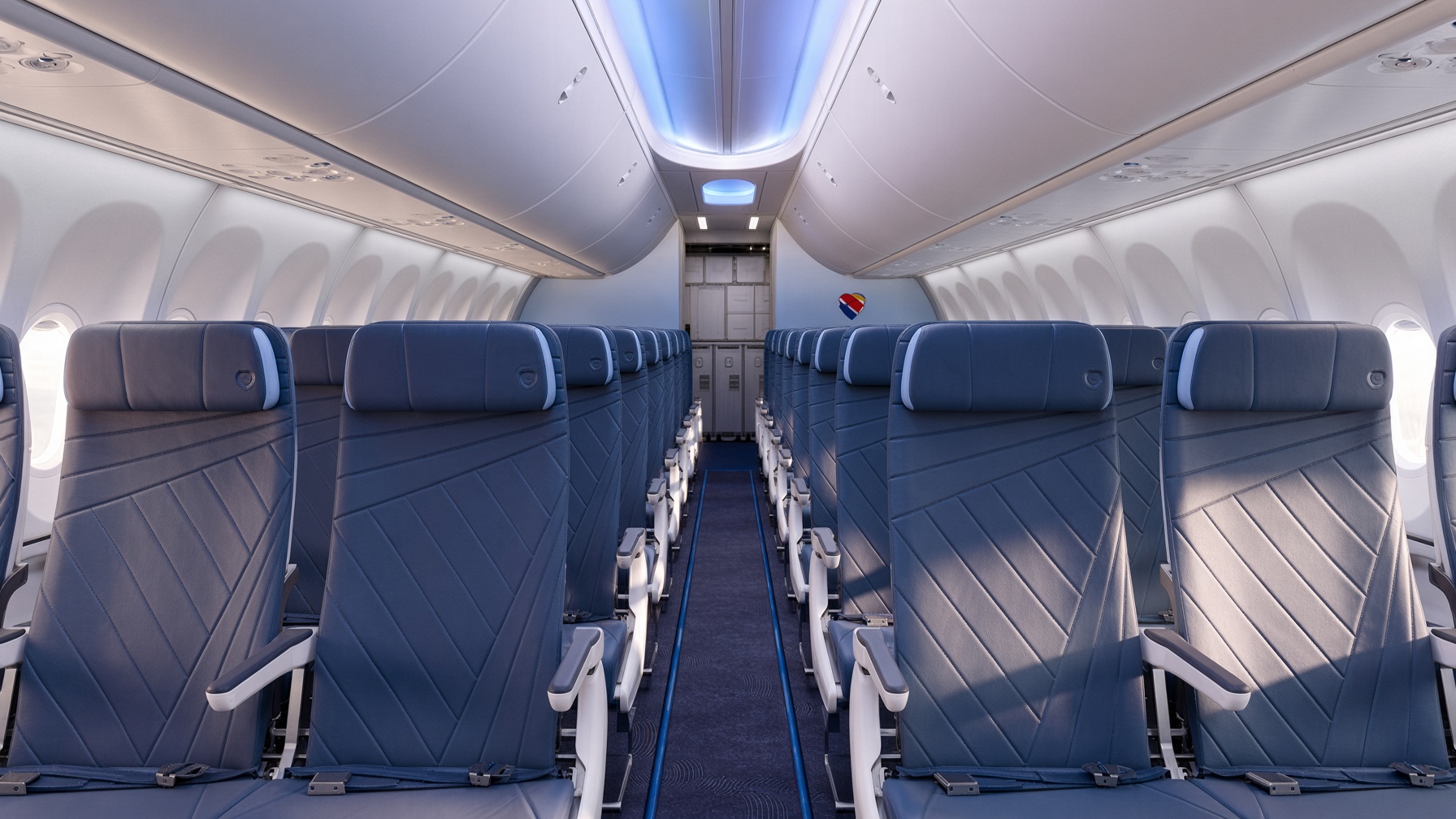
Southwest Airlines plans to start flying passengers on its Boeing 737 MAX 7s in March 2027, according to an internal rollout document shared with me. The aircraft are slated to have 150 Recaro seats, Starlink internet, seat power and bigger overhead bins, much better than the airline’s aging small planes. The document lays out how Southwest expects to get there, starting with deliveries in mid-to-late December. December Deliveries, March Passenger Flights The Boeing 737 MAX 7 received FAA certification on August 3. That followed years of delays, with the approved design incorporating a revised engine anti-ice system and updates to flight controls and pilot alerts. Southwest still has to complete its own operating approvals. Its most recent quarterly filing lays out the training, inspections, documentation and validation flights with FAA personnel that are needed. Mid-to-late December 2026: Southwest expects to begin accepting aircraft from the batch of 27 already built. February 2027: Newly built aircraft begin arriving. Preparation: Configuration, maintenance and other work takes place at Paine Field, Phoenix and Kansas City. Before passenger service: Each prebuilt aircraft gets at least five flights after its preparation work, including a simulated extended-overwater operation lasting more than 3.5 hours. By the end of 2026: The airline intends to put the MAX 7 into published schedules, with passenger flying starting in March 2027. The date is marked subject to change. The plan also calls for regular flying to keep delivered aircraft ready before service begins. It lists “+90 flights” across the fleet for this work, without explaining how those flights overlap with the validation program. Southwest had disclosed the 27 prebuilt aircraft and late-year deliveries. Chief Operating Officer Andrew Watterson had also pointed to a spring break launch. But we now have more specific timing and the work planned between delivery and passenger service. 150 Seats, Starlink And Three Bathrooms Here’s how the planes will be equipped: 150 Recaro seats, with indicators identifying extra legroom seats. Starlink wifi and in-seat power. Larger overhead bins and a refreshed interior. Two exit rows and three lavatories, with two bathrooms at the back. A secondary physical barrier for the flight deck, cockpit power, locks for crew overhead bins, and a prerecorded announcement and music system. Southwest’s cabin design and Recaro seats were announced but this shows more than just a MAX 7 seat map. The 150-seat count is slightly more than in Southwest’s 2024 investor presentation which had 148 seats, 48 extra legroom seats and 100 standard seats with most rows at 34 and 31 inches of pitch. There’s a strong reason to stop at 150 seats. They need one flight attendant per 50 passenger seats. 151 seats would require an additional flight attendant. Three lavatories is actually an improvement over the two on Southwest’s 737-700s. Starlink is amazing and Southwest plans to install it quickly. I’ve written about avoiding Southwest because unreliable internet meant losing productive hours. They’ve committed to fleet-wide Starlink by fall 2027. The MAX 7 Has Two Jobs Southwest’s October 22 order position works out to 240 undelivered MAX 7s and 201 undelivered MAX 8s, plus 130 options, under contracts extending through 2031. That subtracts 46 MAX 8s already received from the totals in the filing. Those orders support both replacement and growth. But the immediate fleet plan is overwhelmingly replacement: Southwest expects 67 deliveries and roughly 60 retirements this year. They still had 271 Boeing 737-700s at September 30, averaging 20 years old. Replacing a current 137-seat 737-700 with a 150-seat MAX 7 adds 13 seats, about 9.5%. The larger MAX 8 can spread costs across more passengers when demand supports it; the MAX 7 leaves fewer seats to fill on thinner routes. In his August interview on The Air Show, Watterson said the first 27 MAX 7s would take over the extended overwater role of 28 older 737-800s. Those older aircraft would keep flying with a less demanding maintenance program. Watterson identified Burbank–Honolulu, hot-weather departures from Phoenix and Las Vegas to Hawaii, and interisland flying as uses. A Better Cabin Still Leaves A Premium Seat Gap I’ve argued that Southwest’s changes follow from one another. Once they gave up much of what made the airline different, they needed more of the products that make customers willing to pay competitors a premium. Better wifi, power and a modern cabin help. Larger bins also help accommodate the carry-ons that bag fees encourage passengers to bring onboard. The MAX 7 preserves something from the old Southwest, too: an aircraft in the same 737 family that can serve routes without needing the demand for a larger plane. It improves their options below 175 seats. A 150-seat jet still doesn’t solve the small-community feeder problem I’ve raised several times, including in discussing a potential long haul network. But they’re rolling out new planes, with new seats, and still not putting in first class. They’ll soon be the only major U.S. airline without it – even Frontier and Allegiant will have it! If there was a time to do it you’d think it would be now. Frontier is actually launching its first class on March 5, 2027 – right when Southwest plans to start flying these planes. Topics on this page
Leaked Southwest 737 MAX 7 Plan Targets March 2027 Flights—150 Seats, Starlink And Bigger Overhead Bins
Full Article
Original Source
Read the full article at Viewfromthewing →KhanList aggregates and links to publicly available news content. We do not host full articles from third-party sources. Always verify important information with original sources.