
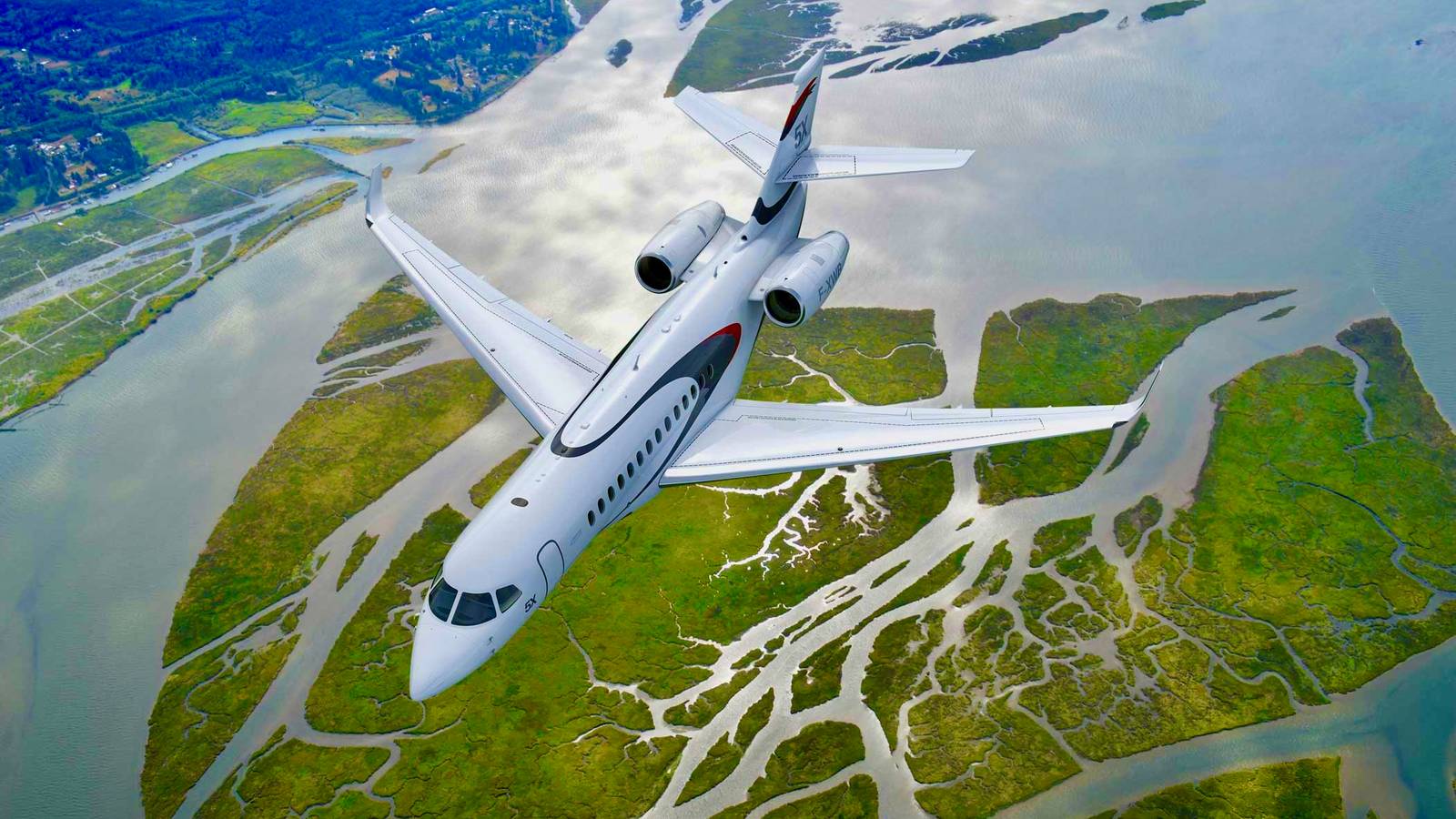
Published Oct 31, 2026, 5:00 PM EDT Ethan is an aviation professional with a degree in Aviation Management with Flight from the Florida Institute of Technology. He previously wrote aviation and tourism features for Florida Tech’s student newspaper, The Crimson, where he developed a clear, reader‑focused reporting style. Aviation journalism has remained a consistent priority throughout his career. He currently holds a Restricted ATP and Commercial Multi‑Engine Pilot certificate and works in aviation supply chain and aircraft component repair. Alongside his industry role, he is pursuing his Certified Flight Instructor rating and actively building flight experience. A lifelong aviation enthusiast, Ethan spent countless hours at Raleigh–Durham International Airport’s observation deck studying air traffic and practicing amateur photography and videography. The Boeing 787-3 was a planned program for Boeing's lineup of commercial aircraft. However, the program was canceled before the first example took flight. As with most product lines that never take flight, firms typically cancel them well before the first flight, or even before the first manufactured example takes shape. Dassault Falcon Jet Corporation developed a platform that made it through most of the planning stages and even flew a series of test flights. The Dassault Falcon 5X was originally announced at the NBAA Convention in Las Vegas in October 2013, according to Monarch Air Group. This program was intended to become Dassault's largest and most technologically advanced business jet. Promised to debut as the corporate aviation manufacturer's new flagship, it drew significant market interest, although only limited order disclosures are publicly known. Why Did Dassault Cancel The Falcon 5X? Most business jets in the modern jet age are powered by reputable engine manufacturers. Gulfstream, Bombardier, and Textron Aviation products are commonly powered by Honeywell, Pratt & Whitney, General Electric(GE), and Rolls-Royce engine models, among other offerings. The Falcon 5X was designed in collaboration with a unique player in the powerplant marketplace, located near its main headquarters in France. Safran developed an in-house business aviation powerplant subdivision known as Silvercrest. Aviation International News reported back in 2006 when the program was launched, that it promised an alternative to traditional engine manufacturers; Safran's extensive background in the supply chain for a wide variety of airframe components was a signal of the French Corporation's bandwidth to develop its own engines. Unfortunately, the Silvercrest turbofan quickly emerged as a bottleneck for the Falcon 5X program. Technical problems repeatedly delayed entry into service, turning what began as a competitive advantage into the program's greatest liability. The program was effectively terminated in 2017, according to Safran's press release on the unit. Vadim Feldzer, a spokesperson for Dassault Aviation, said the Falcon 5X program is old news, with new offerings currently on the market. "The 5X program got canceled almost 10 years ago. It’s an old story now." What Went Wrong With Safran's Silvercrest Engine? Credit: Alphacit Newim Reporter | Shutterstock The core issue centered on Silvercrest's high-pressure compressor. During development and testing, the engine encountered performance shortcomings that prevented it from meeting certification requirements. Safran repeatedly modified the design to solve the problem, but each redesign required additional testing and validation. AOPA reports that Textron's Cessna was also interested in the Silvercrest for their super mid-size Citation Longitude, prior to switching to Honeywell’s 7,600-lbst HTF7700L engines. In a similar fashion to Pratt & Whitney Geared Turbofan (GTF) engine shortages and manufacturing defects for the Airbus A320neo and Airbus A321neo families, the Silvercrest engine faced similar production challenges. As a result, this delayed the airframe program as a whole, forcing Dassault to wait until production delays cleared. Unfortunately for Dassault and Safran, that day never came. Safran's Various Propulsion Entities Cover a Broad Array of Components Business Unit What They Make Common Products Safran Aircraft Engines Commercial and military aircraft engines LEAP, CFM56, M88, Silvercrest CFM International (50/50 Joint Venture with GE Aerospace) Narrowbody turbofans LEAP, CFM56 Safran Helicopter Engines Helicopter turbine engines Arriel, Arrius, Ardiden, Makila, Aneto Safran Power Units Auxiliary Power Units (APUs) eAPU series, APS products Safran Nacelles Engine nacelles & thrust reversers A320neo, Airbus A330, Airbus A350, LEAP nacelles Safran Electrical & Power Electric propulsion and power systems ENGINeUS electric motor family RISE Program (with GE) Future open-fan propulsion Demonstrator for next-generation single-aisle aircraft engines Safran and CFM both outline their propulsion product lines on their websites, many of which are collaborative. Beyond power-generating products, Safran also has entities specializing in cabin interiors, landing gear assemblies, and more. The Safran Aircraft Engines Division was primarily responsible for the engineering behind the Silvercrest engine, but has since pivoted to focus solely on its collaborations with CFM on the Leap engine and CFM56 engine. Why Was Flying The Aircraft Not Enough To Save The Program? Credit: VanderWolf Images | Shutterstock An aircraft manufacturer does not certify a business jet as separate pieces, but rather as one complete, customer-ready unit. As a result, regulators can certify the entire package, including the exact engines customers will receive. Although the Falcon 5X successfully completed its maiden flight on July 5, 2017, the program remained dependent on a certified production-standard Silvercrest engine before deliveries could begin. The optics were particularly frustrating for Dassault. As reported on the Dassault website, the Falcon 5X looked close to completion. The aircraft featured a cabin nearly six feet (1.83 meters) tall, fly-by-wire technology derived from Dassault's fighter and business jet expertise, and a range targeting approximately 5,200 nautical miles (9,630 km). Customers could see a tangible aircraft taking shape, yet a component outside Dassault's direct control stalled the program. Dassault's dependence on a coherent Silvercrest program eventually transformed a technical issue into a commercial one. Because delays in aerospace development rarely affect only engineering teams, they trickled down to the customer level on Dassault's side. The only publicly known order for the Falcon 5X was from Wallan Aviation, according to Corporate Jet Investor. Dassault Aviation officially canceled the entire program on December 14, 2017, voiding Wallan's order along with other undisclosed customer commitments. An Engineering Deep Dive On The Silvercrest During testing, engineers encountered issues within the engine's high-pressure compressor, one of the most critical components in any modern turbofan. The compressor's job is to squeeze incoming air before it enters the combustion chamber, prior to the power stage, which ignites the fuel and air mixture. Even relatively small inefficiencies can affect thrust, fuel consumption, temperature, and certification margins throughout the entire engine. Despite the known root cause of the delays, the Falcon 5X story becomes increasingly more ambiguous. Safran never publicly released a level of detail outlining the specific component specifications at stake. There are no publicly available service bulletins, IPC references, engineering drawings, or compressor redesign kits that can verify this; all of this material became permanently unpublished and proprietary upon the demise of the program. An unexpected outcome of the presumably defunct product line has recently surfaced, however. Flight Global reported that earlier this year, Safran announced a project to hybridize the original Silvercrest engine design was in work, in the pursuit of an electrified engine. Rising fuel costs have forced manufacturers to lean into their most fuel efficient models, and pursue various initiatives to help reduce the requirement for large amounts of Jet-A. How Did The Delays Begin To Threaten The Business Case? Credit: Sergey Kohl | Shutterstock As certification timelines slipped, customer confidence began eroding. Dassault disclosed that twelve Falcon 5X orders were canceled during 2016 as uncertainty surrounding the program increased. While that represented only a portion of the total order book, it demonstrated that the market's patience was not unlimited. Business jet customers often make fleet decisions years in advance, coordinating aircraft deliveries with financing plans, retirement schedules for existing jets, and corporate travel requirements. Global private jet demand remains resilient and structurally elevated following a lasting post-pandemic surge, emphasizing intricate fleet planning and a level of commitment from the manufacturer. Every additional delay increased the risk that customers would shift to competing products from Gulfstream, Bombardier, or other industry competitors. By late 2017, Dassault faced a difficult choice between continuing to absorb delays or pursuing an alternative path. But Dassault did not simply walk away from the large-cabin segment. Instead, the company made a decision that revealed how much confidence it still had in the underlying aircraft design. Dassault currently offers five concise platforms: Falcon 10X - Dassault's forthcoming ultra-long-range flagship. Falcon 8X - A long-range tri-jet designed for intercontinental missions. Falcon 6X - The manufacturer's newest large-cabin business jet. Falcon 2000LXS - A super-midsize aircraft focused on versatility and efficiency. Falcon Multi-Mission - A special-mission platform adapted for government and defense operations. How Did The Falcon 6X Emerge From The Ashes Of The 5X? Credit: VanderWolf Images | Shutterstock Rather than abandon years of development work, Dassault effectively rebuilt the program around a different engine. The company launched the Falcon 6X immediately after canceling the Falcon 5X, replacing the troubled Silvercrest with Pratt & Whitney's PW800-series powerplants. The new aircraft retained many of the design concepts that had originally made the 5X attractive to customers. This approach reflected Dassault's conclusion that the airframe was not the problem. In its cancellation announcement, the manufacturer emphasized that the decision stemmed from continuing engine issues rather than shortcomings with the aircraft itself. The Falcon 6X would ultimately preserve much of the cabin architecture, interior spaciousness, and market positioning planned for the 5X, while benefiting from a powerplant with a more predictable certification path. Feldzer added that the Falcon 6X has benefited from the development of the Falcon 5X. With a plethora of new features and strong customer feedback, he suggested the newer 6X is well positioned in the current market. "Flight crews report that the 6X has the best handling of any Falcon ever (already known for precision control), in large measure due to its third generation digital-flight controls, a further refinement of the systems found on the 8X. Pilots say “kiss” landings are routine...Passengers say the 6X is remarkably quiet, easily as quiet as the Falcon 8X, considered by many the standard in the industry when it comes to noise reduction. Passengers are also finding that the spaciousness of the 6X provides real benefits in comfort and productivity."
Here’s Why Dassault Scrapped The Falcon 5X Before It Ever Entered Service
Full Article
Original Source
Read the full article at Simpleflying →KhanList aggregates and links to publicly available news content. We do not host full articles from third-party sources. Always verify important information with original sources.