
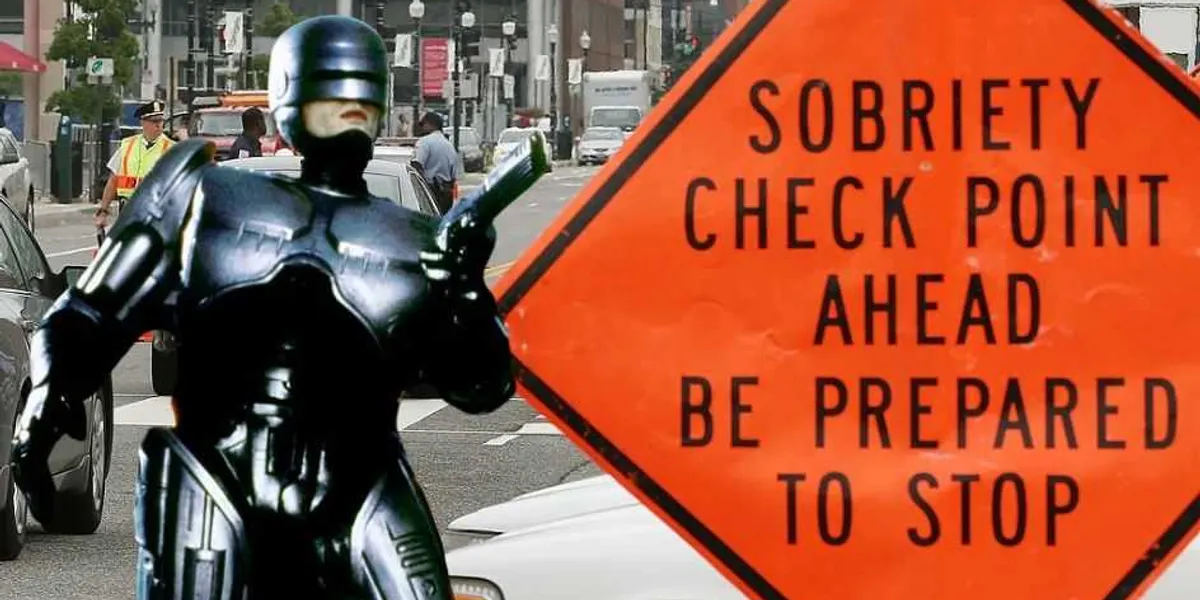
Nearly five years ago, Congress ordered the federal government to develop technology that could prevent you from operating your vehicle if the car determines that you are impaired.But the National Highway Traffic Safety Administration — the agency responsible for deciding how that technology must work — has yet to issue regulations. It hasn't even formally proposed them.As NHTSA itself noted, stopping a vehicle in a traffic lane could create 'significant unintended consequences.'And now the NHTSA has acknowledged the problem that should concern every driver: The technology isn't reliable enough.In a February report to Congress, NHTSA said current impaired-driving detection systems have yet to demonstrate the precision, speed, and reliability necessary for a federal mandate. The agency said current detection technology around the legal alcohol limit has an “unacceptably high” error rate.How high are the stakes?NHTSA estimates Americans take roughly 227 billion driving trips annually. According to the agency, even technology that achieved 99.9% detection accuracy could still produce millions to tens of millions of instances each year in which a system either incorrectly prevents or limits a sober driver from operating a vehicle — or fails to stop an impaired driver.That is the part of the so-called “kill switch” debate that deserves much more attention.Road killIn 2021, Congress passed the Infrastructure Investment and Jobs Act, signed by President Joe Biden on November 15 of that year. Section 24220 directed the Department of Transportation, through NHTSA, to establish a federal motor-vehicle safety standard requiring advanced drunk- and impaired-driving prevention technology in new passenger vehicles.The stated goal is obvious and worthwhile: preventing deaths and injuries caused by impaired driving. Nobody is arguing that drunk driving is acceptable, and nobody wants innocent people hurt by someone who should not be behind the wheel.The question is what happens when the government requires a machine to decide whether you should be allowed to drive.Section 24220 contemplates technology that can passively monitor driver performance and identify possible impairment, detect a driver's blood alcohol concentration at or above the legal limit, or combine the two approaches.Then comes the important part. The technology must be capable of preventing or limiting vehicle operation when impairment is detected.That is considerably more consequential than another warning light on the dashboard.Moving violationCritics call Section 24220 the “kill-switch law.” The term is provocative, so let's be precise about what the law does and doesn't say.It does not create a universal remote-control button that allows the police or federal government to shut down every American's car. It does not prescribe one camera, one algorithm, or one specific technology. And it does not require a vehicle suddenly to switch itself off while traveling down the interstate.The final federal standard — if and when NHTSA can devise one — will determine how the requirement actually works.But the law explicitly calls for technology capable of preventing or limiting vehicle operation, and NHTSA is already studying what should happen once impairment has supposedly been detected.The agency acknowledges that preventing a vehicle from moving before a trip begins is one thing. Intervening after the vehicle is moving is considerably more dangerous. As NHTSA itself noted, stopping a vehicle in a traffic lane could create “significant unintended consequences.”You think?Wrong turnThis is where the debate stops being theoretical. Suppose the system determines that you are impaired when you're sober. Can you override it? How quickly?What happens when you're trying to get to work? Pick up your child? Reach a medical appointment? Respond to an emergency?NHTSA says it is trying to minimize false positives that could restrict sober drivers. But its latest report also acknowledges that it currently knows of no technology that comes close to the necessary accuracy while minimizing both false positives and false negatives.Most of the technologies it reviewed remain in early stages of research and development or were not designed for use inside production vehicles.Passive breath and touch sensors are still being developed. Camera-based driver-monitoring systems may use eye movements, facial characteristics, or vehicle behavior to infer impairment. NHTSA is still working on something even more fundamental: how to create objective tests proving that these technologies work reliably enough to become a federal safety standard.In plain English, Congress ordered the mandate before regulators had a proven technology capable of fulfilling it.U-turn?Congress originally directed NHTSA to issue the final standard by November 15, 2024.That didn't happen.The law allows the Department of Transportation additional time if the secretary determines that a standard meeting of federal motor-vehicle safety requirements cannot yet be issued. NHTSA has continued its research and reporting to Congress instead.As of 2026, the government's regulatory agenda still lists advanced impaired-driving technology at the pre-rule stage. NHTSA is analyzing the comments it received after its 2024 Advance Notice of Proposed Rulemaking.There is therefore no date on which every new car suddenly acquires this technology. There isn't yet a final standard to comply with.Once a final rule eventually is issued, the law generally calls for the requirement to take effect two to three years later.That gives regulators time. They should use it.RELATED: Welcome to the new traffic stop, where it's your word against AI's NurPhoto/Getty ImagesNo blank checkDrunk driving kills people. Technology that reliably prevents an intoxicated driver from taking a car onto the road could save lives.But a congressional mandate doesn't make immature technology reliable.NHTSA's own research now confirms the central problem. A system empowered to restrict vehicle operation must operate with extraordinary accuracy because even a tiny error rate multiplied across hundreds of billions of trips can create an enormous number of mistakes.Before Washington requires this technology in every new passenger vehicle, drivers deserve answers.What exactly will trigger an intervention? What will the vehicle do? What happens if the system detects supposed impairment after you're already moving? Can a sober driver override a false reading? How will manufacturers prove their systems work? Who is responsible when they don't?Nobody wants a drunk driver on the road. Nobody wants to end up in “kill-switch jail” because the computer got it wrong either.
KILL-SWITCH UPDATE: 5 years later, error-prone tech could still strand sober drivers
Full Article
Original Source
Read the full article at Theblaze →KhanList aggregates and links to publicly available news content. We do not host full articles from third-party sources. Always verify important information with original sources.