
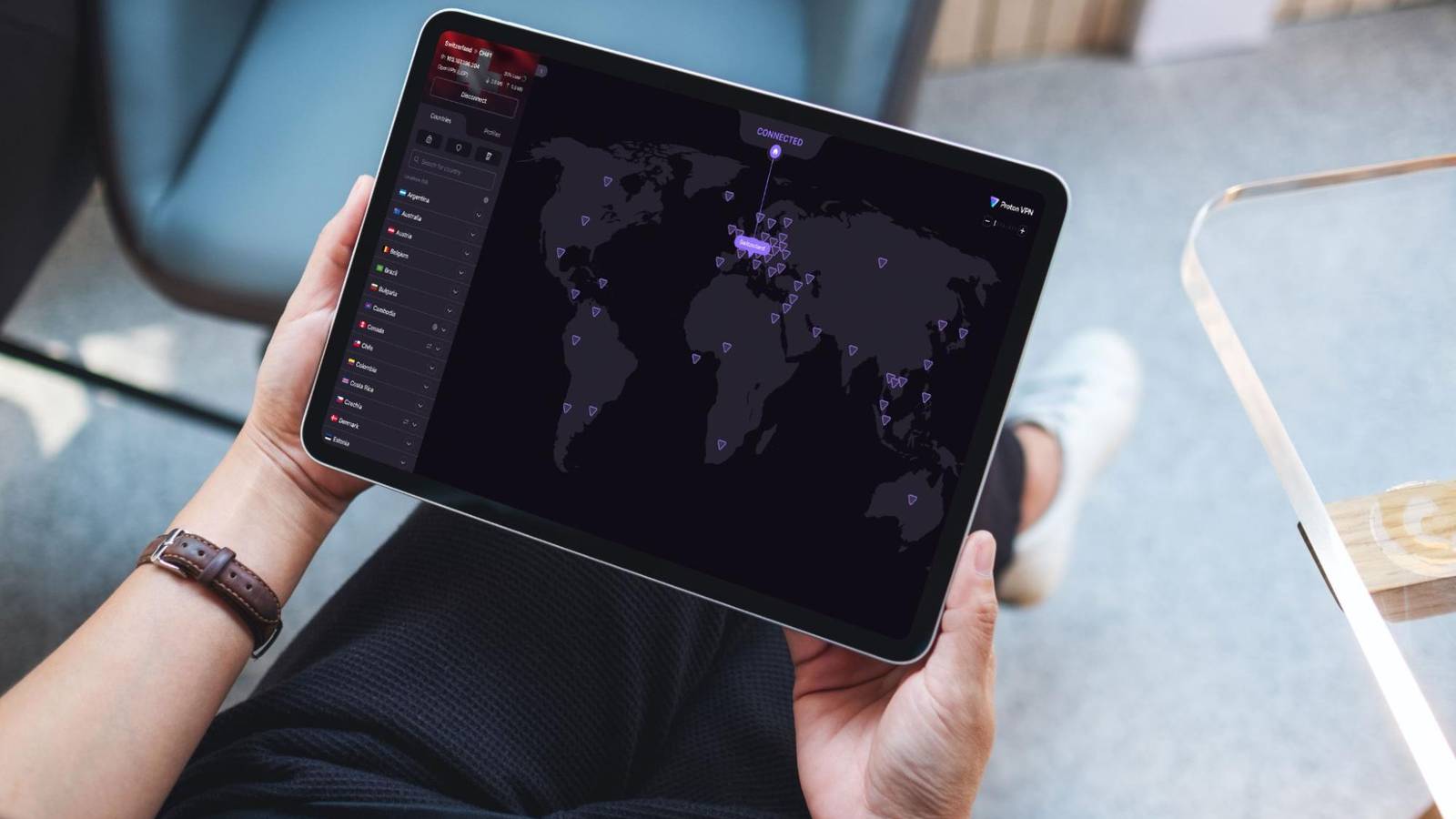
Published Nov 10, 2026, 10:15 AM EST The below articles are sponsored by one of our partners. Product choices and opinions expressed are from the sponsor and do not reflect the views of the How-to Geek editorial staff. We’ve all experienced searching for something on the internet only for ads about that thing to follow us around for weeks. It even crosses devices; targeted ads show up on your computer after searching a keyword on your phone. Perhaps it’s just a mild annoyance, but it’s a visible reminder that we’re all tracked across the web. This practice goes way beyond advertising. Your own ISP (Internet Service Provider) can see which websites you visit and keep a detailed log of your browsing habits, if it so chooses. Your IP address also tells the websites you’re visiting your location with accuracy. The good news is you don’t have to simply sit down and take it. You can use technology to protect against activity and location tracking. The usual advice is to sign up for a VPN (Virtual Private Network) service, and that is great advice. However, not all VPN services are equal. Proton VPN is built on strong privacy technology and end-to-end encryption that spans Proton’s entire family of products, and it's currently offering 70% off its two-year VPN Plus plan. Even without the discount, Proton VPN is a solid choice for users, boasting fast speeds and a secure connection on thousands of servers in hundreds of countries for up to 10 devices. Your internet connection reveals more than you might think Proton VPN Logging policy No-Logs Policy Mobile app Android and iOS Number Of Servers 13,000+ Free Trial Free version with limited features Encryption AES-256, ChaCha20 Supported platforms Windows, macOS, Linux, Android, iOS, Chrome, Firefox, Chromebook, Apple TV, Android TV, Fire TV Encrypting your internet connection can be a simple task with Proton VPN. The provider boasts fast speeds and a stable connection, offering over 20,000 severs in over 140 countries. And with a strict no-logs policy, you can bet your data is in good hands. Best of all, right now, plans are up to 70% off. So, you can prioritize your privacy for less. How much can someone see if you don’t use a VPN? After all, aren’t all websites supposed to be encrypted these days? While it is true that websites using HTTPS encryption prevent your ISP or any third-party snoopers from seeing the content on the page or the full URL, they can still see quite a lot. Your ISP knows what the main site you've visited is; it knows the exact time you visited those sites, how long you were there, and broadly what you were doing. For example, it can know you were streaming video, even if it doesn’t know what the video itself was. Your public IP address, which is assigned by your ISP to your internet gateway device, is visible to the websites you visit. So the site will know who your service provider is and your approximate location. If someone were to combine several of these logs, it’s possible to identify specific physical addresses and people. This doesn’t happen routinely, but with the right motivation and resources, it can be done. A VPN mitigates these risks. When you’re connected via an encrypted tunnel to your VPN provider, your ISP can only see that you are connected to the VPN provider. It has no idea what sites and resources you’re accessing while using that service. Likewise, the websites you visit only see the VPN server’s IP address, hiding yours. So, it certainly sounds like a good idea to sign up for one. Proton VPN takes privacy seriously, and you can verify that Credit: Proton VPN But there’s a big problem that’s easy to overlook. When you sign up for a VPN, you’re shifting your trust from your ISP to the VPN service. Everything your ISP could know about your activities before, you’re now handing over to the VPN service. This is why you need to be careful when choosing a VPN provider. You need to know who the true owners are, what the policies of the provider mean for your privacy, and whether the VPN has been independently audited to ensure it actually adheres to its own policy on your data and what happens to it. Proton has all the bases covered. The company is based in Switzerland and operates under notoriously strict Swiss privacy laws. More importantly, Proton has a strict no-logs policy, which means even if it were compelled to hand over your logs, it can’t — because they never existed. Even better, Proton itself can’t see the contents of your browsing, since it uses zero-access end-to-end encryption. Of course, any VPN provider can make the same promises, but Proton has been independently audited, and its 2026 audit marks the fifth consecutive year of verification that it is indeed a no-logs, strictly private service. On top of this, Proton VPN’s code is open-source, meaning anyone can inspect the VPN’s claims for themselves. It's about more than hiding your IP address Credit: Proton VPN Obscuring your traffic and IP is the bare minimum you can expect from a VPN, but Proton has packed its service with valuable additional features. The most important one for most users is probably NetShield. This acts as a filter for the content you receive through your Proton VPN tunnel, intercepting ads, trackers, and malware-infested domains. NetShield works at the DNS level, with a list of domains that are known to serve ads or contain malware. Thus, it won’t block every ad or replace your antivirus software, but it offers a strong level of additional security. Proton VPN also offers a robust killswitch. If, for any reason, your VPN connection is disconnected, the Proton VPN client immediately blocks your internet connection to prevent any of your real information from leaking to your ISP or the websites you visit. With more than 20,000 servers across over 140 countries, Proton VPN offers unparalleled flexibility and network stability. You can protect all your devices with one subscription Credit: Proton VPN Most households have several devices that connect to the internet, and a single Proton VPN subscription allows for up to 10 devices connected simultaneously. If you have a router that supports OpenVPN or WireGuard as a client, you can install Proton VPN on the router itself. This covers all the devices on your network, and only counts as a single device against your global connection limit. That leaves plenty of connection slots open for mobile devices that leave your home, such as laptops and smartphones. Proton VPN also offers specialized servers for streaming, allowing for good performance and fast speeds when watching high-quality video. Right now, Proton VPN is offering 70% off Proton runs one of the most trustworthy and technologically robust VPN services in the industry, and even offers a free basic service anyone can use to try it out. It has no data cap and offers the same strong encryption, but is limited to a single device connection. However, for a limited time, you can get 70% off the Proton VPN Plus package for two years. Reducing the advertised US price to $2.99 per month, billed as $71.76 upfront for the first 24 months, excluding applicable taxes. After the first 24 months, the subscription will renew at the usual rate. If you’re still on the fence, Proton VPN offers a 30-day money-back guarantee. So if you’re not happy for any reason, you can get a refund without being committed for the whole two years. So take this opportunity to regain control of your privacy for years to come, at a price that’s rarely repeated, and sign up for Proton VPN today.
Keep what the internet knows to a minimum with 70% off Proton VPN
Full Article
Original Source
Read the full article at Howtogeek →KhanList aggregates and links to publicly available news content. We do not host full articles from third-party sources. Always verify important information with original sources.