
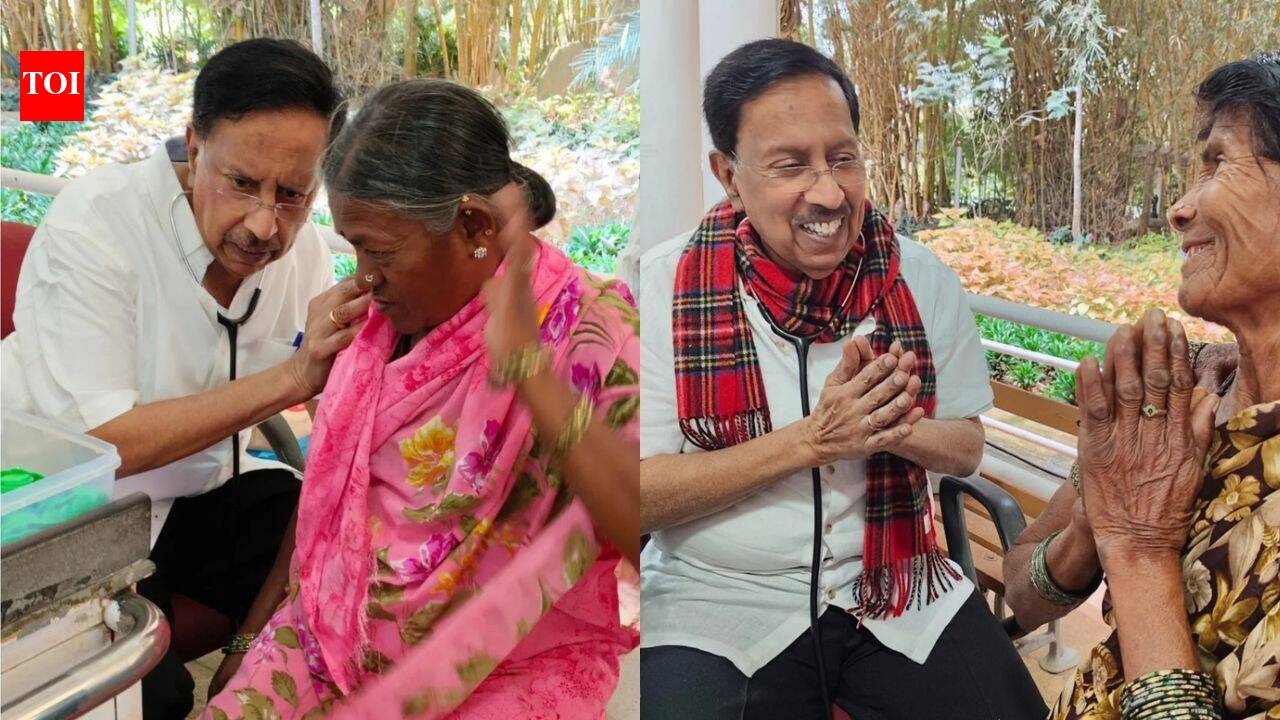
He could have spent his Sundays resting, but for more than five decades, Dr B Ramana Rao has chosen to open his clinic to people who need medical care. His latest Guinness World Records recognition celebrates a lifetime of service that has reached millions. Most people look forward to Sundays as a day to slow down, spend time with family or catch up on things they missed during the week. But for Dr B Ramana Rao, Sunday has meant something entirely different for more than 53 years.It is the day he welcomes patients from rural Karnataka, listens to their health concerns, examines them and provides treatment without charging them for consultations. What began as a small effort to take healthcare closer to people has grown into a remarkable mission that has touched more than 33 lakh patients.On November 15, 2026, the veteran doctor received recognition from Guinness World Records for conducting 2,777 consecutive Sunday medical camps. His achievement is not simply about counting weeks. It represents decades of showing up for people who might otherwise struggle to access medical care.A Sunday commitment that began in 1973Dr B Ramana Rao's rural healthcare journey began in 1973, when he established his village clinic in T Begur, near Nelamangala, Karnataka. At a time when medical facilities were difficult to access for many rural families, he wanted to bring basic healthcare closer to their homes. The idea was simple: patients should not have to travel long distances or worry about consultation fees just to see a doctor.Over the years, the clinic became a regular destination for people from surrounding villages and other parts of Karnataka. His Sunday camps offered consultations, medical assistance and, where needed, support to help patients seek further treatment.The scale of the initiative grew gradually. A weekly clinic became a long-running healthcare effort supported by volunteers and medical staff, with thousands of patients relying on the service. What makes his journey remarkable is its consistency. Week after week, Sunday after Sunday, he continued the work without allowing the routine to fade.More than 33 lakh patients, one doctor and a promise keptThe numbers behind Dr Rao's work are extraordinary. He has reportedly examined and treated more than 33 lakh patients across 2,777 consecutive Sundays, providing free medical services to people who travel from different parts of Karnataka to reach his rural clinic.For families living with limited incomes, even the cost of travelling to a hospital, consulting a doctor and purchasing medicines can become a burden. A free consultation can make it easier to seek medical advice instead of postponing care because of financial concerns.His clinic has also grown beyond the efforts of one individual. According to his official website, more than 30 volunteers and trained medical staff have supported the initiative over the years. The broader mission has included cataract surgeries, ambulance support, construction of toilets, educational assistance and other community welfare activities. The idea has never been limited to treating an illness. It has also been about addressing some of the everyday conditions that affect people's health, dignity and access to basic services.A Guinness record that recognises consistency, not just numbersOn November 15, 2026, Dr Rao's long-standing commitment received international recognition when he was presented with a Guinness World Records certificate at a programme near T Begur, close to Nelamangala. The record acknowledges his achievement of conducting medical camps on 2,777 consecutive Sundays. Karnataka Deputy Chief Minister G. Parameshwara attended the event and praised the doctor for dedicating decades of his life to rural healthcare.Dr Rao had already received the Padma Shri in 2010 for his contribution to medicine and public service. The Guinness recognition adds another milestone to a career shaped by the belief that healthcare should not become inaccessible simply because someone cannot afford it.During the ceremony, Parameshwara also raised concerns about the growing commercialisation of healthcare and stressed the importance of compassion in the medical profession. He encouraged doctors to draw inspiration from Dr Rao's example and find ways to serve people who are often left out of the healthcare system. The recognition celebrates the number of camps, but the real achievement lies in the discipline required to keep that promise for more than five decades.The doctor who made Sundays a lifelineFor Dr Rao, the work appears to be driven by something that goes beyond professional responsibility. It is the belief that medical knowledge becomes meaningful when it reaches those who need it most. His service also challenges the idea that healthcare must always be defined by large hospitals, expensive infrastructure or complicated systems. While these remain essential, his journey shows how a consistent, community-based effort can make a difference to people who have limited access to doctors.His story is also a reminder that the impact of a doctor cannot always be measured by the number of patients seen in a hospital or the success of a medical practice. Sometimes, it is measured by the distance people travel because they trust a doctor, the families who return year after year, and the relief of receiving treatment without worrying about the consultation fee.For 2,777 Sundays, Dr B Ramana Rao has kept his clinic doors open. And behind every Sunday is a story of someone who came seeking help, advice, treatment or simply the reassurance of being heard. His Guinness record may celebrate an extraordinary number, but the legacy he has built is much simpler: making sure that for more than five decades, a doctor's time and care remained available to those who needed it.
Karnataka doctor enters Guinness record after 2,777 free Sunday camps
Full Article
Original Source
Read the full article at Timesofindia →KhanList aggregates and links to publicly available news content. We do not host full articles from third-party sources. Always verify important information with original sources.