
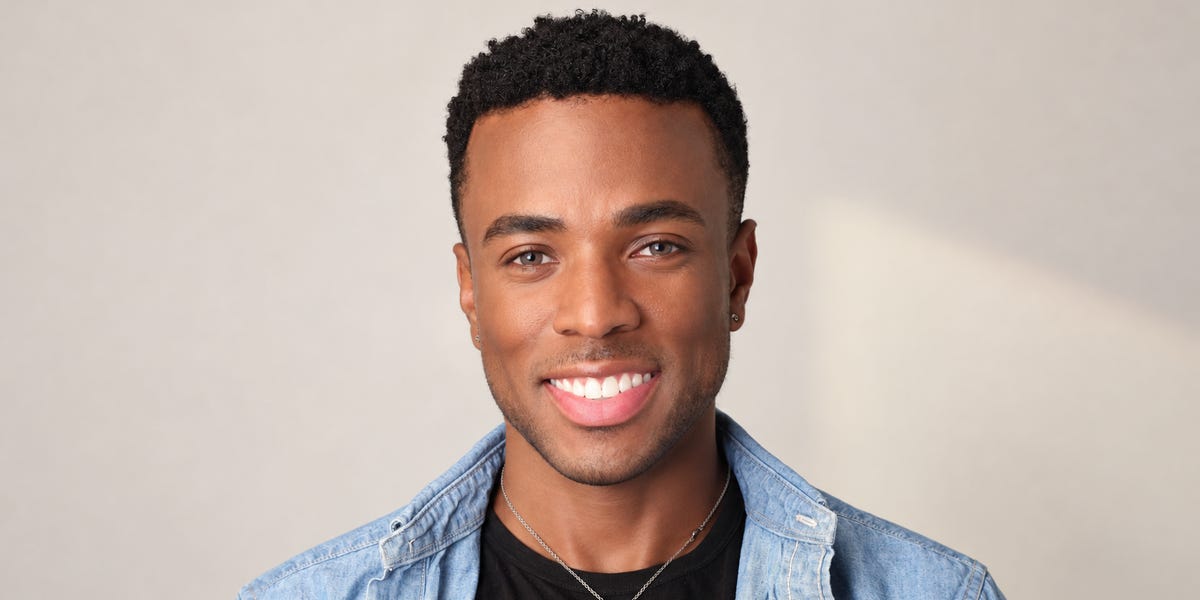
Courtesy of Paden Gayle Paden Gayle says a forward deployed engineer has to be technical and also communicate with customers. This as-told-to essay is based on a conversation with Paden Gayle, a forward deployed engineer at Notion, and the author of "The Forward Deployed Engineer." He is 30 years old and lives in New York. The following has been edited for length and clarity.Before getting into tech, I wanted to pursue music. Cello was a passion of mine from a young age.Worried about whether I could make a stable income in music, I studied computer information systems. I went on to work at Accenture as a technology analyst, and then at Bloomberg and Google as a software engineer.In the years following the release of ChatGPT in 2022, I grew fearful of how AI would affect software engineering jobs.It wasn't about "if" you use AI, but "when," and I wanted to get as much of an advance on that "when" as I could.That's how I became a forward deployed engineer, or FDE.A mix of software engineering and consultingWhen I learned more about the role, I felt it was a mixture of my role in software engineering and consulting. I liked that the role involved an interpersonal aspect but was still technical.In late 2025, I started looking for FDE roles. One day, while scrolling on LinkedIn, I saw a hiring manager's post saying Notion, an AI workspace company, was hiring. I DM'd them, got through to the interview process, and was offered the job in April 2026.My job as an FDE is to help clients implement Notion's products in their workspace, often building on top of the company's platform with custom code to meet their needs. For example, one task could be building out an agentic workflow for a business on top of the company's technology. I have to stay up to date on new developments to our product. If a customer on a call asks me technical questions about what our company can do for them, I could say, "Let me check on that and get back to you," but I should really be able to answer those questions live.I do a lot of context switching when working with different clients. I have to understand what each customer wants and what I can do that's valuable for them.In my experience, the FDE role involves more out-of-the-box thinking than a traditional software engineer. If I were hired to make a client's workflow easier, I'd review their existing workflow, suggest parts that could be automated, and then I could use AI to find solutions, design, and code them. It feels like a subset of AI engineering, as I'm deploying AI into workflows.FDE interviews place more emphasis on your communication skillsOf the FDE interviews I've done across multiple companies, there are similarities to software engineering interview loops that I've done, such as coding interviews and behavioral and system design rounds.One key difference is FDE interviews often also include something called a decomposition round. An interviewer gives you a hypothetical situation where you have to meet a client's needs, and you talk through your approach live. Some companies also use a take-home task, which tests similar skills. I've been asked to spend three to four hours building a working solution and present it. In both cases, it feels like they're assessing your reasoning and communication skills.If you're technical and love talking to people, forward-deployed engineering could be for youFDEs have to be technically skilled, but they also have to communicate with customers. By contrast, in my experience, software engineers can be siloed in their work. It's about being given a task and delivering it. I've realized that I don't love traditional software engineering. What I really like is working directly with the people the software is for.I think people who are amazing at software engineering interviews could pass FDE interviews, but the question is more about whether this is a role they want to do. Because I've done a lot of tutoring, I've spent a lot of time helping people. It's something I genuinely love. Read next Business Insider tells the innovative stories you want to know Business Insider tells the innovative stories you want to know Business Insider tells the innovative stories you want to know Business Insider tells the innovative stories you want to know Charissa Cheong is a senior first-person reporter on Business Insider's Business Contributors and Freelance team, based in London. She covers: Relocation and immigration, how employment visas impact careers, what it’s like working at the world’s biggest companies or alongside its most prominent leaders, how the AI revolution is affecting professionals, and more. Charissa’s work spans a wide range of topics, but the unifying thread is first-person storytelling — sharing people’s unique career and life experiences in their own voice, with their own words. She writes in Business Insider’s signature “As-told-to” format, which is designed to highlight powerful perspectives in a conversational way. She also commissions and edits personal essays from freelance writers and contributors. Charissa joined Business Insider in 2022 on the digital culture desk, covering family vlogging, online harassment, and influencer culture. She moved to the contributors and freelance team in 2024.She graduated from the University of Cambridge with a BA in English and holds a gold standard NCTJ Level 5 journalism diploma. as told to AI
I'm an ex-Googler who became a forward deployed engineer. Here's why I feel it was the right career move.
Full Article
Original Source
Read the full article at Businessinsider →KhanList aggregates and links to publicly available news content. We do not host full articles from third-party sources. Always verify important information with original sources.