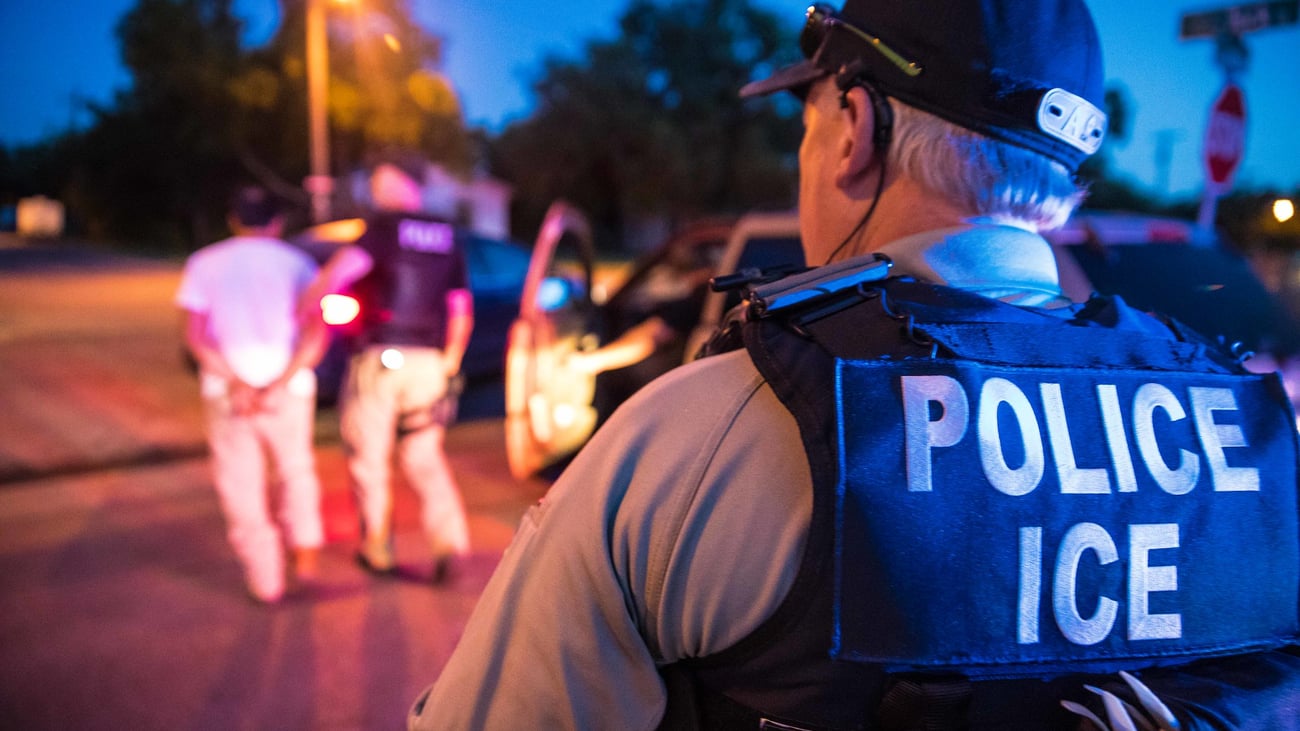
At least four other federal judges have issued preliminary injunctions that say ICE can't arrest people simply because they aren't lawfully present in the country without first determining whether they are likely to escape.LOS ANGELES (CN) — A federal judge on Thursday indicated she would issue an order for U.S. Immigration and Customs Enforcement agents to halt warrantless arrests of people in the Los Angeles region who they believe are in the country without authorization when there is no assessment made whether these people are a flight risk.U.S. District Judge Maame Ewusi-Mensah Frimpong, in a tentative ruling that wasn’t made publicly available at the hearing in downtown LA, granted the request for a preliminary injunction brought by the American Civil Liberties Union and other immigrant rights advocates.The Joe Biden appointee also tentatively granted the request for the plaintiffs to proceed as a class action.In its bid for a preliminary injunction, the ACLU argued immigration officers were specifically targeting Latinos in working class neighborhoods, and making illegal stops and warrantless arrests to boost arrest numbers.“But Congress authorized immigration officers to make civil immigration arrests without a warrant only where they have probable cause to believe that the person is both unlawfully present and likely to escape before a warrant can be obtained,” the organization said. “Defendants are disregarding the second requirement as part of the federal government’s mass deportation campaign.”The ACLU cited a January memo by former Acting ICE Director Todd Lyons that, the organization claims, permits warrantless arrests of anyone unlawfully present simply because they are in public, in transit or unlikely to stand idle while officers obtain a warrant.Daniel Mummolo, an attorney with the U.S. Justice Department, disputed that the government has a policy to arrest people without a warrant and without establishing whether they are a flight risk.“That supposed policy doesn’t exist,” he told judge.The attorney asked Frimpong, should she issue the preliminary injunction, to stay it for 14 days so that the government can decide whether to appeal it with the Ninth Circuit.Laura Perry Stone, an attorney for the plaintiffs, asked the judge to tighten her tentative ruling to prevent ICE agents from just using boiler-plate language instead of making an individualized assessment whether a person in an escape risk.Frimpong, however, appeared unpersuaded that this was necessary because law enforcement in general tend to use standard words and phrases to describe a suspect’s actions and demeanor and it wouldn’t be practical to block this if ICE agents are doing what they’re supposed to be doing in assessing an escape risk.“Boiler-plate language isn’t indicative of noncompliance,” she told the attorney.The judge took the plaintiffs’ motions and the Justice Department’s request for a stay under submission without making a final ruling.At least four other federal judges in Oregon, Colorado, Washington DC and Sacramento have issued similar preliminary injunctions against warrantless arrests by ICE agents.The claims regarding the warrantless arrests added a new component to the case the ACLU brought last year in the wake of the immigration crackdown the Trump administration unleashed in the LA region, where the government claims there are as many as 2 million people who lack legal authorization to reside in the U.S.The judge issued a temporary restraining order in July of last year, which barred ICE from apprehending people based only on their work, appearance, language or location, without a reasonable suspicion that they are in the country without proper authorization, in light of local residents’ Fourth Amendment rights to be free of unreasonable searches and seizures.The Ninth Circuit rejected the government’s request to stay that temporary restraining order while its under appeal, but the U.S. Supreme Court stepped in last month and stayed it.Subscribe to our free newslettersOur weekly newsletter Closing Arguments offers the latest about ongoing trials, major litigation and rulings in courthouses around the U.S. and the world, while the monthly Under the Lights dishes the legal dirt from Hollywood, sports, Big Tech and the arts.Additional Reads
Judge inclined to stop warrantless ICE arrests without escape risk findings
Full Article
Original Source
Read the full article at Courthousenews →KhanList aggregates and links to publicly available news content. We do not host full articles from third-party sources. Always verify important information with original sources.