
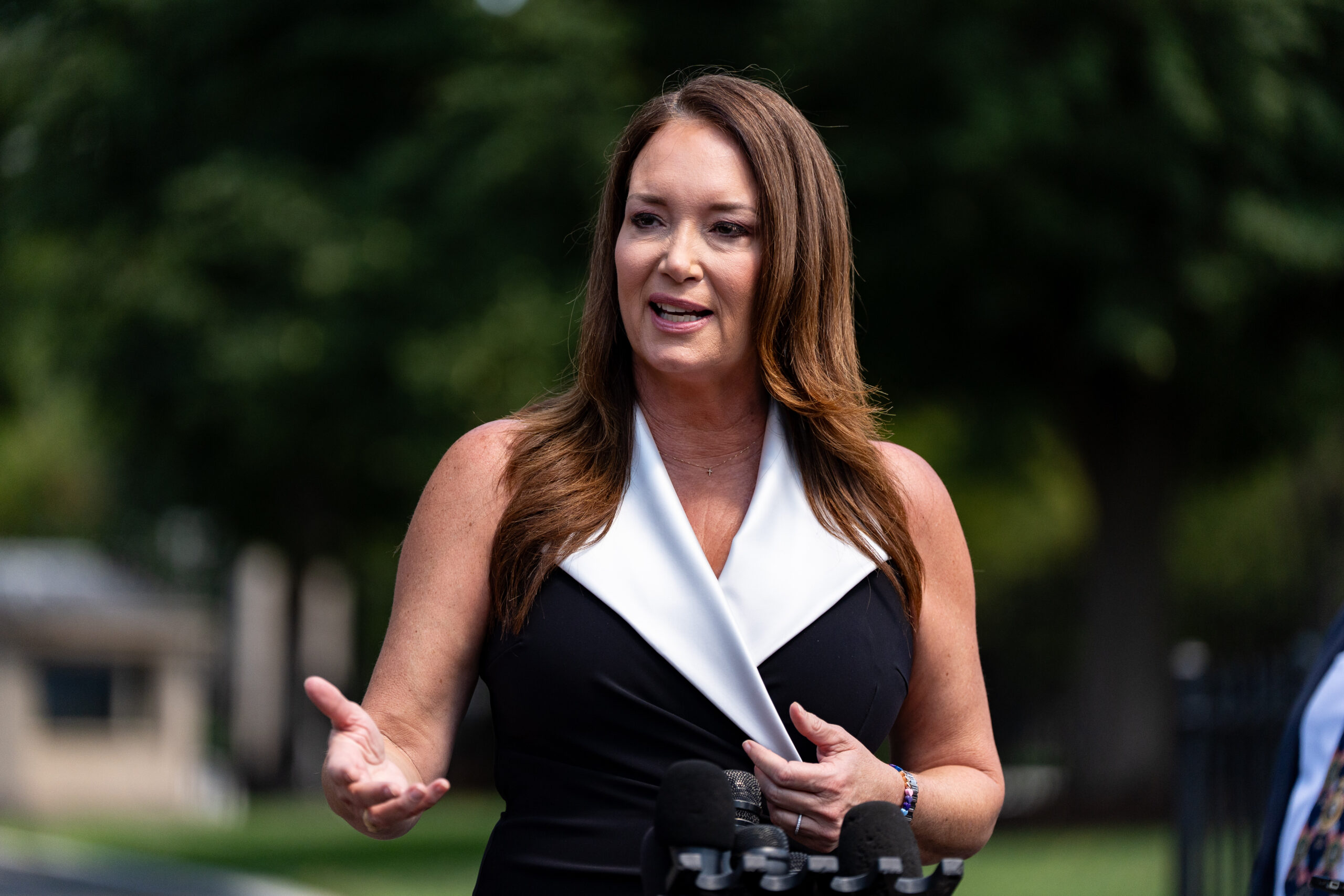
The judge said certain emails sent by Secretary Brooke Rollins amounted to coercion and violated employees' constitutional rights.SAN FRANCISCO (CN) — Shortly after assuming her position as U.S. secretary of agriculture, Brooke Rollins began sending a series of holiday emails to all USDA employees invoking Christianity. Employees sued, claiming the messages pressured them to conform to the secretary’s religious beliefs and made them feel unwelcome.On Thursday, a federal judge ordered Rollins to cease the messages, quoting the secretary’s own guidance on religious expression in the workplace in her 21-page ruling granting the employees’ request for a preliminary injunction.“The court orders that the secretary must recognize certain boundaries when communicating religious messages. She ‘[m]ust stop if a colleague asks [her] to stop,’ she ‘[c]annot create a hostile work environment through persistent unwelcome advances,’ and she ‘[c]annot use official authority to pressure subordinates,’” U.S. District Judge Trina L. Thompson wrote.The Joe Biden appointee continued: “She may ‘[d]iscuss [her] religious beliefs with interested colleagues,’ ‘[s]hare why [her] faith is meaningful to [her],’ ‘[p]olitely invite coworkers to religious services or events,’ ‘[e]xpress religious viewpoints during appropriate conversations.’”The judge additionally clarified that her injunction enjoins Rollins’ use of her official email “in a manner that also prevents non-parties from receiving constitutionally violative messages,” because the government does not allow employees to opt out of the secretary’s messages.The seven named plaintiffs, described as “a group of multifaith and nonreligious USDA employees,” claim Rollins had been violating the First Amendment by sending a series of “increasingly proselytizing communications to the entire USDA workforce.”In one email, sent on Dec. 23, 2025, Rollins states in a video that “the spirit of generosity flows from the very first Christmas when God gave us the greatest gift possible, the gift of his Son and our Savior Jesus Christ, who came to free us from our sins and open the door to eternal life.”In another message, sent on April 5, 2026, Rollins extolled “the greatest story ever told, the foundation of our faith, and the abiding hope of all mankind” and described her employees as “like the very first disciples to encounter our risen Lord … almost 2,000 years ago.”In their complaint, the plaintiffs describe the emails as “exactly the sort of government-sponsored religious coercion, religious sermonizing, and denominational preference that the Establishment Clause prohibits.”Thompson agreed, ruling the December 2025 and April 2026 emails “go too far” and “suggest acquiescence that amounts to coercive pressure; a pressure of conformity sufficient to raise an establishment clause violation.”The judge routinely referenced Rollins’ November 2025 guidance throughout her ruling, writing the court “finds the secretary’s guidance reasoned.” However, Thompson emphasized Rollins needs to “observe her own directives.”“Why should the secretary be exempt from her own rules? The buck stops with Secretary Rollins. In fact, her position of authority warrants greater concern as she sits atop the agency hierarchy,” she wrote.The judge called Rollins’ use of her official email account to send department-wide religious emails “worrisome,” agreeing with the plaintiffs that the secretary’s emails are mandatory to read, as she also uses her official email for other important messages, such as agency reorganization and plans for a government shutdown.“USDA employees are expected to read the secretary’s religious message. To suggest that plaintiffs may choose at their discretion which of the secretary’s emails to read and which to ignore defies logic,” she wrote.Thompson also took issue with the language Rollins used, finding her use of “we,” “us,” and “our” in the emails and omission of messages for other religious holidays assumed the employees receiving the emails subscribe to her same beliefs.The judge repeatedly stated the court had no view on what Rollins could or couldn’t do in her personal capacity, noting that the secretary is not shy about her religious beliefs. However, Thompson said Rollins’ actions were “the type of conduct the Framers sought to protect against.”“The Supreme Court has repeatedly recognized that ‘immense social pressure’ can result in a finding of coercion. Such pressure is demonstrated here,” she added.While the judge sided with the plaintiffs on their constitutional claims, she tossed their claim that the emails violated the Administrative Procedure Act, finding they were not a final agency action or an order.DOJ representatives did not respond to a request for comment.In a statement to Courthouse News, Rachel Laser, president of Americans United for Separation of Church and State, celebrated the ruling.“Today’s decision should send a message to the Trump administration that it cannot misuse taxpayer resources to preach, hold government-sponsored prayer services during work time, and broadcast Christian nationalism over official communication channels. Not on our watch,” she said.Subscribe to our free newslettersOur weekly newsletter Closing Arguments offers the latest about ongoing trials, major litigation and rulings in courthouses around the U.S. and the world, while the monthly Under the Lights dishes the legal dirt from Hollywood, sports, Big Tech and the arts.Additional Reads
Judge blocks USDA secretary from sending religious emails from official account
Full Article
Original Source
Read the full article at Courthousenews →KhanList aggregates and links to publicly available news content. We do not host full articles from third-party sources. Always verify important information with original sources.