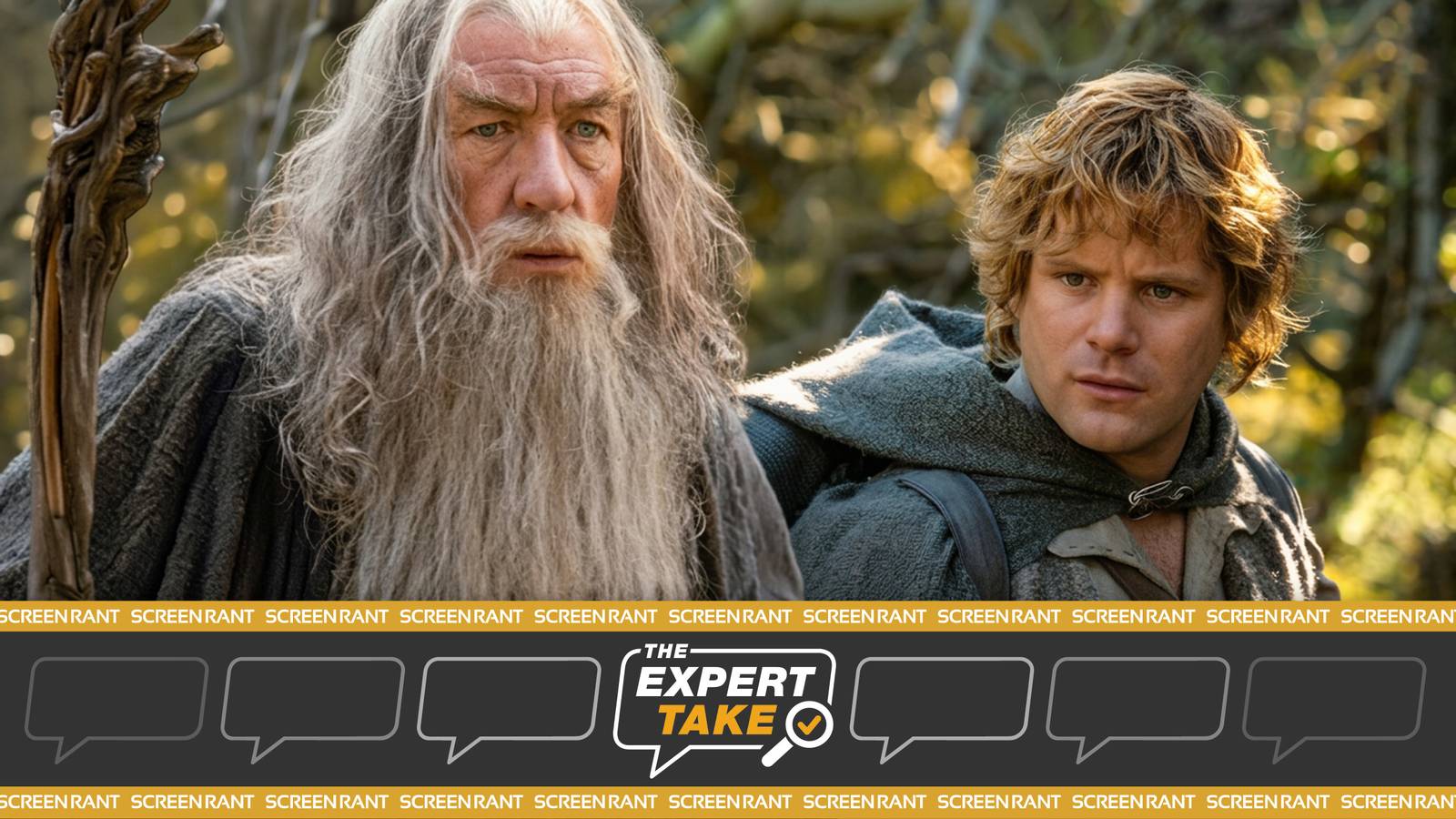
Exclusive: J. R. R. Tolkien had a unique approach to creating the characters in his books, as is revealed in his wider writings on Middle-earth. Published Jul 30, 2026, 5:39 PM EDT Ben is a Senior Writer on the New TV team at Screen Rant. He graduated from the University of Central Lancashire with a First Class B.A. Degree in English Literature and History. Born and raised in Ireland, Ben has always had a love for storytelling in all forms of media and operates multiple projects under the name Benjamin Blogs. Ben is a comic book writer and podcast host, in addition to his work as an entertainment journalist. He has worked as both a writer and editor for Screen Rant, Collider, and other media outlets across various departments, including features, news, reviews, and interviews. J. R. R. Tolkien is one of the most studied authors in history, with an unmatched ability to create expansive and immersive characters in his sprawling worlds of Middle-earth. In an effort to dig deeper into the wonderful mind behind The Lord of the Rings, Screen Rant spoke to Dr. Gerry Canavan, an associate professor of 20th- and 21st-century literature at Marquette University, specializing in sci-fi and fantasy stories, who is a well-versed Tolkien scholar. While discussing a handful of scenes from popular adaptations of Tolkien's work, Dr. Canavan dove deep into his extensive knowledge of the renowned author as he shared anecdotes, paragraphs from Tolkien's letters, and other insights that unravel mysteries about the man behind the stories, which exposed an interesting pattern regarding Tolkien's approach to creating his characters. As with the rich and expansive world-building that Tolkien is so frequently praised for, it seems as though his characters are equally expansive, with vastly more material dedicated to exploring their lives and stories beyond what fans have come to know and love. JRR Tolkien Kept Designing His Characters Beyond His Books Tolkien first shared The Hobbit with the world in 1937, which began his journey into Middle-earth, and the story began to take hold on the imaginations of everyone who read it. However, none appear to be as captivated or immersed in that world as the author himself. Tolkien not only expanded the story of Bilbo Baggins, the protagonist of this early publication, in his subsequent stories, but he spent the remainder of his life defining the world of Middle-earth, with each of his published works before his death being dedicated to exploring this fantasy world. Then, in the decades after he passed away in 1973, many of his writings were gathered together and compiled, resulting in the publication of many more works all denoting Middle-earth, and showing just how deep the rabbit hole went for Tolkien, considering the bulk of his writing was never a part of his finished products in his lifetime. And these further writings are littered with explorations of his characters, which is a significant portion of what Screen Rant spoke to Dr. Canavan about during the recording of The Expert Take. Samwise Gamgee Ensured Gollum's Fate As A Monster While dissecting the original The Lord of the Rings trilogy, Dr. Canavan highlighted one scene that he felt had far more significance and weight in the books than in the Peter Jackson films. The scene in question is when Sam, Frodo, and Gollum are climbing the Stairs of Cirith Ungol, and the party has several moments of conflict and strife as they journey forth. Dr. Canavan reveals both what happens in the novels and how Tolkien himself viewed this particular moment, while also exposing a fascinating revelation about how Tolkien viewed Gollum: "The tragic thing is that Frodo stirs, Sam wakes up, and he starts screaming at Gollum to get away from Frodo, right? And he calls him nasty names, and this is the moment where Gollum kind of decides in a way that he'll always be Gollum. That this is who he is, this moment of Sam's rejection. And Tolkien was really interested in this moment because he was a Catholic, and to a Catholic, the universe was made by a being who loves us, and wants the best for us, and has given us the free will to choose it, right? So, God couldn't have made Gollum to always choose evil, or to always be wicked. And he doesn't make beings whose purpose it is to suffer. There has to be a chance, even for Gollum to redeem himself. And so in his letters you find that there's these moments where he's writing almost fan fiction to himself about what would have happened if Gollum had changed in this moment and become good." - Dr. Jerry Canavan The idea that Tolkien wrote "fan fiction to himself" of his own stories may sound odd, but considering the wealth of notes and journals that were filled with concepts about Middle-earth and its inhabitants, it makes perfect sense that he would occasionally take a slightly more experimental approach to opening up the characters to new unexplored directions that ultimately never made it to print. But it also appears that with the focus placed on this pivotal moment in Gollum's journey, things could have gone very differently if Samwise Gamgee, Frodo's faithful traveling companion, had been more patient and less suspicious of Gollum. Indeed, Tolkien spent some time unraveling what may have been if Gollum had chosen to truly turn away from his past faults. Tom Bombadil Didn't Have A Clear Reason For Existing In The Lord of the Rings On a very different note, there were also characters like Tom Bombadil, who appeared to have a less concrete purpose and journey within the texts written by Tolkien. Despite this, Tolkien still felt fiercely protective of them, as is revealed in the quote supplied by Dr. Canavan while discussing this character and his role in Middle-earth: "I don't think Tom needs philosophizing about, and is not improved by it, but many have found him an odd or indeed discordant ingredient. In historical fact I put him in because I had already 'invented' him independently and wanted an 'adventure' on the way. But I kept him in, and as he was, because he represents certain things otherwise left out." - J.R.R. Tolkien Evidently, Tolkien seems to have been acting on some other plane of existence while trying to create this expansive world. Instead of trying to justify and reinforce the purpose for characters, or at the very least define the purpose they already possess, Tolkien stands firm on his decision to include a character like Bombadil with the vaguest explanation. And yet, in doing so, it seems to reveal more about the man behind the novels in the process of giving an answer that doesn't seem to fully answer the question. J. R. R. Tolkien's Characters Have Taken On A Life Of Their Own Beyond The Books Credit: New Line Cinema via MovieStillsDB Dr. Canavan went on to try and explain what he believed were those "other things left out," and in doing so, he does offer up an explanation that appears to support the presence of Tom Bombadil; "He seems to be somebody who has the kind of power that Gandalf has, but has refused war in favor of peace. And I think the thing that he represents as much as anything else is pacifism. Tom is somebody who doesn't want to get involved in the war, he doesn't care about power, he doesn't want to dominate anybody else, right, and so the ring has no effect on him. But he also can't do anything useful in the world." - Dr. Gerry Canavan That being said, while Bombadil may indeed be a presence of peace and pacifism that could not have been communicated effectively through any other individual character, his inclusion speaks to a much larger truth about the way that Tolkien wrote his stories. In a sense, these characters became something larger than himself. Tolkien's entire body of work, when it comes to writing, was dedicated to Middle-earth. Unlike other authors, Tolkien was singularly focused on this world and the stories that allowed it to evolve and take a more defined shape. The same is true of the characters, with Tolkien seemingly following them through their own journeys and documenting these adventures, rather than dictating how, why, and what they should do. This likely explains why the characters feel so rich and realistic, despite many being fantastical creatures. They are flawed, they are broken, and they often act with some sense of independence. Obviously, that is not entirely true, because they are works of fiction, but at least for Tolkien, it appears that once a story was formed, he had no real choice but to record it as it played out. He took time to play with the characters and explore alternative paths, as was the case with Gollum, but this served as a work of fiction within the wider world of fiction. It was not what actually plays out, but Tolkien was curious and willing to take time to dig deeper. Similarly, Tom Bombadil did not have a clear role in Tolkien's stories, but nevertheless, Tolkien felt compelled to include him, and felt that his absence would result in "other things left out." Today, these stories remain some of the most widely studied and adored works of fiction of all time, and it's fascinating to see how J. R. R. Tolkien himself developed the characters that populated Middle-earth. Movie(s) The Lord of the Rings (1978), The Lord of the Rings: The Fellowship of the Ring, The Lord of the Rings: The Two Towers, The Lord of the Rings: The Return of the King, The Hobbit: An Unexpected Journey, The Hobbit: The Desolation of Smaug, The Hobbit: The Battle of the Five Armies, The Lord of the Rings: The War of the Rohirrim TV Show(s) The Lord of the Rings: The Rings of Power Video Game(s) The Lord of the Rings Online (dupe), Middle-Earth: Shadow of War, The Lord Of The Rings: Gollum, The Lord of the Rings: Return to Moria First Film The Lord of the Rings (1978) Cast Norman Bird, Anthony Daniels, Elijah Wood, Ian McKellen, Liv Tyler, Viggo Mortensen, Sean Astin, Cate Blanchett, John Rhys-Davies, Billy Boyd, Dominic Monaghan, Orlando Bloom, Christopher Lee, Hugo Weaving, Sean Bean, Ian Holm, Andy Serkis, Brad Dourif, Karl Urban, Martin Freeman, Richard Armitage, James Nesbitt, Ken Stott, Benedict Cumberbatch, Evangeline Lilly, Lee Pace, Luke Evans, Morfydd Clark, Mike Wood, Ismael Cruz Cordova, Charlie Vickers, Markella Kavenagh, Megan Richards, Sara Zwangobani, Daniel Weyman, Cynthia Addai-Robinson, Lenny Henry, Brian Cox, Shaun Dooley, Miranda Otto, Bilal Hasna, Benjamin Wainwright, Luke Pasqualino, Christopher Guard, William Squire, Michael Scholes, John Hurt Created by J.R.R. Tolkien
JRR Tolkien Expert Unpacks What Went Into Making The Lord of the Rings' Most Outrageous Characters
Full Article
Original Source
Read the full article at Screenrant →KhanList aggregates and links to publicly available news content. We do not host full articles from third-party sources. Always verify important information with original sources.