
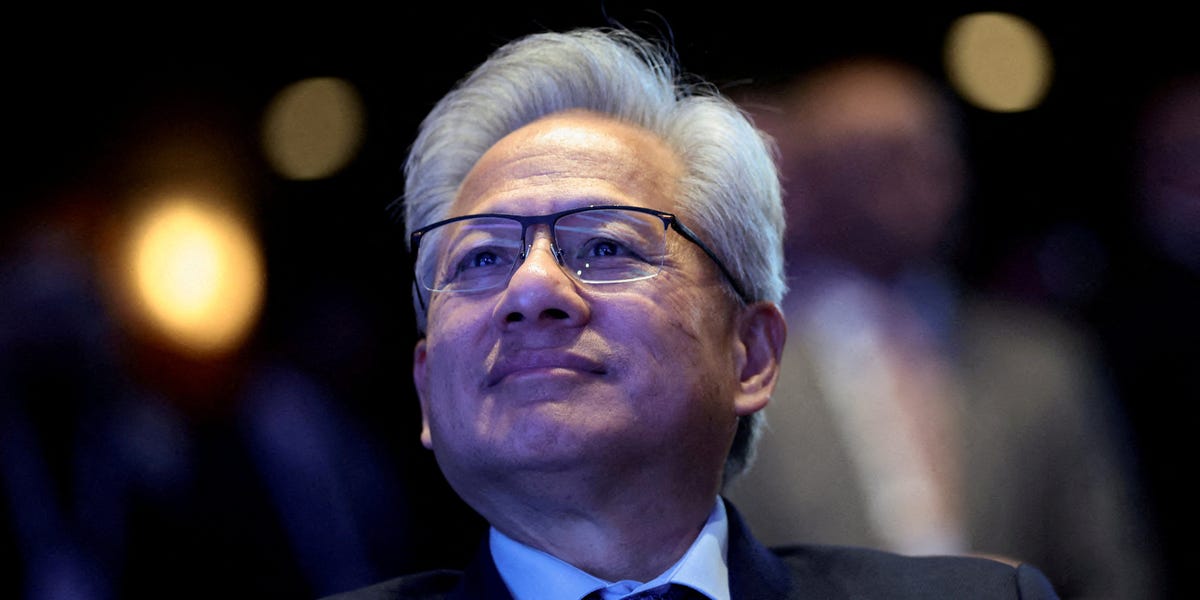
Evelyn Hockstein/Reuters Jensen Huang, CEO of Nvidia Extending human life is a popular pursuit in Silicon Valley. At Nvidia, Jensen Huang appears to have little interest in planning for the inevitable.A day after being reinstated as CEO on Monday, Huang reportedly told colleagues he didn't "believe in succession planning," because it would suggest some executives were more important than others. The idea is consistent with the unusually flat structure at the top of Nvidia — yet also remarkable given the company's recent leadership upheaval."If the CEO is hit by the proverbial bus, somebody has to be in charge," said Umesh Ramakrishnan, cofounder and chief strategy officer at the executive search firm Kingsley Gate.Assuming Huang is as mortal as the rest of us, Nvidia will eventually need a new leader. While he may not believe in succession planning, experts in corporate governance say it's the board's responsibility to prepare for a future without him."Life goes on beyond one individual, and when a board is so wedded to one individual, they're making a terrible mistake," said Charles Elson, founding director of the Weinberg Center for Corporate Governance at the University of Delaware.Avoiding a lame duckOn Wednesday, S&P Global Ratings placed Nvidia's AA credit rating on watch for a possible downgrade, citing concerns about its management and governance. It said a downgrade could come within 90 days if S&P determines governance deficiencies remain."Weak executive oversight and lack of succession planning have brought questions around the 'key man' risk to the forefront," S&P said. "The departure, then reinstatement of the CEO, does not sufficiently answer our questions regarding board oversight of executive code of conduct."It's not unusual for a company to lack a succession plan. In a 2025 Nasdaq survey of about 700 board members, CEOs, executives, and governance professionals, 21% said their boards didn't have one, while another 16% said they had only an emergency plan. Huang's departure and reinstatement has caused volatility in Nvidia's shares ANGELA WEISS / AFP via Getty Images Companies that do prepare for a leadership change tend to keep their plans quiet to avoid turning the sitting CEO into a lame duck or prompting passed-over contenders to leave, said Ramakrishnan. Boards should get started well before a crisis, he added, by developing two or three serious internal candidates, giving them substantial operating responsibility, and creating incentives for them to stay through a transition. At Nvidia, Huang has around 60 direct reports, an unusual structure he has credited with keeping information flowing and empowering employees. The downside, some leadership advisors say, is that executives who oversee individual pieces of the business may not be prepared to run the whole company."It's hard to imagine any of those direct reports are able to get the scale, scope, and experience to even be qualified to be the CEO," David Astorino, a senior partner at leadership consulting firm RHR International, previously told Business Insider.'A house of cards'The decision by Nvidia's board to put Huang back in charge just 11 days after announcing his resignation also suggests its directors are unwilling to challenge him, Elson said.His departure came amid revelations that he had an intimate relationship with a client; concerns raised by US officials that he may have been the target of a foreign intelligence effort; and reports that he had affairs with two employees, including a direct report."Given what's happened, he really loses all accountability," Elson said of Huang. "I mean, if that didn't get him out, what will?"Nvidia's board said it gave Huang his job back because it was satisfied with his "candor" and that it had received "input from senior levels of the United States government."But Kim Scott, a former Apple and Google executive and cofounder of the leadership-training company Radical Candor, said Nvidia would be vulnerable if it relied too heavily on Huang."If it's all dependent on him, then it's a house of cards, and it's going to fall down anyway," she said.Huang, for his part, has acknowledged that he won't live forever and suggested that his successor can reshape Nvidia to suit their own leadership style. Earlier this year, he told Garry Tan, CEO of the startup accelerator Y Combinator, that he expected to die on the job."The next CEO, whatever their personality is, they can figure it out," he said. Read next Business Insider tells the innovative stories you want to know Business Insider tells the innovative stories you want to know Business Insider tells the innovative stories you want to know Business Insider tells the innovative stories you want to know Sarah E. Needleman covers leadership and the workplace for Business Insider.Previously, she was a reporter for The Wall Street Journal for more than two decades, covering technology companies, entrepreneurship, and recruiting.In 2022, Sarah received an honorable mention with WSJ colleagues for their coverage of workplace misconduct at Activision Blizzard from the Society for Advancing Business Editing and Writing.Sarah graduated from Rutgers University in 1997 with a bachelor's degree in journalism. She lives with her husband, daughter, and fur child (an Australian labradoodle) in northern New Jersey. Lloyd Lee is a reporter at Business Insider covering frontier technologies, with a focus on how they're being deployed in the real world and the gaps and tensions that emerge as people, companies, and regulators respond. His coverage has featured autonomous vehicles, EVs, robotics, brain-computer interfaces, and AI.Lloyd's reporting on the progress of Alphabet's Waymo and Tesla's autonomous ambitions was recognized by the San Francisco Press Club with a Bay Area Journalism Award.Before joining Business Insider, he was a local reporter for Almanac News and Palo Alto Weekly, covering housing issues, small businesses, and notable Silicon Valley characters.Lloyd is based in San Francisco.He can be reached via email lloydlee@businessinsider.com, or by phone at 646-768-1630, or Signal at lloyd.71.
Jensen Huang’s message to Nvidia: We don’t need a Plan B
Full Article
Original Source
Read the full article at Businessinsider →KhanList aggregates and links to publicly available news content. We do not host full articles from third-party sources. Always verify important information with original sources.