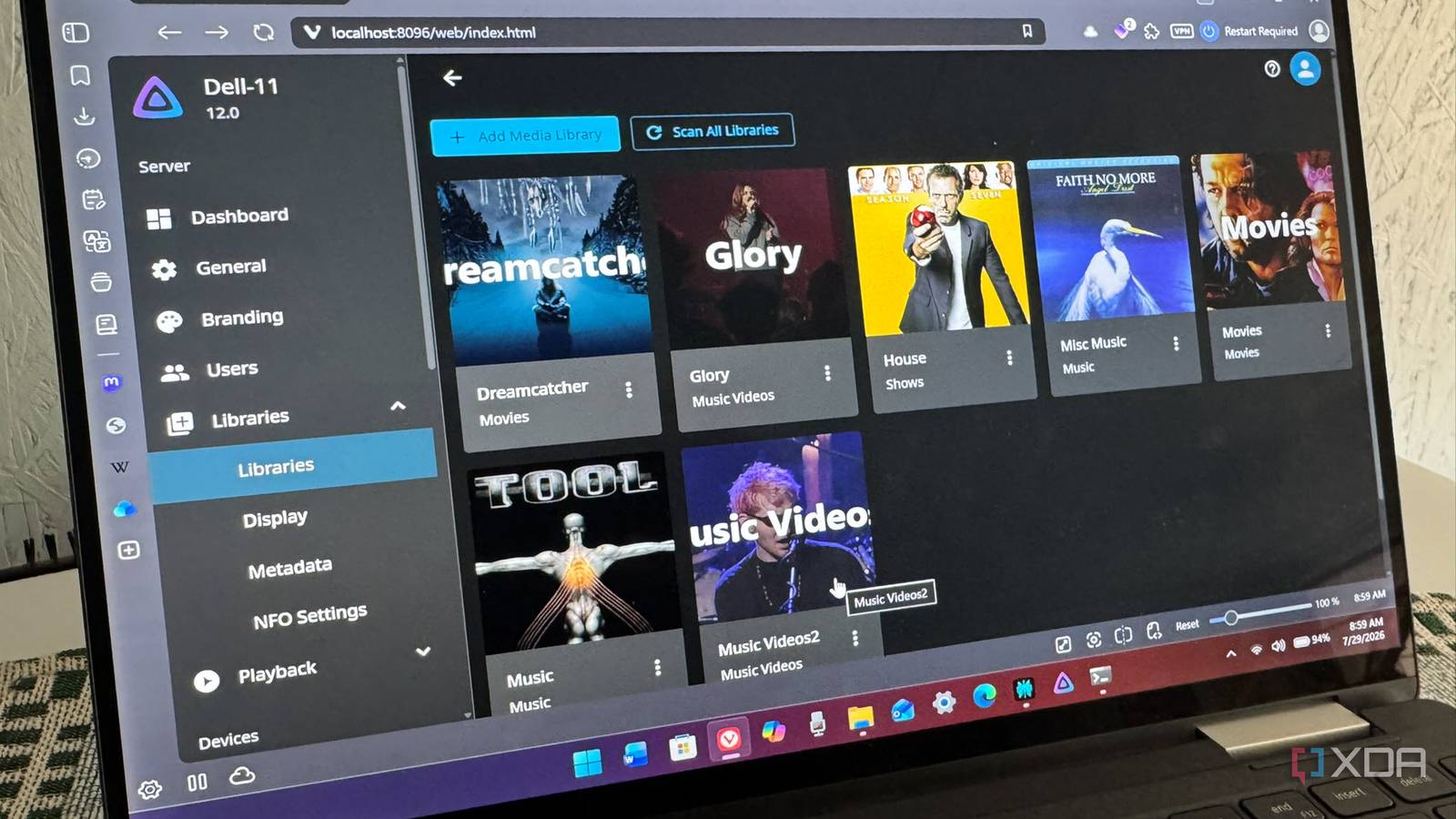
Published Aug 3, 2026, 3:00 PM EDT Based in rural Minnesota, Brian Burgess worked in IT for 10 years before finding his passion for writing about consumer technology. Brian earned his degree in computer and network technology in 2000. He held various IT positions, including help desk support, router installations for IBM, database administration, and other associate network administration roles. He's been a personal technology journalist for 18 years and has written thousands of articles about Microsoft products and services, Android, iOS, streaming, and more. He has written for notable tech sites including XDA, InformationWeek, How-To Geek, Byte, groovyPost, and others. When he is away from the keyboard, you will hear him playing guitar, working outdoors, and watching Star Trek. I had been out of the self-hosted media community for years, until Plex decided to paywall all the good features. When Jellyfin came out, I didn't pull the trigger right away, but I was interested. Once I finally got my Jellyfin server running, I found an Android client and don't miss Plex, plus a plethora of fun clients. I like that the service is free and open-source and offers many configuration options. However, the current version hasn't always been everything I've wanted; the recent version 12 update has fixed many of the issues, and the desktop server experience has improved. Previous Jellyfin versions had issues Instabilities need fixed The most recent stable version of Jellyfin, 10.11.11, was released in the fall of 2025 and fixed many server issues. Users and the dev team have noted some performance issues. For instance, media libraries have seen slow queries, which lead to slow playback and home screen loads. There have also been memory-leak issues that cause slow performance during prolonged use. In fact, version 10.x shipped with a major database backend rewrite that introduced widespread problems that some still experience today after the 10.11.11 update. The web UI and various clients (depending on the device) can take several seconds to load the home screen, TV apps can crash repeatedly, and even simple mobile music playback can stall or stop entirely. Another issue is inconsistent "custom authentication" errors in the server logs, and users with media libraries larger than 15 TB had to revert to 10.10.7 rather than wait for Jellyfin fixes. Also, as fixes continued to mount, new login and security problems were eventually resolved with 10.11.11. Many Jellyfin improvements on deck for enthusiasts Better performance for everyone The new version of Jellyfin fixes many of the above issues and adds some notable fixes that I am excited to see. The metadata issue that shows "ghost" libraries after deleting a file, folder, or entire path on the server seems to have been resolved. Nothing is more annoying than seeing the wrong artwork on my music albums or TV show folders. Live TV, specifically XMLTV, has been updated to work better with guide data when refreshed. Previously, it would keep reprocessing the same information stored from a previous refresh — slowing down the guide. The experience is more responsive now, a noticeable improvement over version 10.x. The subtitle system for movies and shows has also been improved. FFmpeg would hang while sending subtitles to the client, but a fix to subtitle conversion has stopped that from happening. I can watch content without subtitles hanging like before. Another improvement is for audiobook and eBook loading on Jellyfin with better query performance. It indexes cover art and pages from archives and PDFs to improve large, slow-loading book collections. It should finally be fast enough that adding a large library of comics or other eBooks to the server should be worthwhile. Far better but not perfect Version 12 of Jellyfin doesn't look any different; the changes are mainly under the hood. There is a revamped database, a cataloging method, metadata changes, and live TV improvements. Overall, running Jellyfin version 12 is an improved experience, and it's more responsive, regardless of the client or device, even on older hardware. Even setting it up as a new server went quicker than what I originally expected compared to the previous version. Many of the issues plaguing 10.x have been resolved, and there are additional features, but everything isn't perfect. There are still gaps in some of the functionality I'd expect from such a major overhaul. For instance, the alternative client Swiftfin for the Apple TV 4K won't work unless I re-enable legacy authentication. While I praised the metadata improvements for comics and eBooks, the built-in reader doesn't have proper zoom. Also, the split version function is missing for 12-to-alternate cuts of the same title; Diacritic search is still broken, and there's no transcoded copy for offline playback — something Plex has. CPU usage can be high even on minimally configured servers, and other inconsistencies persist across versions 10 and 12. However, even while it isn't perfect, it is a much more enjoyable version to use. Jellyfin continues to improve over time I was lucky to get started with Jellyfin 10.11.11 when I finally got around to setting it up, and I didn't experience the growing pains some did earlier. However, I did notice inconsistencies with server and client performance — namely metadata issues. The Jellyfin 12 desktop server has addressed most of the issues. Of course, it is still a work in progress, and there is always room to improve Jellyfin; I can't wait to see what's added and enhanced in future major builds. Still, there are more bright spots than not, and despite some glaring issues, this version is more responsive overall and one I recommend you update to.
Jellyfin's desktop app was always the weak link, and version 12 rewrite is finally fixing it
Full Article
Original Source
Read the full article at Xda-developers →KhanList aggregates and links to publicly available news content. We do not host full articles from third-party sources. Always verify important information with original sources.