
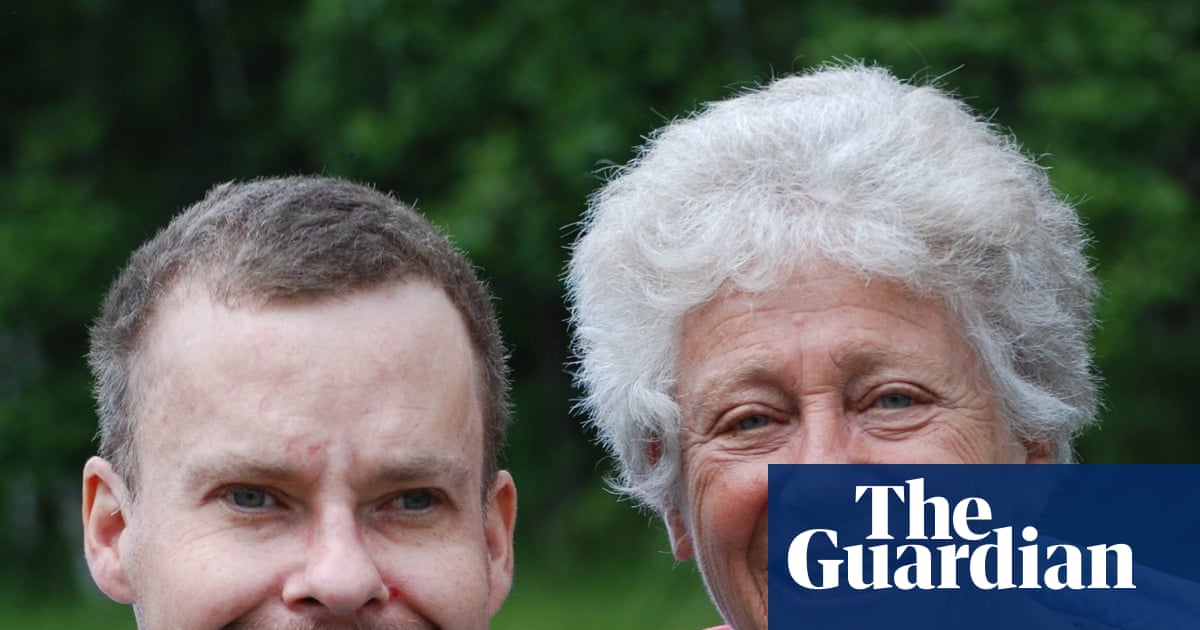
In 1984 Jean Phillips-Martinsson, a British woman living in Sweden, came across an article in the Lancet. It was about Prader-Willi syndrome (PWS), a rare genetic condition named after Andrea Prader and Heinrich Willi, two of the three Swiss paediatricians who discovered it in 1956.It was a lightbulb moment for Phillips-Martinsson, who had been in limbo for 14 years, wanting to know why her son, Anders, born in 1970, was floppy and unable to suck as a baby, and later had behavioural problems and was constantly hungry (hyperphagia). It turned out these are all key signs of PWS.Phillips-Martinsson contacted the article’s author, who was able to diagnose Anders. She said her first thought was, “Are we alone in Sweden?”, and through the endocrinologist Martin Ritzén she was put in touch with four other families with a PWS child. They had all felt similarly isolated, and when they met for coffee on in April 1986 at Phillips-Martinsson’s house in Stockholm she said: “It was an extremely emotional situation for us all.”She and the other parents wanted advice on PWS, which causes behavioural and mental health issues as well as constant hunger and weight gain. So that year she set up a Prader-Willi Syndrome Association in Sweden. But she knew it was too small to be effective: the condition is so rare (estimated to affect between one in 15,000 and in one in 25,000 people) that a global charity with a wider reach was essential.It helped that she had networking and research skills, and could speak several languages. With a background in PR and translating, over the next few years she poured her energies into researching PWS. She discovered fledgling PWS charities in other countries, including the Netherlands, the US and the UK, and in November 1986 attended the PWS-UK’s conference in Bristol.In 1988 she was excited to hear from the American geneticist Dr Suzanne Cassidy. Thanks to a new technique called high-resolution analysis, geneticists knew that PWS resulted from an anomaly on chromosome 15. Research was taking place across the world, but it was not coordinated, and Cassidy wanted to bring researchers and doctors together in an international conference. Phillips-Martinsson and Cassidy met in 1989, forming an organising committee for a conference to be held in the Netherlands in 1991.During the next couple of years, a time she described as “being drowned in correspondence”, Phillips-Martinsson drummed up support from researchers, doctors and parents around the world, and secured sponsorship from the Swedish company Kabi Pharmacia, the World Health Organization and Nato. While much of the conference was devoted to scientific developments, Phillips-Martinsson championed the families, making sure one day of the conference focused on the concerns of parents and caregivers.Phillips-Martinsson speaking at the International PWS conference in Limerick, Ireland, in 2022. Photograph: IPWSOThe conference opened in May 1991 in the Netherlands, with 200 delegates from 22 countries. They voted to form the International Prader-Willi Syndrome Organisation (IPWSO) with Phillips-Martinsson as its president. She served in this capacity until 1998 and remained its guiding force and honorary president to the end of her life.As president, Phillips-Martinsson networked extensively to bring more countries into the IPSWO fold, and supported the setup of national organisations in many countries in Europe and beyond. She travelled widely, speaking at PWS conferences in Europe, the US, Australia and New Zealand.On her watch, IPWSO began its programme of international conferences every three years. They put out regular newsletters, a vital mouthpiece for their community, and disseminated information about developments, such as clinical trials into growth hormones (now a standard treatment). To reduce global inequality, IPWSO lobbied for genetic testing, working to provide free diagnostic testing for people in underserved countries.IPWSO also created information resources on subjects such as diet, behaviour and education, and in 1992 established the first residential care facility for adults with PWS. It was in Sweden and Phillips-Martinsson’s son Anders became one of its first residents.Born in London, Jean had an elder sister, Diana. Her father Emmanuel’s original surname was Isaacs but he took his fiancee’s surname (Phillips) when he married. He ran a furrier business while his wife, Iris, served in the Women’s Royal Voluntary Service during the war. Jean attended the Claremont school in Esher, Surrey, and, aged 16, spent a year at La Chatelaine finishing school in Switzerland, where she learned French.She also learned skills such as which petit fours to serve and how to treat the servants, on the assumption she was going to marry well, but this was not her goal. Instead, in 1957 she went to Neuchâtel University to study French and then trained as a secretary in London. A passionate European, in 1952 she got a job in Paris with the Organisation for European Economic Development, first as a secretary and then as an interpreter, slipping out in the evenings to hear singers such as Edith Piaf and Yves Montand in the Montmartre nightclubs.In 1958 she returned to London, managing to freelance as a PR consultant and a foreign correspondent for several newspapers including the Manchester Guardian. In 1962 the Guardian sent her to cover the British Trade Fair in Gothenburg, Sweden, where she stayed on, finding PR work with advertising agencies. On a skiing trip in Romania with Swedish friends she met Sven Martinsson, a teacher of children with special needs, and they married in 1966. They lived in Gothenburg, where Phillips-Martinsson gave seminars and workshops on cross-cultural relations, and she wrote a book, Swedes As Others See Them, which was published in 1979.After several miscarriages, in 1970, aged 40, Phillips-Martinsson became pregnant with Anders. When he was born it was clear something was wrong, but no one knew what the problem was until she came across the Lancet article about PWS in 1984 and her life took a new direction.In 1994, Phillips-Martinsson moved to Tunbridge Wells, in Kent, with Sven, who died in 2008. There she enjoyed singing in local choirs and playing tennis. In 2019, Anders also died, aged 49, and she established the Jean Phillips-Martinsson Fund in 2020 at IPWSO to continue to finance its work. In her 90s she was still heavily involved with the organisation, joining online meetings during Covid and giving a presentation at the 11th IPWSO conference in Limerick, Ireland, in 2022.Diana died in Phillips-Martinsson is survived by her stepchildren, Arne and Karin, from Sven’s previous marriage, and many nephews and nieces.
Jean Phillips-Martinsson obituary
Full Article
Original Source
Read the full article at Theguardian →KhanList aggregates and links to publicly available news content. We do not host full articles from third-party sources. Always verify important information with original sources.