
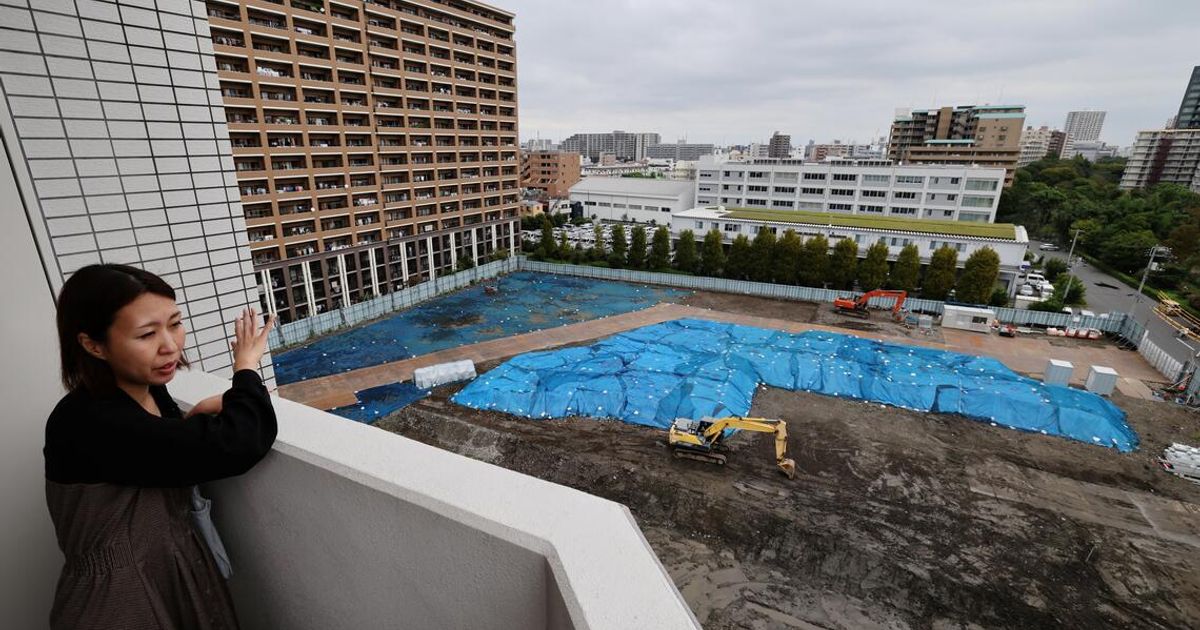
KASHIWA, Japan – Until a few years ago, Susumu Goto’s house in Kashiwa, northeast of Tokyo, looked out on a grassy field where neighbours played baseball and soccer.Today, a couple of 31m-tall data centres owned by Hong Kong-based asset manager PAG loom in front of it. At least once a month, tests of backup generators send black fumes into the sky and the smell of burning fuel hangs in the air.“Every morning when I step outside, my whole view is swallowed up by the buildings,” said the retired auto mechanic. “It feels oppressive. Seeing that day after day takes a real mental toll.”Each building is the size of a large warehouse but as tall as a 10-storey apartment block.Loose regulation and political stability have made Japan a magnet for data centre investment even as other countries have put administrative brakes on the industry.But about 60% of data centres are in and around the densely populated Tokyo metropolitan area, home to about 37 million people, and growing opposition from residents has prompted a review of an industry the government is counting on to drive economic growth.An action plan aimed partly at heading off disputes is due to be finalised by the end of 2026. Industry group Japan Data Center Council as well as Tokyo and several other local governments have also drawn up best-practice guidelines in 2026 as data centres have crept ever closer to homes.Disaster zoneIn Tokyo’s Koto ward, near Tokyo Bay, Ayano Sasaki worries about what will happen once Singapore-based Empyrion Digital finishes its 51m data centre, due for completion in 2029.Her apartment building stands 3.7m from the site of the planned facility, where 1.2 million litres of heavy oil – enough to fill three 25-metre pools – will be buried underground. The area is designated as both flood-prone and among the capital’s highest earthquake-risk zones.“It’s incredible that something like this can be built here without any special regulations,” said Sasaki, a 37-year-old nurse.Residents in Koto have filed appeals with Tokyo demanding binding rules on noise, heat, fuel safety and the placement of data centres. The petitions are awaiting deliberation in the metropolitan assembly.Empyrion referred questions about the data centre to local consulting firm USI Engineering, which said the site was chosen “after reviewing regulatory compliance, infrastructure conditions and environmental impact”.Consultancy JLL expects Japan’s data centre market, measured by revenue, to grow to US$33.4 billion (S$43 billion) by 2030 from US$23.4 billion in 2024, representing average annual growth of 6.7%.Too close for comfortOn a recent afternoon, six backup generators facing Goto’s house fired up for a test run, belching out black smoke and hot air, with a jet-engine-like whine.“I can’t stand the noise, so I close the windows or leave the house to escape it,” the 76-year-old said, looking out from his second-floor window. Exhaust settles on his laundry, he said, and the smell can be overpowering.Goto’s plea to the city to push the developer to locate the underground fuel tanks towards the middle of the roughly 10-hectare site, farther from homes, went nowhere. The data centres sit among hundreds of houses, some farmland and a baseball field.The generators are tested whenever a new tenant moves in, and over the past two months they ran for some 110 hours combined. Two more data centres are planned, meaning the tests will only multiply.“As long as this continues, I’ll keep fighting to protect our living situation, maybe until the day I die,” Goto said.Asked whether proximity to residential areas was considered when selecting a site, PAG said: “We carefully consider numerous factors... including local environmental and community impact, and we work with city, prefectural and community leaders to understand their views before work commences.”Fighting it in courtIn Inzai city, between Tokyo and Narita airport, Junichi Takeda and fellow residents are going a step further by taking their issue to court.Britain’s Colt Data Centre Services began construction in 2026 on a 32-megawatt facility that will rise directly in front of Takeda’s apartment 11m away, blocking the view from his spacious balcony.Takeda and fellow plaintiffs are suing the city and Japan ERI, a government-authorised building inspection and certification company, arguing the project was wrongly permitted as an office rather than a factory or warehouse – a classification that would have barred construction there.“Japan hasn’t established the proper laws,” said their lawyer, Satoshi Oikawa. “That’s why you’re seeing huge data centres being planned in residential areas or in front of train stations. That’s threatening people’s lives, and their rights. It’s a big problem.”Inzai city and Japan ERI declined to comment because the cases are ongoing.Campaigners say the Inzai case could set a precedent for how – or whether – Japanese courts will police the office-zoning loophole developers have used nationwide. For now, residents are scrambling to raise awareness among the broader public with a simple warning: your community could be next. REUTERS
Japan’s data centre boom faces growing revolt from urban residents
Full Article
Original Source
Read the full article at Straitstimes →KhanList aggregates and links to publicly available news content. We do not host full articles from third-party sources. Always verify important information with original sources.